Arkansas Driver's Test Practice: Hazard Situations and Rural Road Risks
You're not just prepping for some generic multiple-choice quiz. The Arkansas OMV wants to know if you can read the land. Little Rock interstates get their share of brake lights, and Fayetteville floods with football traffic, but the questions that haunt people go rural fast. The pavement drops into a hollow. The sky turns. That's when the Arkansas drivers permit test stops feeling theoretical. It's about what happens when the shoulder crumbles and the only light is your own headlights. You're learning to survive two-lane highways where a curve isn't a curve. It's a blind handshake with a logging truck. This isn't just studying. This is Arkansas drivers test practice the way it should be. Uncomfortable and honest.
See more
You're not just prepping for some generic multiple-choice quiz. The Arkansas OMV wants to know if you can read the land. Little Rock interstates get their share of brake lights, and Fayetteville floods with football traffic, but the questions that haunt people go rural fast. The pavement drops into a hollow. The sky turns. That's when the Arkansas drivers permit test stops feeling theoretical. It's about what happens when the shoulder crumbles and the only light is your own headlights. You're learning to survive two-lane highways where a curve isn't a curve. It's a blind handshake with a logging truck. This isn't just studying. This is Arkansas drivers test practice the way it should be. Uncomfortable and honest.
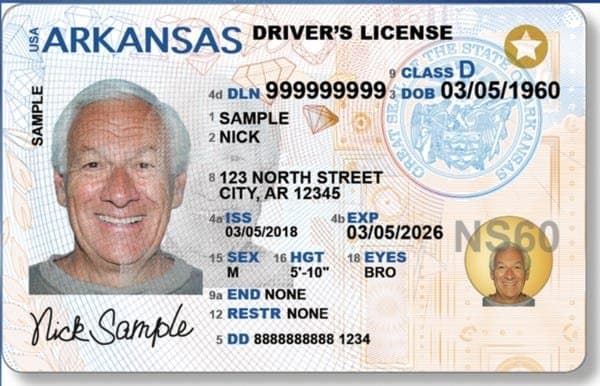
Arkansas8 minEasy30 questions

Tests Verified by Daniel Gonzalez
Experienced teacher & Instructional Designer
"These practice tests are built from the DMV handbook to help you actually learn the rules and pass the driving test with confidence"
The Most Common Hazards on Arkansas Roads
You're east of Little Rock on US 67/167, just before dusk. The sun is that low, blinding angle. And then you see them. Deer. Lots of them. They don't wait for a sign. The test knows. It will show you a wet two-lane after a sudden spring shower, the pavement shimmering, and ask what's really happening. You're not looking for just the deer. You're looking for that oily slick that rises out of the asphalt after a dry spell. That's the trap.
What makes the test feel personal are the hidden intersections. Not the lit crossroads with turn arrows. I'm talking about the gravel cut between two pine lines near Jonesboro. Suddenly a loaded chicken truck is in your world. The OMV hides the hazard in a photograph. A gap in the tree line. A fence that stops short. A dip in the road. If you don't see the clues early, you're already too late. That's the point.
Slow-moving vehicles. Between Fort Smith and Springdale, a tractor can eat the whole lane. The test answers hang on patience. Honk? Fail. Flash your lights? Fail. Your only safe move is waiting until you have a clean sight line past that hill.
- You're scanning ditches for movement, not just the center line.
- A wet road after a long dry week is greasy, not just slick.
- Gravel on a paved curve behaves like ball bearings.
This one trips people up. They're so focused on the deer they forget the road itself turns into a hazard.
How Rural Roads Increase Accident Risk
Downtown Fort Smith has stoplights. The test material lives where the streetlights end. Rural Arkansas highways often serve up narrow lanes and zero shoulder. None. You drift six inches near Conway or out in the Delta and you're in grass, or worse, a ditch full of rainwater. The exam makes you visualize that. A blind curve on a narrow lane isn't just a turn. It's a meeting with a tractor-trailer whose tires are already hugging the center line.
Night driving over there changes everything. Near Rogers or Bentonville, the Ozark hills aren't just pretty. They swallow your headlights. You come around a bend and there's a fallen limb. Can't see it until you're on it. The OMV loves this rule: you must never outdrive your headlights. That means 55 on a pitch-black county road might be legal, but it's not smart. Period.
Hill crests. You're heading toward Beaver Lake and the road rises hard. You can't see the other side. A stalled pickup. A group of cyclists. The Arkansas permit exam will ask what you do. The answer never changes: ease off early, move right. Never assume the road is clear just because your line of sight is gone.
Then there's the debris. Tyson plants. Logging rigs. Rocks fly. A windshield smack startles you. The test wants one reaction: hold steady. No sudden swerve. On a narrow lane, yanking the wheel puts you head-on or wrapped around a sweetgum tree. You slow. You breathe. You let the truck pass.
Weather Hazards Arkansas Drivers Must Understand
Talk to anybody in North Little Rock. Bridges really do ice first. Those signs on I-30 aren't decoration. The OMV test treats this as gospel. An overpass freezes fast because cold air runs underneath. The road surface stays warmer for a bit. So you're rolling on clear asphalt, hit a bridge, and suddenly you have zero traction. The test says: don't brake on ice. Let off the gas. Steer with small movements. That's it.
Rain. A thunderstorm near Bentonville can drop visibility to near zero in three seconds. The test asks about hydroplaning. What does it feel like? The steering goes light. The engine note rises a little. Then you see two answers that both look right. "Brake firmly" and "Ease off the accelerator." Time pressure makes you misread. You want to stop, so your thumb reaches for "brake firmly." But that's the spin-out move. Ease off. That's the one you need.
Fog is a silent ambush. River bottoms around Pine Bluff, fields outside Jonesboro. You top a small rise and drop into a wall of white. The test asks about headlights. High beams in fog? Instant fail. They bounce back and blind you. Low beams only. And maybe a white-knuckle grip on the wheel.
- Thunderstorms hide potholes deep enough to swallow a tire.
- Hail in May makes the road as slick as an ice storm.
- Tornado warning? Pull over. Never hide under an overpass.
This one trips people up. The overpass feels safe, but it's a wind tunnel that turns debris into missiles. The safest spot really is a low ditch.
Why Arkansas Hazard Questions Are Different
If you're using some generic app and calling it Arkansas drivers test practice, you're missing the whole point. This test isn't borrowed from California. It's written for a place where a curve can hide a washed-out shoulder and a hill might have a tractor doing 15 mph just out of sight. The state loads more rural hazard scenarios than most urban-heavy states do. You're not memorizing sign shapes. You're learning to judge distance when the only landmark is a sagging barn.
The OMV knows a new driver in Fayetteville deals with roundabouts and Razorback gridlock. But that same driver might head to the Buffalo River on Saturday. So the test blends both worlds. One question hits the hands-free law in a school zone. The very next asks about a one-lane bridge over a creek with no signage. The shift jars you if you aren't ready.
Hills and curves eat up reaction time. On flat I-40 near the Mississippi, you see brake lights a mile ahead. On a twisty state highway near the Ouachitas, you see them fifty feet ahead. The Arkansas drivers permit test asks: what's your following distance here? It's not the standard two-second rule they taught you in a parking lot. You need four seconds. Maybe more. You need time to react to a deer, a fallen rock, or a stopped mail carrier just past the blind spot.
The language feels local. "Pull off onto the improved shoulder." "Check for loose surface material." These aren't bureaucratic terms. They're road-crew talk. An improved shoulder just means a paved one. Loose surface material means gravel that's about to take your traction. The test expects you to know this without a translator.
Most Common Hazard Situation Mistakes in Arkansas
The biggest killer? Complacency on familiar roads. You've driven I-40 from Conway to Little Rock a thousand times. You know the construction zones. So your brain checks out. The test frames this as hazard perception failure. You miss the brake lights three cars ahead because you're locked on the tailgate right in front of you. The whole picture matters. Scan it or fail.
Drivers enter blind curves too fast. Classic test question. The advisory sign says 35. You think, "I can hold 45." Then the test asks what you do when a hay truck is stopped just past the apex. The correct answer isn't "swerve into the other lane." On a blind curve, the oncoming lane might have a car you can't see. You brake hard in a straight line. Only swerve if you've already cleared the curve and see that it's open. That distinction makes or breaks your score.
Weather mistakes. First few drops of rain on a dusty windshield create a film. You can't see. The test asks what you do before the downpour really hits. Wipers on, sure. But also headlights. Arkansas law says wipers on, lights on. It's simple, but under permit test pressure, your brain is thinking about skid recovery, not visibility law. So you forget.
- Slamming brakes the instant a deer appears.
- Staring at the ditch instead of steering toward your escape path.
- Leaving a turn signal blinking long after a passing zone ends.
This one trips people up. There's a tiny real-life detail that shows up on the test: if a ball bounces into the street in a residential area, brake immediately. The kid follows the ball. The test doesn't show the kid at first, just the ball. It's a trick as old as time, and hesitation fails the hazard segment. In places like Rogers or Springdale with new subdivisions everywhere, this isn't hypothetical.
Arkansas Hazard Situations FAQs
What hazards are most common on Arkansas roads?
It's an odd mix. Heavy freight on I-40 and I-49. Sudden deer crossings near wooded areas at dusk. Farm equipment swallowing rural state highways. In Little Rock, it shifts to sudden congestion and merging chaos on I-630. But statewide, wet leaves in the fall and black ice on bridges in winter are the silent ones that catch you off guard.
Does Arkansas test weather-related hazards?
Very much so. The OMV leans hard into this. You'll see questions about hydroplaning recovery, when to use fog lights, and how to handle gusty crosswinds on exposed stretches like the I-30 bridge. They make sure you know that cruise control in the rain is dangerous. If you hydroplane with cruise on, the car tries to keep speed and you lose control faster. Turn it off.
Why are curves dangerous for new drivers?
New drivers fixate. They stare at the center line or the guardrail. Your car goes where your eyes go. In the Ozarks near Fayetteville or the winding roads outside Hot Springs, a curve demands you look through it, not at it. The test asks about speed before the curve, not in it. Braking inside a curve shifts weight and starts a slide. It's a physics lesson disguised as a road rule.
How should drivers react to rural-road emergencies?
First, get off the road if you can. A flat tire on a narrow highway with no shoulder means limp to a driveway or a wide spot. If you can't, hazards on, and exit on the passenger side. Never stand by the driver's door. The OMV wants you thinking about distracted drivers coming up behind you. On a road like US 71 near Fort Smith, that fear is real. The shoulder might be a six-inch drop into muddy nothing.
What mistakes are common in Arkansas hazard situations?
Oversteering leads the list. A tire drops off the pavement onto gravel or a dirt shoulder. Instinct screams yank the wheel back. That's how you flip. The test says ease off the gas, keep a firm grip, and gently steer back after you've slowed. Another mistake is misjudging a truck's turning radius. A semi turning onto AR 49 in Jonesboro needs the entire lane and then some. Don't slip in next to it. Not ever.
See more
The Most Common Hazards on Arkansas Roads
You're east of Little Rock on US 67/167, just before dusk. The sun is that low, blinding angle. And then you see them. Deer. Lots of them. They don't wait for a sign. The test knows. It will show you a wet two-lane after a sudden spring shower, the pavement shimmering, and ask what's really happening. You're not looking for just the deer. You're looking for that oily slick that rises out of the asphalt after a dry spell. That's the trap.
What makes the test feel personal are the hidden intersections. Not the lit crossroads with turn arrows. I'm talking about the gravel cut between two pine lines near Jonesboro. Suddenly a loaded chicken truck is in your world. The OMV hides the hazard in a photograph. A gap in the tree line. A fence that stops short. A dip in the road. If you don't see the clues early, you're already too late. That's the point.
Slow-moving vehicles. Between Fort Smith and Springdale, a tractor can eat the whole lane. The test answers hang on patience. Honk? Fail. Flash your lights? Fail. Your only safe move is waiting until you have a clean sight line past that hill.
- You're scanning ditches for movement, not just the center line.
- A wet road after a long dry week is greasy, not just slick.
- Gravel on a paved curve behaves like ball bearings.
This one trips people up. They're so focused on the deer they forget the road itself turns into a hazard.
How Rural Roads Increase Accident Risk
Downtown Fort Smith has stoplights. The test material lives where the streetlights end. Rural Arkansas highways often serve up narrow lanes and zero shoulder. None. You drift six inches near Conway or out in the Delta and you're in grass, or worse, a ditch full of rainwater. The exam makes you visualize that. A blind curve on a narrow lane isn't just a turn. It's a meeting with a tractor-trailer whose tires are already hugging the center line.
Night driving over there changes everything. Near Rogers or Bentonville, the Ozark hills aren't just pretty. They swallow your headlights. You come around a bend and there's a fallen limb. Can't see it until you're on it. The OMV loves this rule: you must never outdrive your headlights. That means 55 on a pitch-black county road might be legal, but it's not smart. Period.
Hill crests. You're heading toward Beaver Lake and the road rises hard. You can't see the other side. A stalled pickup. A group of cyclists. The Arkansas permit exam will ask what you do. The answer never changes: ease off early, move right. Never assume the road is clear just because your line of sight is gone.
Then there's the debris. Tyson plants. Logging rigs. Rocks fly. A windshield smack startles you. The test wants one reaction: hold steady. No sudden swerve. On a narrow lane, yanking the wheel puts you head-on or wrapped around a sweetgum tree. You slow. You breathe. You let the truck pass.
Weather Hazards Arkansas Drivers Must Understand
Talk to anybody in North Little Rock. Bridges really do ice first. Those signs on I-30 aren't decoration. The OMV test treats this as gospel. An overpass freezes fast because cold air runs underneath. The road surface stays warmer for a bit. So you're rolling on clear asphalt, hit a bridge, and suddenly you have zero traction. The test says: don't brake on ice. Let off the gas. Steer with small movements. That's it.
Rain. A thunderstorm near Bentonville can drop visibility to near zero in three seconds. The test asks about hydroplaning. What does it feel like? The steering goes light. The engine note rises a little. Then you see two answers that both look right. "Brake firmly" and "Ease off the accelerator." Time pressure makes you misread. You want to stop, so your thumb reaches for "brake firmly." But that's the spin-out move. Ease off. That's the one you need.
Fog is a silent ambush. River bottoms around Pine Bluff, fields outside Jonesboro. You top a small rise and drop into a wall of white. The test asks about headlights. High beams in fog? Instant fail. They bounce back and blind you. Low beams only. And maybe a white-knuckle grip on the wheel.
- Thunderstorms hide potholes deep enough to swallow a tire.
- Hail in May makes the road as slick as an ice storm.
- Tornado warning? Pull over. Never hide under an overpass.
This one trips people up. The overpass feels safe, but it's a wind tunnel that turns debris into missiles. The safest spot really is a low ditch.
Why Arkansas Hazard Questions Are Different
If you're using some generic app and calling it Arkansas drivers test practice, you're missing the whole point. This test isn't borrowed from California. It's written for a place where a curve can hide a washed-out shoulder and a hill might have a tractor doing 15 mph just out of sight. The state loads more rural hazard scenarios than most urban-heavy states do. You're not memorizing sign shapes. You're learning to judge distance when the only landmark is a sagging barn.
The OMV knows a new driver in Fayetteville deals with roundabouts and Razorback gridlock. But that same driver might head to the Buffalo River on Saturday. So the test blends both worlds. One question hits the hands-free law in a school zone. The very next asks about a one-lane bridge over a creek with no signage. The shift jars you if you aren't ready.
Hills and curves eat up reaction time. On flat I-40 near the Mississippi, you see brake lights a mile ahead. On a twisty state highway near the Ouachitas, you see them fifty feet ahead. The Arkansas drivers permit test asks: what's your following distance here? It's not the standard two-second rule they taught you in a parking lot. You need four seconds. Maybe more. You need time to react to a deer, a fallen rock, or a stopped mail carrier just past the blind spot.
The language feels local. "Pull off onto the improved shoulder." "Check for loose surface material." These aren't bureaucratic terms. They're road-crew talk. An improved shoulder just means a paved one. Loose surface material means gravel that's about to take your traction. The test expects you to know this without a translator.
Most Common Hazard Situation Mistakes in Arkansas
The biggest killer? Complacency on familiar roads. You've driven I-40 from Conway to Little Rock a thousand times. You know the construction zones. So your brain checks out. The test frames this as hazard perception failure. You miss the brake lights three cars ahead because you're locked on the tailgate right in front of you. The whole picture matters. Scan it or fail.
Drivers enter blind curves too fast. Classic test question. The advisory sign says 35. You think, "I can hold 45." Then the test asks what you do when a hay truck is stopped just past the apex. The correct answer isn't "swerve into the other lane." On a blind curve, the oncoming lane might have a car you can't see. You brake hard in a straight line. Only swerve if you've already cleared the curve and see that it's open. That distinction makes or breaks your score.
Weather mistakes. First few drops of rain on a dusty windshield create a film. You can't see. The test asks what you do before the downpour really hits. Wipers on, sure. But also headlights. Arkansas law says wipers on, lights on. It's simple, but under permit test pressure, your brain is thinking about skid recovery, not visibility law. So you forget.
- Slamming brakes the instant a deer appears.
- Staring at the ditch instead of steering toward your escape path.
- Leaving a turn signal blinking long after a passing zone ends.
This one trips people up. There's a tiny real-life detail that shows up on the test: if a ball bounces into the street in a residential area, brake immediately. The kid follows the ball. The test doesn't show the kid at first, just the ball. It's a trick as old as time, and hesitation fails the hazard segment. In places like Rogers or Springdale with new subdivisions everywhere, this isn't hypothetical.
Arkansas Hazard Situations FAQs
What hazards are most common on Arkansas roads?
It's an odd mix. Heavy freight on I-40 and I-49. Sudden deer crossings near wooded areas at dusk. Farm equipment swallowing rural state highways. In Little Rock, it shifts to sudden congestion and merging chaos on I-630. But statewide, wet leaves in the fall and black ice on bridges in winter are the silent ones that catch you off guard.
Does Arkansas test weather-related hazards?
Very much so. The OMV leans hard into this. You'll see questions about hydroplaning recovery, when to use fog lights, and how to handle gusty crosswinds on exposed stretches like the I-30 bridge. They make sure you know that cruise control in the rain is dangerous. If you hydroplane with cruise on, the car tries to keep speed and you lose control faster. Turn it off.
Why are curves dangerous for new drivers?
New drivers fixate. They stare at the center line or the guardrail. Your car goes where your eyes go. In the Ozarks near Fayetteville or the winding roads outside Hot Springs, a curve demands you look through it, not at it. The test asks about speed before the curve, not in it. Braking inside a curve shifts weight and starts a slide. It's a physics lesson disguised as a road rule.
How should drivers react to rural-road emergencies?
First, get off the road if you can. A flat tire on a narrow highway with no shoulder means limp to a driveway or a wide spot. If you can't, hazards on, and exit on the passenger side. Never stand by the driver's door. The OMV wants you thinking about distracted drivers coming up behind you. On a road like US 71 near Fort Smith, that fear is real. The shoulder might be a six-inch drop into muddy nothing.
What mistakes are common in Arkansas hazard situations?
Oversteering leads the list. A tire drops off the pavement onto gravel or a dirt shoulder. Instinct screams yank the wheel back. That's how you flip. The test says ease off the gas, keep a firm grip, and gently steer back after you've slowed. Another mistake is misjudging a truck's turning radius. A semi turning onto AR 49 in Jonesboro needs the entire lane and then some. Don't slip in next to it. Not ever.
25000
practice tests completed by Arkansas learners this month