How to Get a CDL in California: Steps, Age, and Cost
If you're wondering how to get a CDL license in California, I'll give you the short version first and then we'll go piece by piece. Start with a valid California driver's license. Next, get a DOT medical card. Pass the 50-question general knowledge test. Pass it and you walk out with your Commercial Learner's Permit, then you finish ELDT with a school that's on the FMCSA registry and sit on that permit for at least 14 days before you can test. Then pass the skills test. Simple on paper.
California CDL Classes and What They Let You Drive
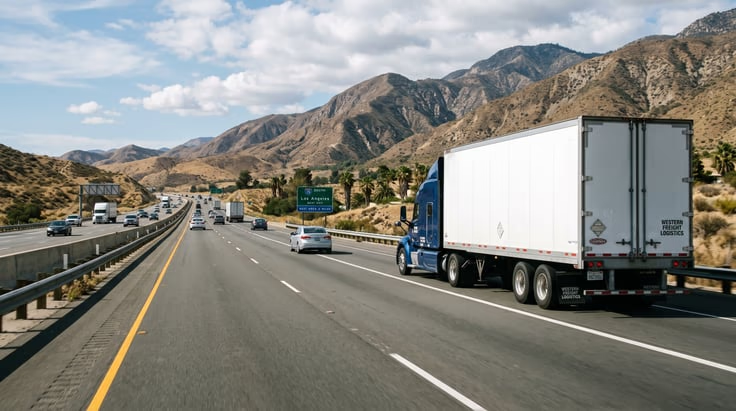
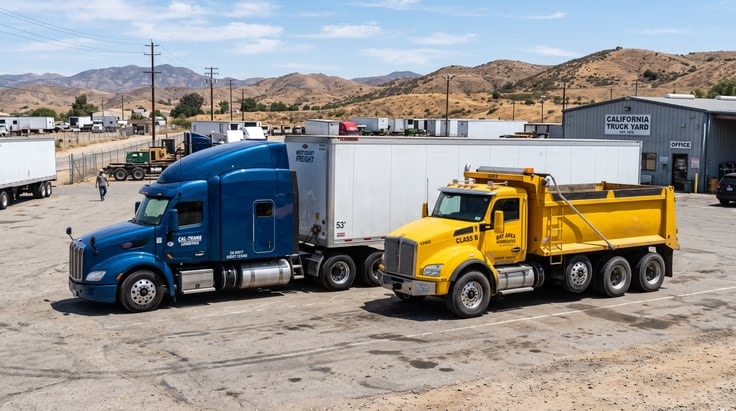
The California DMV commercial drivers license program has three classes. A Class A California driver's license covers combination vehicles. Think tractor-trailers, tankers and flatbeds, the big rigs you see rolling up I-5 all night. If you want to haul freight up and down the state or across the country, that's the one you're after.
Class B covers large single vehicles. So we're talking dump trucks, box trucks and the city and school buses you pass every morning. Class B fits local delivery fleets. It also works for transit agencies in Los Angeles or San Francisco.
Class C is the one people forget about. It's for smaller vehicles that either haul placarded hazardous materials or carry 16 or more people, so picture a little hazmat van or one of those airport shuttles circling LAX.
Endorsements add job-specific privileges. Want to drive a bus with paying riders? You'll need the P (passenger) endorsement, and school bus work adds the S on top of that, along with extra background checks. Tanker covers liquid loads. Hazmat requires a federal background check and fingerprinting. Doubles/triples lets you pull more than one trailer. That matters for Central Valley agricultural hauling.
I'd start from the job you actually want and work backward to the class. Long-haul from Fresno to Nevada calls for Class A. A city bus job in Oakland calls for Class B with passenger. Want to deliver propane locally? Class C with hazmat and tanker.
A Class A does not cover every cargo. Certain loads still need their own endorsement on top of it, so don't assume the A gets you into everything.
Step-by-Step: From CLP to California CDL
- You'll need a valid California driver's license in your wallet before anything else happens.
- Pass the DOT physical. You walk out with a Medical Examiner's Certificate, and any certified examiner can do it (they'll look at your vision, your hearing and your blood pressure, mostly).
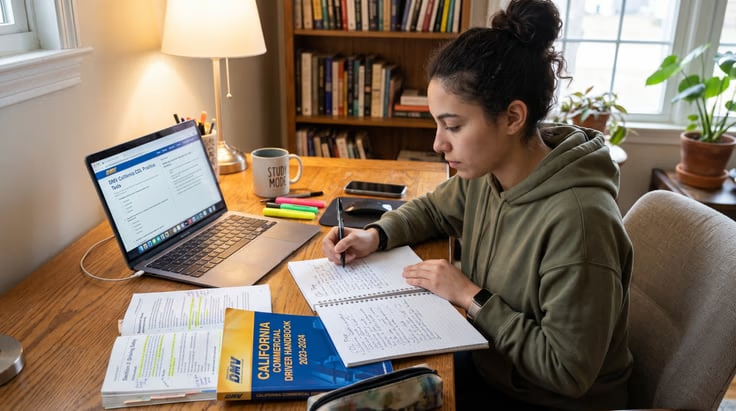
- Get the California Commercial Driver Handbook and actually work through it. The DMV website has it free. Read the air brake section twice if you're going Class A.
- Pass the 50-question general knowledge test. The CA CDL general knowledge test requires 40 of 50 correct. That is an 80% pass score.
- Complete ELDT through an FMCSA-registered provider. This is the theory and behind-the-wheel training.
- Hold the CLP at least 14 days. That's federal law, not a California quirk.
- Pass the skills test. This has three parts: pre-trip inspection, basic controls, and the road test.
Endorsement knowledge tests are taken separately. You can do them when you take the general knowledge test or later. Hazmat requires the background check first.
For the written portions, Drivio's California CDL practice tests at /cdl/california are worth your time. They mirror the real format.
Age and Eligibility Rules in California
The federal age rule is plain. You can get a CDL at 18 but only for intrastate driving. That means within California borders. No crossing into Arizona or Nevada. At 21 you can drive interstate and apply for hazmat.
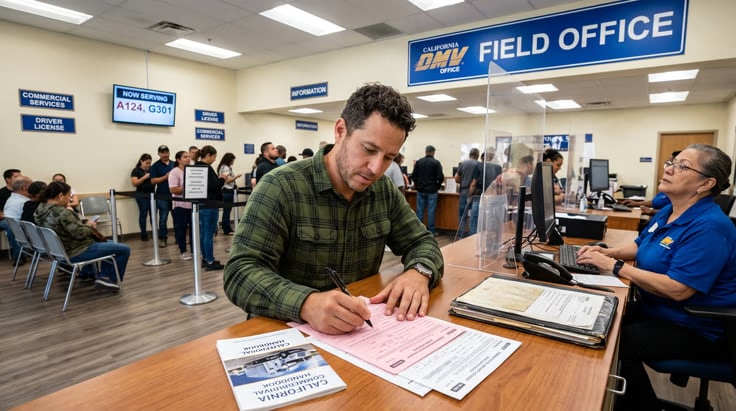
You also need a valid California driver's license and proof of lawful presence. The DMV will ask for residency documents. Bring more than you think you need.
The DOT medical exam is mandatory. No medical card, no CLP. Some health conditions mean you'll need a waiver, but I've seen plenty of students with sleep apnea or diabetes or high blood pressure get through, so it isn't an automatic no.
Too many points or a recent DUI will delay things. They'll pull your driving record when you apply, so it's worth knowing what's on it before you go in.
If you want every eligibility detail in one spot (waivers, residency paperwork, driving record rules), Drivio's California CDL requirements article lays it all out.
Entry-Level Driver Training (ELDT): The Federal Rule
If this is your first Class A or B, you've had to finish ELDT before the skills test ever since February 2022. This is a nationwide rule. California follows it exactly.
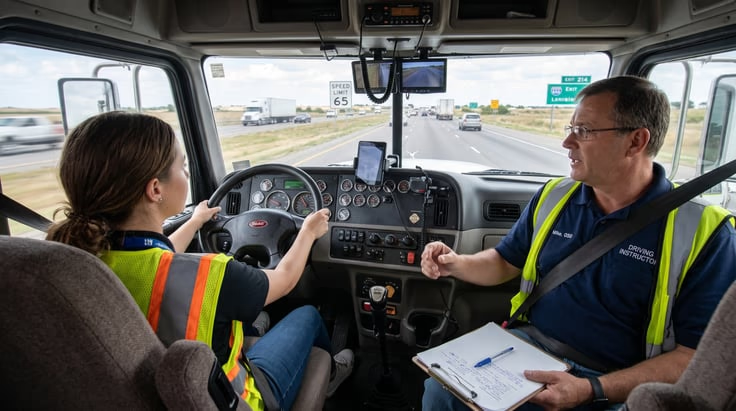
There's a classroom (theory) side where you learn the regulations and how the truck works, and then there's behind-the-wheel time with an instructor sitting next to you. You can't skip either.
The provider must be listed on the FMCSA Training Provider Registry. Not every truck school is registered. Check before you pay. A school in San Diego might advertise CDL training but if they're not on the registry, your certificate means nothing.
Use the FMCSA registry to find a registered California CDL provider. Search by state. You'll see options from Sacramento to Bakersfield. Prices vary widely. In my experience a community college program usually comes in cheaper than a private academy.
How Much Does a California CDL Cost and How Long Does It Take?
Self-study plus DMV testing fees sits at the low end. If you go that route you're probably looking at a few hundred dollars, while a full truck-driving school can climb into the several-thousands, and the same program will usually cost you more in Los Angeles or San Jose than out in Fresno.
Main costs include:
- CLP and CDL application fees
- Knowledge and skills test fees
- DOT medical exam
- ELDT tuition
That last one is the big variable. Some schools bundle everything. Others charge per hour for behind-the-wheel time.
Timeline? A few weeks to a few months. The 14-day CLP hold is the minimum. If you're working a job and studying on the side, I'd plan on six to eight weeks. Full-time school may take three to four weeks.
Two answers look right on the written test when you rush. Don't.
Check CDL California DMV fees at dmv.ca.gov. The licensing fees page updates when the legislature changes things. I wouldn't trust any blog (this one included) for exact dollar amounts.
California CDL FAQ
How do I get a CDL in California? Hold a regular California license. Get a DOT medical card. Pass the general knowledge test for a CLP. Complete ELDT and hold the CLP for at least 14 days. Then pass the skills test.
How long does it take? Minimum two weeks because of the CLP hold. Realistically most of my students take somewhere around four to eight weeks once you add study and training time.
How much does it cost? If you study on your own and just pay the DMV, it's a few hundred dollars. Several thousand if you attend a full truck school. Look up the current DMV fees at dmv.ca.gov before you budget.
Do I need ELDT? Yes, if this is your first Class A or B. It's federal law since February 2022. No ELDT, no skills test.
Can I get a CDL at 18? Yes, as long as you keep it inside California (intrastate), and you'll have to wait until 21 to cross state lines or pick up hazmat.
What's the difference between a CLP and a CDL? A CLP is a learner's permit. You need it to practice and take the skills test. A CDL is the full license. You can't drive a commercial vehicle for hire with just a CLP.
Common Questions From First-Time California CDL Applicants
Do you need experience first? No. Most people start with zero truck experience. The ELDT program exists to teach you from the ground up.
How hard is the knowledge test? It's 50 questions. You need 40 of them right, and the wording will try to catch you, since a single "may" versus "must" flips the whole answer. Running practice tests is how you start noticing those little traps.
What about driving out of state at 18? No. Federal law says 21 for interstate. If you live near the border in San Diego or Needles, this matters. You cannot cross into another state with a load.
As for studying, I'd read the California Commercial Driver Handbook once all the way through and then keep taking practice tests until you're hitting 90% or better, and when you miss one, figure out why the wrong answer is wrong instead of just memorizing the right letter.
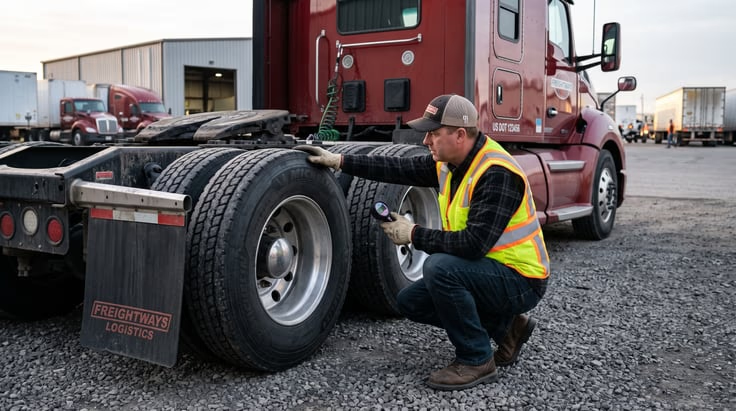
And if you fail a section? You retake it. You'll pay the DMV a retest fee each time, and most schools will let you go again on the skills test after a bit more practice. Honestly, the pre-trip is where I see people fail most, and it's nearly always because they rushed it.
Nobody's grading how smart you are on the written test. The test rewards attention. Read each answer choice. The answer is usually in the handbook word for word.
Drivio's free California CDL practice tests at /cdl/california are built for this. Use them after each chapter. Then use them again the night before your DMV appointment.
I know the whole thing looks like a lot, so take it one piece at a time. Study first. Then the medical. Then the permit. Then training. Then the road test. Every step sets up the next one, and nobody expects you to be perfect at any of them. You need to be consistent.
Share