How to Get a Motorcycle License in California (Step-by-Step)
You need an M1 permit first. Then you either finish a California Motorcyclist Safety Program course or pass the DMV riding test. The written test is part of the process no matter what.
Most of the riders I work with in Los Angeles, San Diego and San Jose take the CMSP class, since finishing it means you don't take the DMV skills test at all. If you're under 21 you don't get a choice anyway, the class is required. Below I'll cover M1 vs. M2, each step in order, the age rules, the tests, and what to bring, all for California only.
M1 vs. M2: Which California Motorcycle License Do You Need?
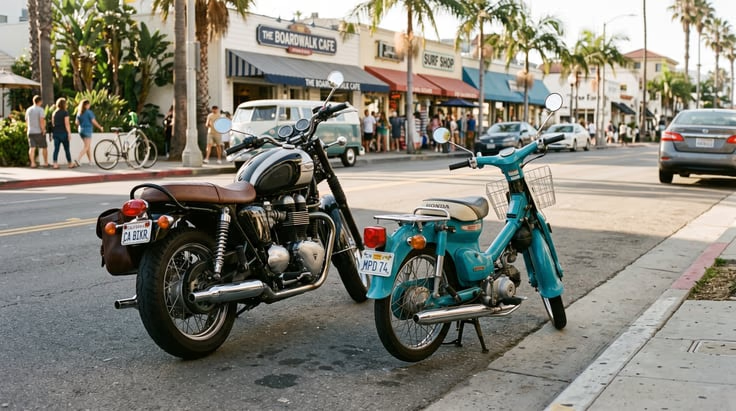
There are two kinds of California Department of Motor Vehicles motorcycle license, the M1 and the M2, and the DMV issues both. M1 is the one almost everyone wants. It covers any two-wheel motorcycle, motorized scooter, and basically anything with a motor and two wheels that isn't a bicycle.
M2 is far more limited. It only covers mopeds and motorized bicycles. If you plan to ride an actual motorcycle on California freeways or city streets, you need the M1 license California offers. No way around it.
Think about the bike you'll actually ride. A Vespa-style scooter over 149cc still needs an M1. A small moped with pedals might be fine with M2. But honestly, just get the M1. It covers everything.
Step-by-Step: Getting Your California Motorcycle License
Here's the path most riders follow. It's not hard. It just takes time.
- Apply at a DMV office. Pay the DMV application fee when you apply.
- Pass the motorcycle written knowledge test. The DMV gives you an M1 instruction permit.
- Sign up for a CMSP course, or make an appointment for the DMV motorcycle skills test.
- Pass the DMV riding test, or bring in your CMSP completion card and you won't have to take it.
- Get your M1 license.
Under 21? You must complete CMSP and hold the permit for six months before getting the M1.
Everything on the written test comes out of the California Motorcycle Handbook, so read that first. The questions feel easy until two answers look right. Then you second-guess yourself. Practice before you go. Drivio has free California motorcycle practice tests at /moto/california that mirror the real thing. Use them.
Age Rules and the CMSP Training Requirement
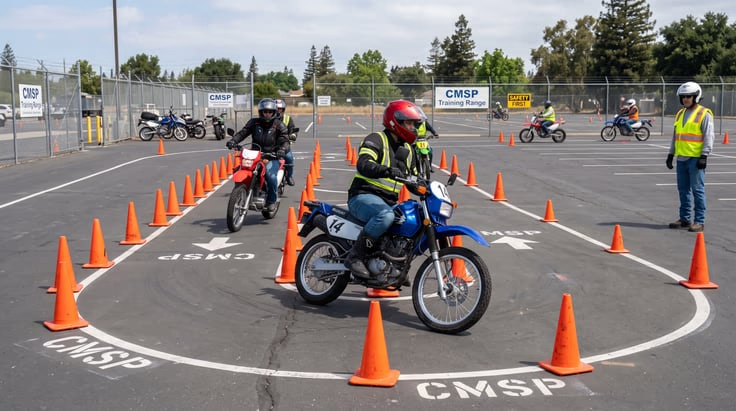
California splits this by age. Under 21 riders have stricter rules. You must take the CMSP course. You must hold your permit for at least six months. No exceptions.
Riders 21 and older get a choice. Take CMSP, which is recommended and waives the DMV skills test. Riders 21 and older can skip CMSP and take the DMV riding test. A CMSP completion card waives that test.
Under 18? You also need driver education and training, same as getting a car permit. These rules do get updated, so I'd look at dmv.ca.gov and the CMSP website before you sign up for anything.
What the Written and Skills Tests Cover
The written test is multiple choice and you need 80% to pass. A lot of my students who fail it knew the material and just read the question too fast. Slow down.
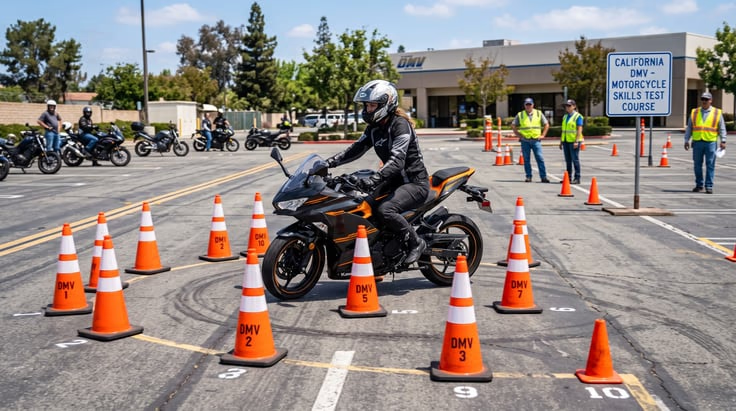
The skills test happens on a controlled DMV course.
It covers:
- slow-speed control
- turning
- stopping
- swerving
It's not a road test. You never leave the parking lot. But nerves get to people.
CMSP is part classroom and part riding. You get on a bike on a closed range and work on the clutch, on turns and on stopping fast. If you're over 21 you could skip it and go straight to the DMV test, but I'd still take it, because most new riders I meet have never been taught how to brake hard on a motorcycle. We also have an article on what's on the California motorcycle written test if you want to know what to study.
Documents, Fees, and What to Bring
Bring these documents:
- proof of identity
- California residency
- your Social Security number
The DMV application fee covers the permit and license testing. I won't quote a number because it changes. Look up the current CA DMV motorcycle license fees on dmv.ca.gov before you go so you're not surprised at the window. You'll also fill out the application at the office, and bring your paperwork in one folder so you're not digging through your bag at the counter.
If you're taking the DMV skills test, you need a DOT-approved helmet and your own motorcycle, and it has to be registered and insured. Before the test they'll look the bike over and check these:
- lights
- turn signals
- horn
- tires
If it's not street legal, they turn you away.
Book ahead. DMV skills test appointments fill fast. CMSP courses also book out weeks ahead, especially in spring.
California Motorcycle License FAQ
What are the steps for a California motorcycle license? Here's how to get motorcycle license California: pass the written test for a permit. After that you either finish CMSP or pass the skills test at the DMV, and then you get your M1.
M1 or M2, which one do I want? The M1 lets you ride any two-wheel motorcycle or motorized scooter. M2 only covers mopeds and motorized bicycles. Get the M1.
Do I have to take CMSP? Only if you're under 21. Riders 21 and older can choose between CMSP and the DMV riding test.
Can I skip the DMV riding test? Yes. Complete the CMSP course and show the completion card. Then there's no need to book a riding test at the DMV at all.
How long does the whole thing take? Under 21, at least six months because of the permit holding period. If you're 21 or older and you can get a class or test date soon, it can be a few weeks.
Do I need a car license first? No. You don't need a car license first. But the permit process still applies.
Beginner Questions From New California Riders
Do I need a car license first? No. You can go straight for the motorcycle license California requires.
How long is the CMSP course? Usually two days total. One classroom day, one range day. Some providers split it differently.
Can I take the freeway on my permit? No. The M1 permit restricts:
- freeway riding
- night riding
- passengers
So no 101, no I-5, until the real M1 is in your wallet.
What's the total cost? Varies. When you add the DMV fees to the CMSP course, most of my students end up spending a few hundred dollars. Check current numbers.
How hard is the written test? Most riders need practice before the DMV written test. Remember it's 80% to pass. Two answers look right. Practice at /moto/california before you go to the DMV.
One last thing. Riders in Anaheim, Bakersfield, and San Diego all deal with different traffic. But the license process is the same statewide. California motorcycle license requirements don't change by city. The California DMV motorcycle license rules are the same in Bakersfield as they are in San Francisco. So study the handbook, take a few practice tests, and get your license before you take the bike out on real roads.
Share