How to Get a CDL in Connecticut: Requirements, Steps & Timeline
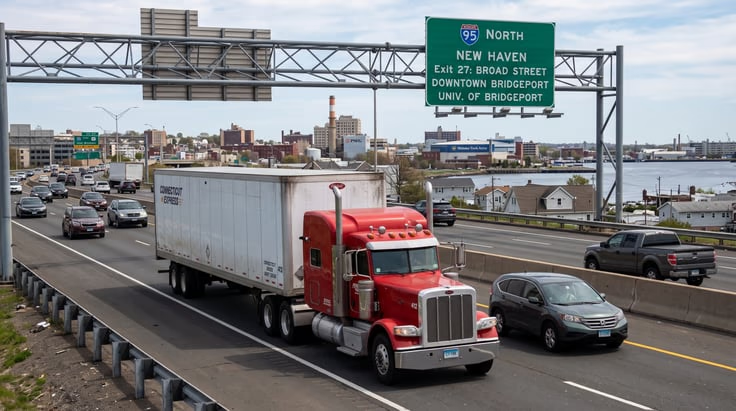
If you're trying to figure out how to get a cdl in ct, the short version is this: you need a valid Connecticut driver's license, you need to be the right age, you need a DOT medical card, and you have to pass written and road tests after completing ELDT. It starts with a learner's permit. Not the CDL itself. Federal rules set the floor, but the DMV in Connecticut has its own fees and scheduling delays. If you live around Bridgeport or Stamford, you already know how rough I-95 gets. Driving a Class A rig through that merge near Exit 8 changes how you think about mirrors.
What Are the Requirements to Get a CDL in Connecticut?
Most people asking how to obtain a cdl in ct want a list. You need to be at least 18 for intrastate driving only. That means no crossing state lines. You need to be 21 for interstate or HazMat. You need a valid Connecticut driver's license, not a learner's permit. You need a DOT medical card. The DMV will check your driving record. Too many serious violations can delay or block your application.
The Commercial Learner's Permit comes before the CDL. Always. HazMat adds a TSA background check, and that can take extra time, sometimes weeks. Don't book the HazMat test before the background check clears. The cdl requirements connecticut sets can change without much fanfare, so confirm current forms and fees before you commit.
CDL Classes and Endorsements Explained
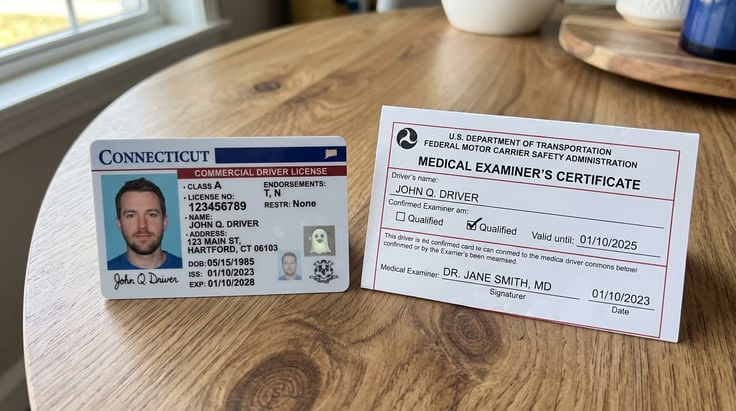
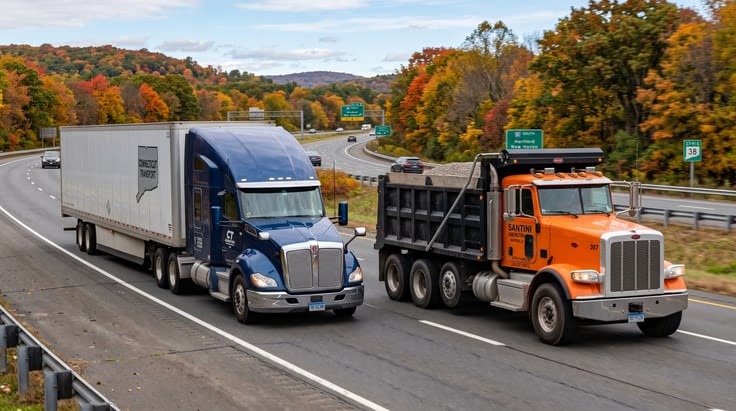
Let's break down cdl classes ct drivers actually need. Class A covers combination vehicles with a gross combination weight rating of 26,001 pounds or more, as long as the towed unit is over 10,000 pounds. That means tractor-trailers, tankers, and flatbeds. Class B is for a single vehicle at or above 26,001 pounds, like a dump truck or a large passenger bus. Class C is for vehicles that don't fit A or B but carry 16 or more passengers or hazardous materials, like small school buses or HazMat vans.
Endorsements matter. Passenger (P) lets you drive buses. School bus (S) adds student transport rules. Tanker (N) means liquid loads. HazMat (H) is the big one for chemical haulers. Doubles/triples (T) allows multiple trailers. Restrictions are a thing too. If you test in a truck without air brakes, you get an air brake restriction. That means you can't legally drive a truck with air brakes, and many companies won't hire you with that restriction.
- Class A: tractor-trailers, heavy combination vehicles
- Class B: straight trucks, dump trucks, large buses
- Class C: smaller vehicles carrying passengers or HazMat
This one trips people up.
People think Class A is always better. But if your goal is driving a city bus in Hartford, a Class B with passenger and air brake endorsements is exactly right. Don't overpay for training you don't need.
Entry-Level Driver Training (ELDT): The Federal Rule
Since February 2022, first-time Class A and Class B applicants must complete ELDT from an FMCSA-registered provider before taking the skills test. This is not a Connecticut-only rule. It applies everywhere. The training includes theory and behind-the-wheel instruction, and your provider logs your completion in the federal Training Provider Registry. The DMV checks that registry before allowing you to test.
Finding an eldt connecticut provider isn't hard. Many truck driving schools in Waterbury, New Haven, and Danbury are registered. Community colleges offer programs too. Ask for the provider's FMCSA registration number. If they don't have one, walk away. You can't test without it. Some schools bundle ELDT with CDL test prep, while others charge separately.
Step-by-Step: From CLP to CDL in Connecticut
Here's the path without fluff.
- Study the Connecticut CDL manual and read it twice. The general knowledge test pulls directly from it.
- Pass the general knowledge test plus any endorsement tests you need. The general knowledge test has 50 questions, and you need 80% to pass. That means 40 correct answers.
- Get your DOT medical certificate on file with the DMV.
- Complete ELDT from a registered provider.
- Hold the CLP for at least 14 days. No exceptions.
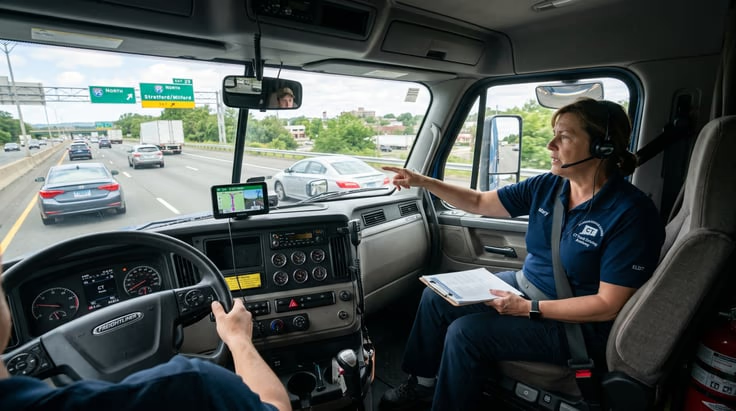
- Practice behind the wheel a lot, and remember that short merges on Route 8 in Bridgeport will test you.
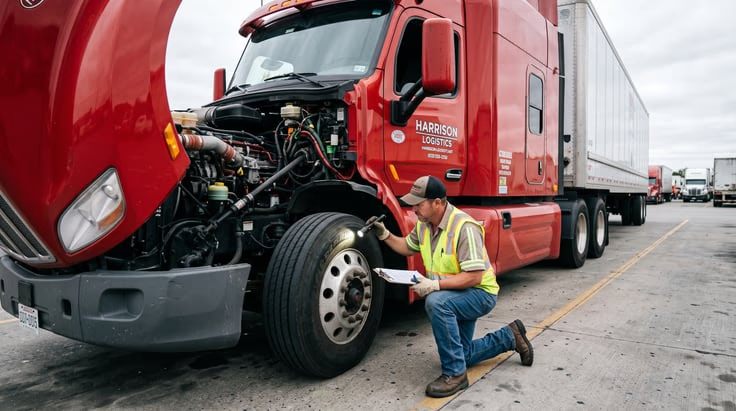
- Pass the skills test: pre-trip inspection, basic controls, road test.
The pre-trip inspection is where most people fail. They memorize the list but forget to actually point at the components and say what they're checking. The examiner wants you to touch the parts, not just recite. Two answers look right on the written test sometimes. Read slowly. Time pressure makes you misread.
How Long Does It Take to Get a CDL in CT?
Realistic timeline: a few weeks to a few months. Accelerated schools can push you through in three to four weeks, assuming you pass the knowledge tests fast, complete ELDT quickly, and the DMV has skills test slots available. The 14-day CLP holding period is the hard minimum. You cannot test before that.
Scheduling the skills test can add wait time. Some DMV locations in New Haven and Waterbury book out weeks in advance. Winter weather delays road tests too. If you're starting in November, expect slower progress. Prepare for the knowledge tests early. Use a ct cdl practice test from Drivio daily to build speed and confidence before you sit for the real thing.
Connecticut CDL FAQ
How old must I be for a CT CDL?
You need to be 18 for intrastate and 21 for interstate or HazMat.
Do I need ELDT?
Yes, for first-time Class A or B applicants and certain endorsement upgrades. It's federal law.
What's the difference between a CLP and a CDL?
A CLP is a learner's permit. It lets you practice with a qualified CDL holder in the passenger seat. A connecticut commercial drivers license is the full license.
How many questions are on the general knowledge test?
The test has 50 questions, and the passing score is 80%.
How long does it take?
It usually takes 3 to 8 weeks, depending on scheduling and your study pace.
Common Questions From First-Time CT CDL Applicants
Can I get a CDL at 18? Yes, but only for intrastate driving. You won't be able to cross into Massachusetts or New York for work. Many companies require 21 anyway. There are local jobs in construction, landscaping, and some delivery routes.
Do I need experience first? No. That's what the CLP and ELDT are for. You learn the basics before testing.
How hard is the knowledge test? The knowledge test isn't impossible, but it isn't easy either. The wording can be tricky. You'll see questions about stopping distances, cargo securement, and air brakes. Those Drivio practice tests mirror that style. Use them daily after each section.
What if I fail a section? You can retake a failed section. You'll pay a retake fee, and there's a waiting period in some cases. Don't rush back in before studying the sections you missed.
How should I study? Read the manual in chunks. Take practice tests after each chapter. After that, take full-length practice exams. The day before your test, review weak areas only. Get some sleep and show up early. You'll be fine.
Share