Motorcycle Safety Tips for Riding in Florida
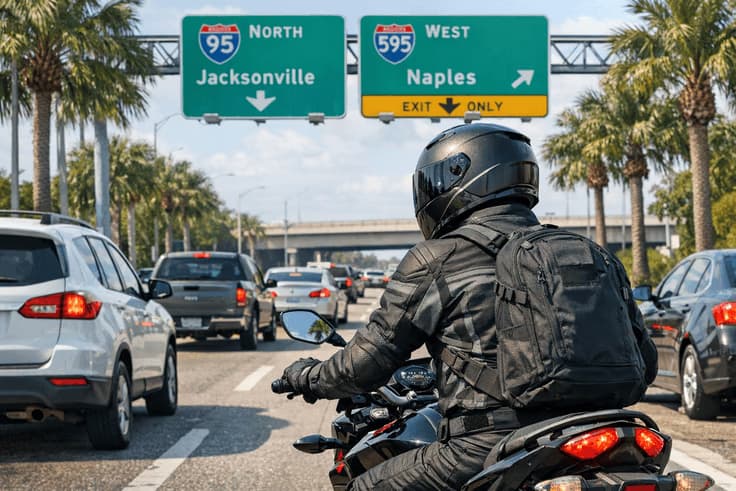
Florida can be a dream on two wheels. Then it flips. Snowbird season stacks up unfamiliar drivers, Orlando’s I‑4 turns into a rolling puzzle, Miami’s I‑95 and the Palmetto reward aggressive merges, and summer rain can show up like someone dumped a bucket on the road.
That’s why Florida motorcycle safety isn’t just “wear a helmet and be careful.” It’s a mindset: be seen, give yourself time, and don’t let other people’s mistakes pull you into panic moves. Simple. Not easy.
If you’re riding a motorcycle in Florida for the first time, you’ll notice the pace changes neighborhood to neighborhood. Beach traffic near St. Pete feels different than commuters in Jacksonville, and both feel tame compared with a packed Fort Lauderdale ramp at rush hour. The basics still hold, though. You’re smaller, harder to notice, and you don’t get a metal cage around you when someone taps their brakes for no reason.
These motorcycle safety tips are aimed at the real stuff tourists staring at GPS, sudden storms, bridge gusts, and that one driver who decides an exit is “right now.” Keep your head, keep your space, and ride like you’re the only one paying attention. Because sometimes you are.
Wear Proper Motorcycle Safety Gear
Florida heat is persuasive. A T‑shirt feels right until it doesn’t.
The road is the road whether it’s 60 degrees or 96, and asphalt doesn’t get kinder just because you’re headed toward the water. Gear is about reducing damage, sure, but it’s also about staying focused: less wind fatigue, fewer stings from debris, better grip when your hands sweat.
Start with the basics and make them automatic:
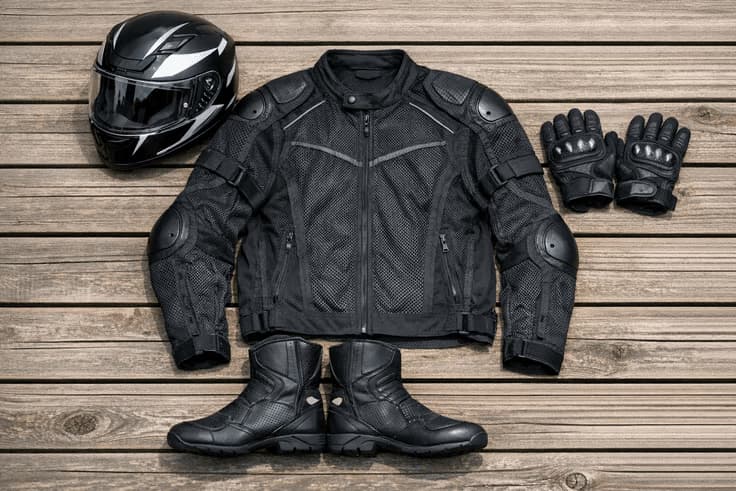
- A properly fitted helmet that stays fastened
- An armored jacket (mesh works in the heat) and real gloves
- Over-the-ankle footwear with traction, not casual sneakers
This one trips people up.
Florida’s helmet rules can confuse people, and you’ll hear a lot of parking-lot opinions about what’s “required.” Even when you technically have options, a helmet, especially, full-face buys you protection, eye coverage, and less exhaustion on long, windy stretches like the Sunshine Skyway or the Buckman Bridge where gusts can shove you around.
Visibility counts here too. Bright colors and reflective bits matter more than riders want to admit, especially at dusk, in heavy spray, and during those glare-heavy sunrise commutes over causeways.
Stay Visible to Other Drivers
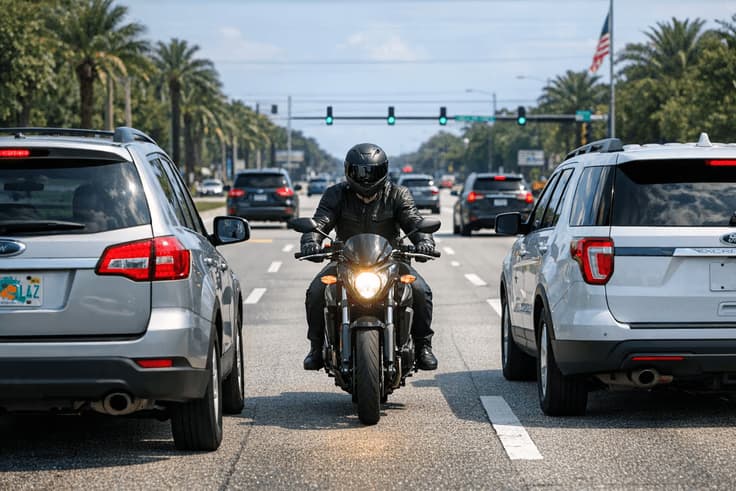
Assume they don’t see you.
Florida traffic is packed with rentals, distracted tourists, and locals who change lanes late because the exit lane suddenly “makes sense.” You can’t control that. You can control where you ride.
Use your headlight in the day. If your bike has running lights, great still make sure everything works. Keep yourself out of blind spots, and don’t hover next to a vehicle like you’re glued to it. If you can’t see the driver’s face in the mirror, betting your day on them seeing you is a bad deal.
A few practical habits help more than fancy theory:
- Pick a lane position that shows you in mirrors, not one that hides behind bumpers
- Signal early and cancel it every time (yes, every time)
- Move through danger zones instead of camping there
This one trips people up.
“Danger zones” in Florida are everywhere: the space next to an SUV, the edges of on-ramps, and the moment two lanes compress near a toll gantry. Watch for double threats too—one car drifts while another merges—and treat that whole cluster like it’s unstable. Because it is.
Maintain a Safe Following Distance
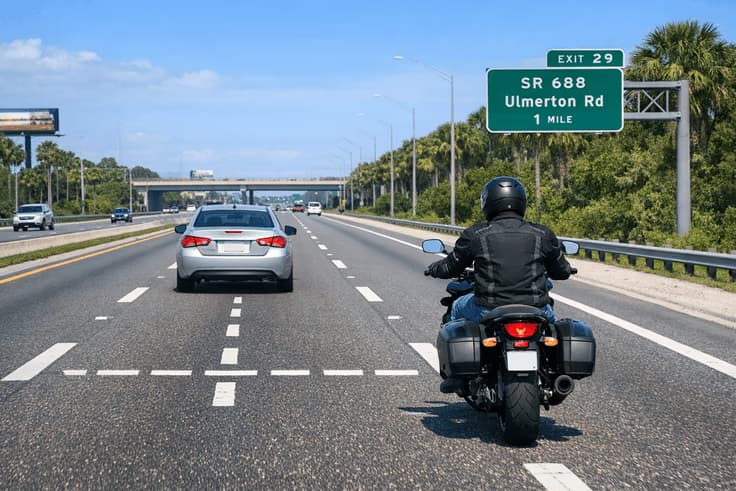
Space is safety.
Florida drivers brake suddenly for everything: a missed turn, a toll sign, a pedestrian near a crosswalk, a lane closure cone that appeared out of nowhere. Motorcycles can stop quickly, but only if you have traction and time is what tailgating steals.
A cushion does three things at once: it gives you reaction time, it lets you see farther up the road, and it creates room to swerve if braking won’t cut it. And in dense traffic, someone will always try to take that cushion. Let them. Rebuild it without getting emotional.
Keep it simple:
- Give at least a 2-second gap in good conditions
- Stretch that to 4 seconds (or more) in rain or low visibility
- If someone fills your gap, back off and recreate it gradually
This one trips people up.
New riders sometimes think, “If I leave space, everyone will cut in, so what’s the point?” The point is options. Options are how you stay upright when the car ahead stops short for a red-light camera intersection or a sudden backup near an Orlando tourist exit.
Watch for Road Hazards and Weather
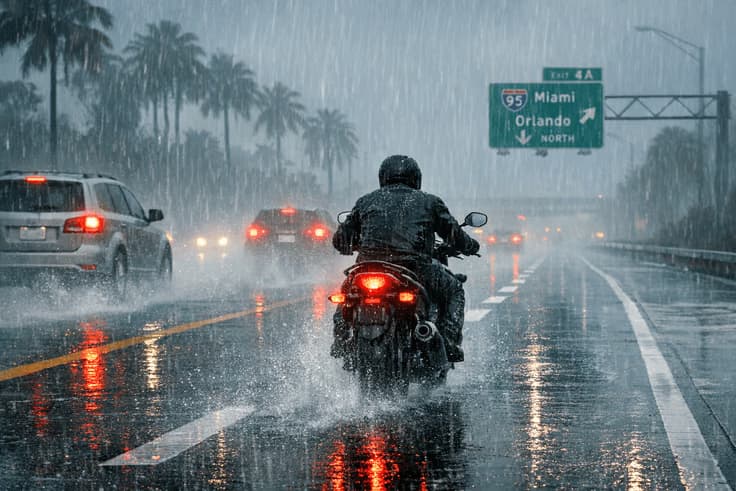
Florida weather changes fast. So do road surfaces.
A sunny stretch in Port St. Lucie can turn into a hard downpour in minutes, and the first rain after a dry spell is especially slick because oil and grime float to the top. Add standing water, reflective paint lines, and metal bridge plates, and you’ve got plenty of places for traction to disappear.
The usual Florida trouble spots show up again and again:
- Sand and gravel near beach access roads, median breaks, and construction zones
- Paint lines and steel grates (especially on drawbridges) when wet
- Potholes and uneven transitions at bridge joints and ramps
This one trips people up.
When it rains, smooth wins. Roll on and off the throttle gently, brake earlier, and avoid hard braking while leaned. If you hit a slick line mid-corner, don’t “correct” with a sudden jerk keep the bike calm and reduce lean gradually.
Also, Florida law requires headlights when your wipers are on. It’s not just compliance; it makes you easier to pick out through spray. And in truly low visibility at highway speeds, Florida does allow hazard lights while moving in those conditions use that sparingly and only when it genuinely helps others notice you sooner.
If you see standing water, don’t guess the depth. Go around if you can. If you can’t, slow down and keep the bike as upright as possible.
Practice Defensive Riding Techniques
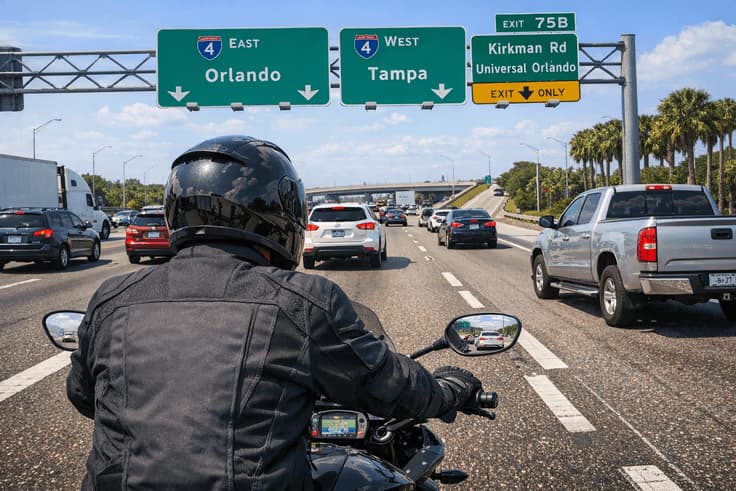
Defensive riding isn’t timid. It’s deliberate.
On roads like the Turnpike, I‑275, I‑295, and I‑95, you’re constantly managing risk: who might merge, who’s staring at a phone, who’s drifting toward your lane because they’re following a GPS voice at the last second. The goal is to never be surprised.
Scan farther ahead than the car in front of you. Look for patterns—brake-light waves, wheels turning at side streets, gaps that invite lane changes, and cars that “hunt” in their lane like they’re undecided. That hunting often turns into a merge with no signal.
Avoid riding side-by-side with cars for long. Either pass or drop back. That’s where the classic “I didn’t see you” lives, and Florida’s big SUVs don’t help.
Keep an escape route in mind all the time: a clear shoulder, an open lane, or a buffer you created by adjusting speed. And remember Florida’s Move Over requirements: when you approach stopped emergency, tow, utility, sanitation, road maintenance, or disabled vehicles showing hazards or flares, you must move over a lane or slow significantly. Plan early so you’re not making a last-second swerve into someone else’s blind spot.
Stay calm.
Understand Florida Motorcycle Laws and Licensing
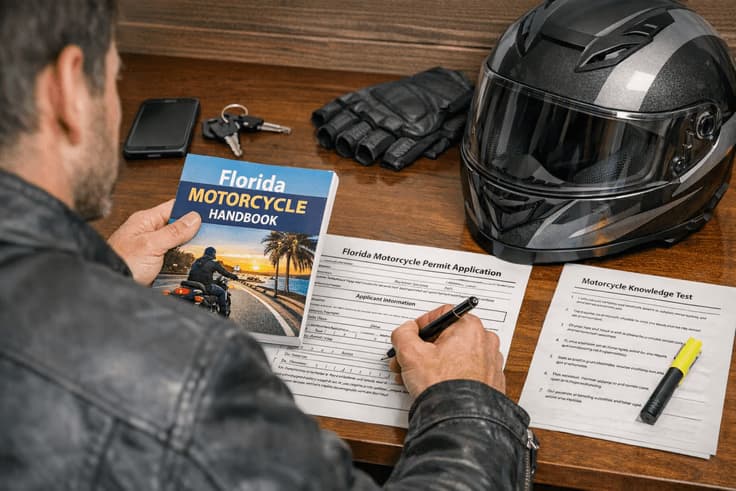
Being legal matters, but so does understanding how the rules affect your safety.
Florida licensing goes through the Florida Department of Highway Safety & Motor Vehicles (DHSMV), and it’s worth reading their current guidance instead of relying on what a friend told you five years ago. If you’re working through the motorcycle permit florida steps, pay attention to what’s required to move from permit to endorsement, and don’t rush the learning phase just because the weather looks perfect.
Training helps in the places Florida punishes mistakes: low-speed control in parking lots, quick stops on slick pavement, and swerving without freezing. It also gives you repetition under calm conditions, so you’re not trying to “figure it out” on a busy multi-lane road.
A few things that make the process smoother:
- Take a certified rider course if you’re new or returning after a long break
- Study the handbook carefully wording is everything on exams
- Practice skills in short sessions so fatigue doesn’t bake in bad habits
This one trips people up.
Tiny real-life detail: on the written stuff, two answers often look right until you notice one word “may” versus “must.” Under time pressure, people misread and then build the wrong habits around that misunderstanding. Slow down when you practice. Speed comes later.
Сonclusion
Florida riding can be incredible, but it asks you to stay switched on. Wear gear that actually protects you, make yourself easy to spot, keep a real following distance, and treat weather like a serious factor, not background noise. Then ride defensively: scan ahead, avoid blind spots, and keep an exit plan.
That’s what Florida motorcycle safety tips look like in real traffic not just on empty roads, but on I‑4 congestion, Miami merges, and those sudden downpours that make the lane markings shine like glass. Keep your options. Keep your head. And enjoy the ride.
Also, feel free to review Motorcycle License in Texas: Requirements & How to Get One.
Share