What Is the Best Way to Pass the DMV Written Test in Illinois?
Here's what nobody tells you about passing the DMV written test in Illinois: it's not really about being smart. It's about how you prepare. The difference between people who pass on the first try and people who don't almost always comes down to whether they did real, repeated illinois driving exam practice or just skimmed a handbook the night before and hoped for the best.
I get it. Reading a government manual isn't anyone's idea of a good time. But if you walk into an SOS facility in Chicago or Naperville or Joliet thinking you can wing it, the test will humble you fast. The questions aren't impossible. They're just specific enough that half-remembered rules won't save you.
So let's talk about what actually works.
What Is the DMV Written Test in Illinois?
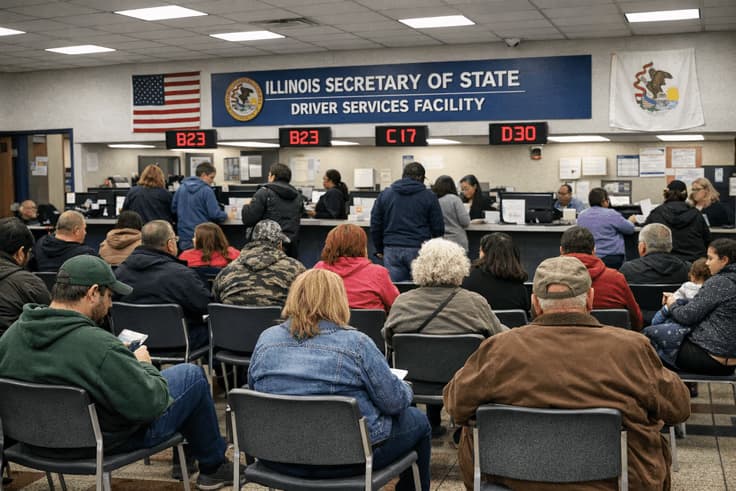
The illinois written driving test is the knowledge exam you take at a Secretary of State Driver Services facility. It's run by the Driver Services Department and Vehicle Services Department, and it exists to prove you understand the rules you'll actually use behind the wheel. Not obscure trivia. Real rules.
It's multiple-choice. It covers things like:
- Road signs, their shapes, and their colors
- Traffic laws including right-of-way
- Defensive and safe driving basics
This one trips people up.
The passing threshold sits around 80 percent. Most people describe needing roughly 28 correct answers out of 35, though the exact setup can shift depending on your license type or testing situation. Point is, you don't have a ton of room for error.
You take it in person. If you're anywhere in the Chicago metro area, expect the facility to be busy. Show up with time to spare and your head clear.
The Best Way to Pass the Illinois DMV Written Test (Step-by-Step)
There's a method that works. It's not complicated but it does require you to actually do it consistently. No hacks. No shortcuts.
Step 1: Read the Illinois Rules of the Road handbook, but read it right
Go through the whole thing once without trying to memorize every line. You're building a mental map on this first pass - signs, speed rules, penalties, right-of-way, safety basics. Big picture stuff.
Then circle back.
On the second read, slow down wherever you see words like "always," "must," or "except." Those words become test questions more often than you'd think. Illinois has some specific rules too, like the fact that you must stop for pedestrians in crosswalks - not just yield, actually stop. The hands-free phone rules also come up.
Step 2: Drill the high-frequency topics
The dmv test illinois format leans hard on fundamentals. Give extra attention to:
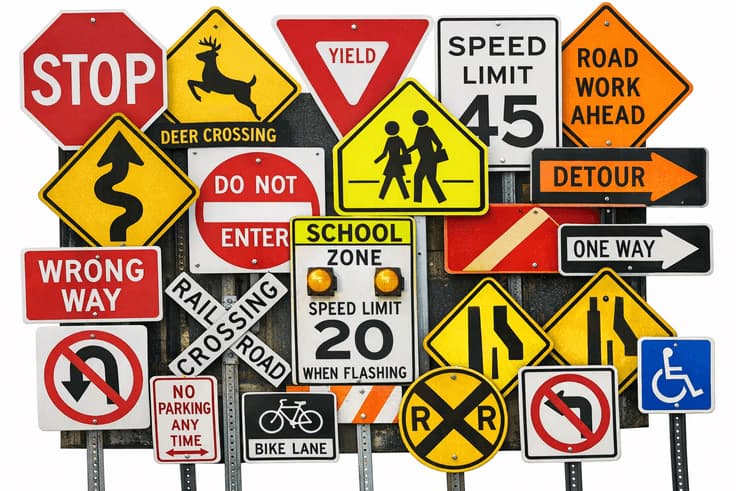
- Warning signs versus regulatory signs
- Right-of-way at intersections and during turns
- Speed limits in work zones and school zones
This one trips people up.
If you drive anywhere near downtown Chicago, you probably already know that "No Turn on Red" signs are everywhere. The written exam checks whether you understand the general turn-on-red rule and when it doesn't apply. It's a small thing that catches a surprising number of people.
Step 3: Take practice tests every single day
This is where the real progress happens. A consistent dmv illinois practice test routine turns passive reading into active recall. You stop recognizing information and start retrieving it, which is what the exam actually demands.
Daily matters.
Fifteen to thirty minutes a day is plenty. If you're cramming because your test is in three days, do more sessions but keep each one focused. You want the question patterns to feel automatic so that when you sit down for the real thing, nothing looks unfamiliar.
Step 4: Actually understand your wrong answers
When you miss a question, don't just glance at the correct letter and move on. Ask yourself why that answer is right and why the others aren't. This is genuinely where most learning happens.
Two answers often look right. That's on purpose.
Here's a tiny but common example: a question asks what you "must" do, and one of the options describes what you "should" do. Both sound reasonable. Only one matches Illinois law. Time pressure makes you misread the difference, and suddenly you've picked an answer that feels safe but is technically wrong.
Step 5: Keep going until you're consistently crushing it
Don't stop after passing one practice exam. One good score could be luck. You need a pattern.
Think 90 percent. Minimum.
That buffer matters when you're sitting in a noisy SOS facility, someone's kid is crying two chairs over, and you're trying to focus.
Step 6: Simulate real conditions
Before test day, do a few full practice runs with zero help:
- No notes open
- No pausing to look things up
- No checking answers until you're done
This one trips people up.
You're training yourself to pull answers from memory cleanly. That's the skill that actually transfers to the real exam.
Why Illinois DMV Practice Tests Are the Key to Passing
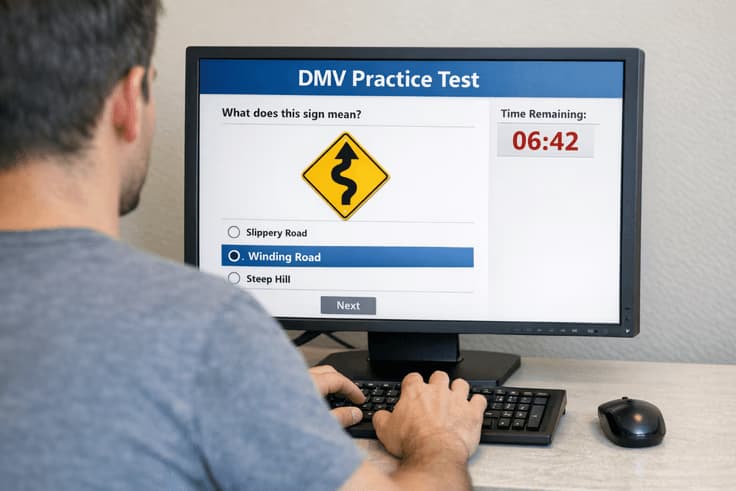
Practice exams aren't just bonus homework. They're the single most efficient study tool for the illinois written driving test because they force your brain to do exactly what the real test requires - recognize correct rules quickly under mild pressure.
Good ones mirror the SOS exam logic: clear rules, tricky exceptions, sign identification. They also do a few things that passive reading can't:
- They expose your weak spots immediately
- They build memory through spaced repetition
- They give you confidence before the real thing
This one trips people up.
People underestimate how much confidence affects performance. If you've taken thirty practice tests, the real exam feels like just another round. The questions might be different, but the rhythm is familiar. That matters.
How to Use Illinois Driving Exam Practice Tests Effectively
Not all practice is equal. Mindlessly clicking through answers teaches you almost nothing. If you want illinois driving exam practice that actually moves the needle, be deliberate about it.
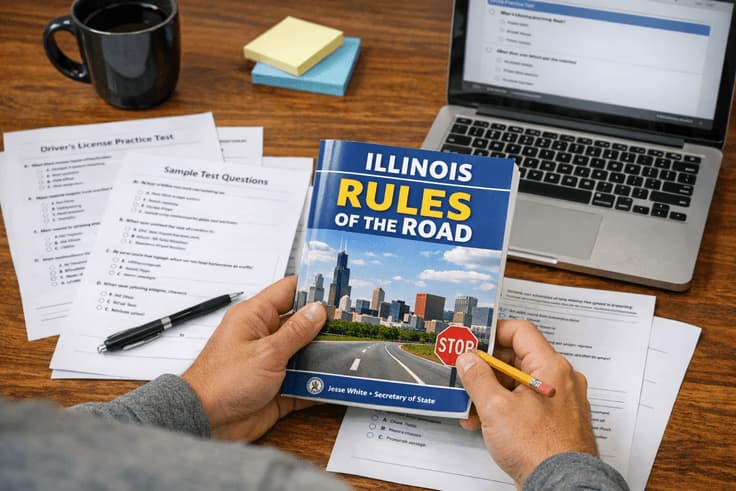
Start taking practice tests after your first full read of the handbook. Do them in short focused sessions - maybe three to five tests per sitting - and review your mistakes carefully between each one. Don't just barrel through.
Keep it tight.
A good session looks like this:
- Take a practice set
- Find every missed question in the handbook
- Retake a mixed set that includes your weak categories
This one trips people up.
Track what you're getting wrong. Even something as simple as scribbling "missed right-of-way again" on a sticky note helps you see patterns. If your test is coming up at a facility in Springfield, Peoria, Champaign, or Waukegan, this kind of targeted structure keeps you from wasting time reviewing stuff you already know cold.
Most Common Mistakes on the Illinois Written Driving Test
Most people who fail don't fail because the questions were hard. They fail because of habits.
Predictable ones.
Ignoring road signs
Everyone thinks they know signs. Then a question shows two similar-looking options and they freeze. Warning signs and work zone signs especially trip people up because the differences are subtle if you haven't actually studied them.
Reading too fast
The SOS exam uses precise language. It's not trying to trick you, but if you rush through a question, you'll miss one key word and answer something the question didn't actually ask.
Read twice. Then answer.
Guessing instead of knowing
Guessing might get you through a practice round. It won't reliably get you through the real DMV written test. Especially on right-of-way questions, where multiple vehicles and pedestrians create scenarios that require actual understanding.
Not taking enough practice tests
Reading is passive. Testing yourself is active. You need both, but the testing part is what most people skip or do too little of.
Getting fooled by "may" versus "must"
Classic mistake. The question uses one word, a tempting answer uses the other. Both sound safe. Only one is legally correct under Illinois law.
Happens constantly.
Key Topics You Must Know to Pass the DMV Test in Illinois
If your time is limited, focus here. These categories show up over and over on the dmv test illinois exam and they apply whether you're driving through downtown Chicago or rural roads outside Rockford.
Road signs and signals
Know shapes, colors, and meanings. Stop signs are obvious. Warning signs and construction zone markers are where people lose points because they look alike if you haven't studied them closely.
Know them cold.
Right-of-way
This includes four-way stops, left turns against oncoming traffic, yield situations, and merging. The Illinois pedestrian crosswalk rule is especially important - drivers must stop. Not creep forward and wave someone across.
Stop.
Speed limits and safe driving
The test cares about legal responsibility. Know posted limits versus conditions-based safe speed. Also know that going 26 mph or more over the limit counts as excessive speeding, which is a criminal offense. At 35 mph over, consequences get significantly worse.
Serious stuff.
DUI laws
You don't have to drink to need this knowledge. The test expects you to know legal limits, implied consent, and what Illinois considers impaired driving.
Defensive driving
Expect questions on following distance, scanning intersections, hazard response. Illinois-specific laws pop up here too - Scott's Law requires you to change lanes or slow down significantly for stopped vehicles with flashing lights, including emergency vehicles, tow trucks, maintenance vehicles, and disabled cars.
Remember that one.
And the statewide handheld phone ban. Using a handheld device while driving is illegal for everyone. Drivers under 19 face even tighter restrictions.
Illinois Driving Test DMV FAQ
Can I pass using only practice tests?
Technically possible. Not recommended. Practice tests teach you the format and reveal weak spots, but the Rules of the Road handbook gives you the full picture - all the rules, all the exceptions. Combining a dmv illinois practice test routine with handbook study is the fastest path to passing at the SOS.
Do both.
What happens on test day?
You'll take the written knowledge exam and, depending on your situation, possibly a road test. The written portion covers signs, laws, and safety concepts. The driving portion evaluates whether you can operate a vehicle safely and follow instructions.
Stay calm.
What do they ask during the road test?
The examiner may ask about basic vehicle controls and safety checks before you start driving. Then you'll be evaluated on turning, lane changes, signaling, and general awareness. They want safe, predictable driving.
Nothing fancy.
What causes automatic failure?
Running a red light. Blowing through a stop sign. Driving dangerously. Ignoring the examiner's instructions. Even one major safety error can end the road test immediately.
No second chances.
Is the test hard?
Not if you prepare. Most failures come from insufficient practice or misunderstood rules, not from genuinely difficult questions. If you're scoring high consistently on practice exams and you've gone through the handbook twice, you'll be fine.
What score do I need?
About 28 out of 35, which works out to roughly 80 percent. Treat that as your floor, not your target.
Aim higher.
The simplest plan that actually works: read the handbook, take a practice test every day, and review your mistakes until you stop repeating them. That's genuinely the best way to pass the DMV written test in Illinois - whether you're walking into an SOS office in Chicago, Aurora, or a small facility downstate. Prepare like it matters and it won't feel hard when you sit down.
Share