How to Avoid Car Accidents as a New Driver in North Carolina
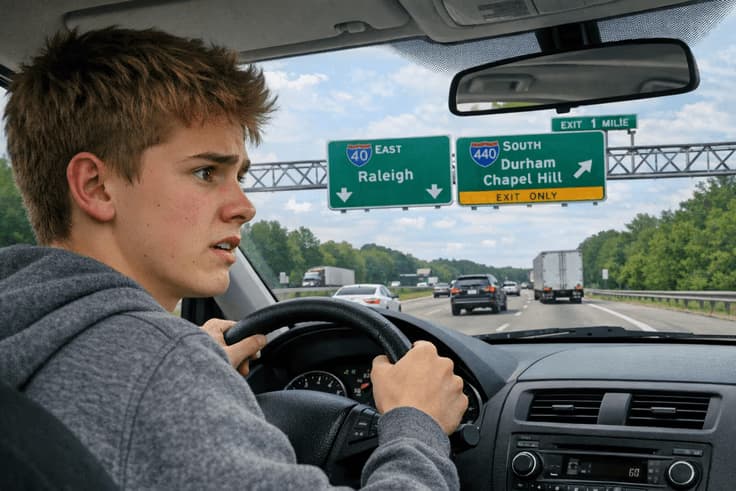
New drivers in North Carolina face a lot at once. City congestion in Charlotte, Raleigh, Durham, and Greensboro. Rural two lane roads where a curve hides everything. And weather that can flip from sunny to blinding rain in minutes.
It's normal to feel a little overwhelmed. Good.
That alert feeling is the start of safe driving.
The Division of Motor Vehicles (Transportation Department) and the DMV knowledge exam both lean hard on one theme: spot risk early, then buy yourself time and space. If you can do that consistently, you'll not only pass the nc driving knowledge test, you'll actually lower your odds of a crash.
Most Common Causes of Accidents in North Carolina
The biggest causes are not mysterious. They're the same three issues troopers see every day on I-40 near Raleigh, I-77 in Charlotte, and I-85 through the Triad.
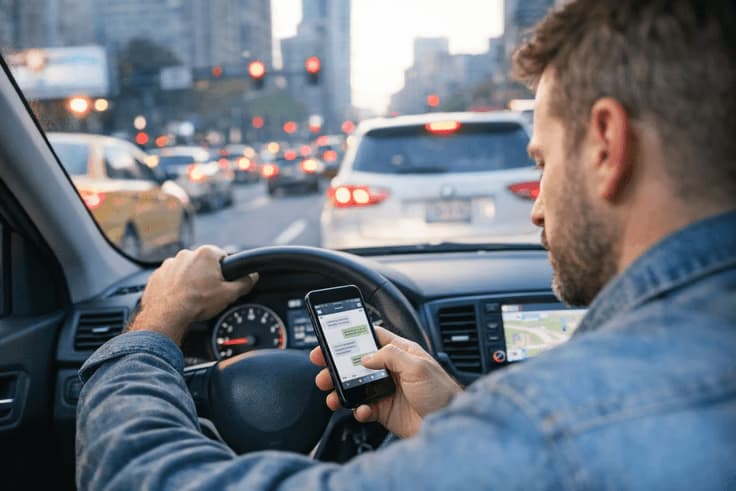
Distracted driving is #1. Speeding is close. Failure to yield is the quiet one that causes ugly angle crashes at intersections and on short freeway merges.
Look up.
North Carolina includes more questions about these risks than many states, and it shows up in wording that feels picky. Two answers look right. That's on purpose.
Here's how those top causes play out in real life:
- Distracted driving: phones, passengers, food, and even the touchscreen. Texting while driving is banned for all drivers in NC, and it's a common reason people drift across lanes.
- Speeding: not just "fast," but "too fast for conditions." A wet curve on a rural road outside Fayetteville can be more dangerous at 45 mph than an interstate at 70.
- Failure to yield: left turns, uncontrolled intersections, and merging onto NC-147 in Durham where ramps can be short and traffic moves quickly.
This one trips people up.
Also remember a very NC specific risk: speeding more than 15 mph over the limit while exceeding 55 mph can trigger a 30 day license suspension for a first offense. That's not just a ticket. It can derail school, work, everything.
How Defensive Driving Prevents Accidents
Defensive driving is not "driving slow." It's driving prepared.
Think ahead.
The DMV tests this concept because it's the skill that covers dozens of situations: sudden stops on I-485, a driver cutting across lanes on US-74 in Charlotte, or a pickup pulling out of a driveway on a country road near Wilmington.
Defensive driving means you assume other people will do something unexpected, then you position your car so their mistake doesn't become your crash.
A simple mental checklist helps:
- Space cushion: keep following distance so you can stop without panic braking.
- Escape route: don't box yourself in beside a tractor trailer on I-95.
- Eye lead time: look far enough ahead to see brake lights and lane closures early.
This one trips people up.
One more NC detail that surprises new drivers: left lane "loitering" is illegal. If you camp in the left lane on I-40 or I-85 without passing and you're holding up traffic, you can be cited. Defensive driving includes lane discipline. Keep right unless you're actively passing.
Shorter stress. Safer.
Understanding Hazardous Driving Situations
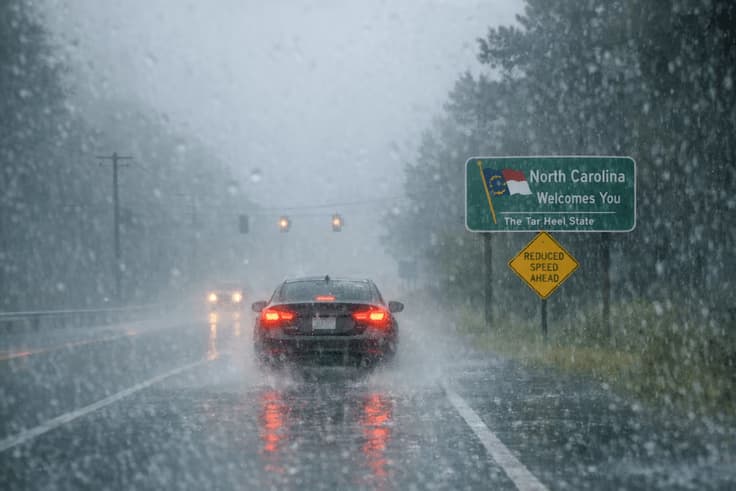
A hazardous situation is any moment where your time to react shrinks. That can be weather, visibility, road design, or human behavior.
NC tests hazard recognition more extensively than many neighboring states, so expect scenario questions where the "best" answer is the one that creates time. Not the one that feels bold.
Watch for these common hazards across North Carolina:
Weather and surface hazards In the Piedmont, freezing rain and black ice show up more than deep snow. Bridges freeze first, especially early morning near Greensboro or Winston-Salem. On the coast, wind and standing water can be serious on bridges and causeways toward the Outer Banks. In the mountains, fog and steep grades on routes like I-26 or I-40 through the gorge can change your stopping distance fast.
Slow down.
Visibility hazards Rural roads can be deceptively risky. Many new drivers underestimate how quickly a deer can jump out at dawn or dusk. If you're driving outside Cary or Concord on unlit roads, reduce speed and keep your eyes scanning the shoulder line.
Unpredictable driver hazards In cities, the hazard is often other people's last second decisions. Downtown Raleigh and Durham have pedestrians and cyclists. Charlotte has lane drops and speed changes on Independence Blvd. If someone looks confused, assume they will do something sudden.
There's also a unique NC equipment issue: the "Carolina Squat" ban. It's unlawful to operate a passenger vehicle with the front 4 inches or more higher than the rear. Besides being illegal, that stance reduces forward visibility and changes braking behavior. If you see a vehicle like that, give it extra room.
Extra room helps.
Safe Driving Habits Every New Driver Should Build
Good habits beat good intentions. Every time.
Start with the habits that prevent the most common collisions: rear end crashes, lane change sideswipes, and intersection failures.
Here are three that matter immediately:
- Follow distance: use a minimum 3 second gap in good conditions, more in rain or at night.
- Mirror routine: check mirrors on a pattern, not randomly. Especially before braking and before changing lanes.
- Intersections: slow your brain down. Look left, right, left, then check for red light runners before you go.
This one trips people up.
Seat belts are required for all occupants in NC. Make it automatic. No debate.
Also, phones. Texting while driving is illegal statewide, and even if you're 18+ and handheld calling is generally legal, it still wrecks your attention. If you're under 18, handheld phone use is prohibited. Keep it simple: set navigation, then put the phone away.
Hands off.
Finally, learn the Move Over law early. You must change lanes or slow significantly for stopped emergency, law enforcement, tow, and many service or utility vehicles with flashing lights. On busy roads like I-440 in Raleigh or I-77 near Charlotte, that means you plan your lane change early, not at the last second.
How Speed and Reaction Time Affect Safety
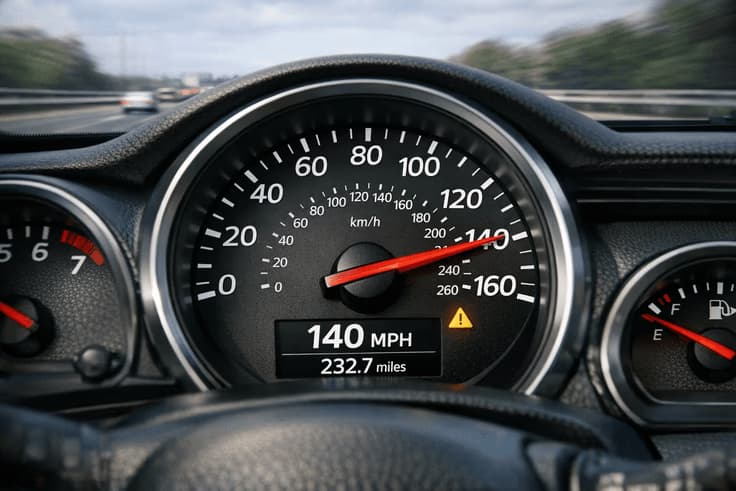
Speed doesn't just increase crash severity. It changes physics in a way new drivers don't feel until it's too late.
Less time.
At higher speeds, your stopping distance grows fast, and your brain has less time to process surprises. NC includes more scenario based speed questions than other states, so you might see items that test whether you understand "safe speed" is not always the posted limit.
A few practical examples:
- In heavy rain on I-40 near Durham, driving the limit can still be too fast if spray reduces visibility.
- In a work zone on I-85 near Greensboro, lanes narrow and traffic stops suddenly. Speeding carries enhanced fines and strict enforcement.
- On a rural curve outside Wilmington, the limit might be 45, but sight distance could demand 35.
Choose time.
Also, remember the license risk rule again because it's so easy to stumble into: more than 15 mph over the limit while exceeding 55 mph can lead to a 30 day suspension. A common trap is 71 in a 55, or 76 in a 60. People think it's "just speeding." It isn't.
And if you're thinking about using a PJC, know what it is and what it isn't. "Prayer for Judgment Continued" (PJC) is a unique NC option that can keep certain minor traffic convictions from adding license or insurance points, but it's limited and not for DWI. It's not a strategy. It's a last resort that you should understand, not rely on.
Drive like you can't erase mistakes. Because you often can't.
Mistakes New Drivers Make in NC
Most new driver mistakes are predictable. They're not about intelligence. They're about attention and confidence.
Overconfidence is a big one, especially after a few smooth drives around town. Then you hit a different environment, like the short merges on NC-147 in Durham, or the fast weaving traffic on I-485 in Charlotte, and suddenly you're behind the car instead of ahead of it.
Pause.
Here are a few NC flavored mistakes to avoid:
- Camping in the left lane on multi lane highways. It can trigger a stop if you impede traffic, and it creates aggressive passing on the right.
- Misjudging rural road risk. Curves, hidden driveways, farm equipment, and wildlife make "empty road" a dangerous illusion.
- Treating right on red as automatic. It's allowed after a complete stop unless posted otherwise, but you still must yield to pedestrians and cross traffic.
This one trips people up.
Another common testing and real world error: confusing "may" vs "must." Under time pressure, people misread. For example, you may turn right on red after stopping unless posted, but you must stop for a school bus with its stop arm out. NC is strict on school bus stops, and many districts use stop arm cameras. Don't gamble.
Never gamble.
How to Practice Safe Driving Before Your Test
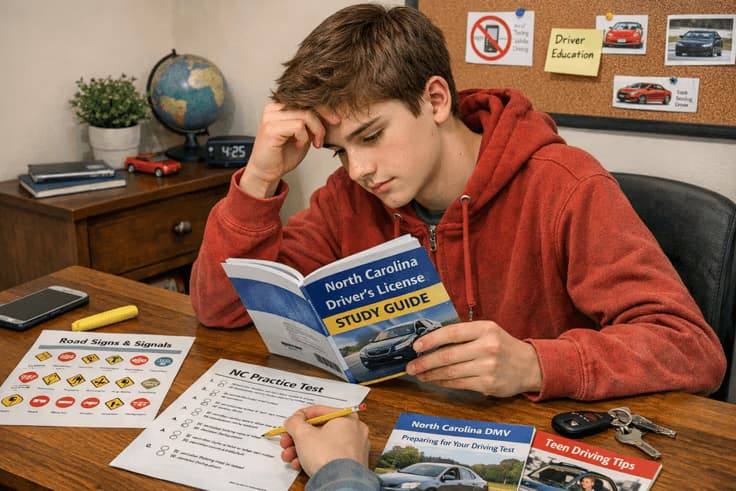
To get safer quickly, combine study with real seat time. That's the fastest path to confidence that's actually earned.
Study smart.
Use permit test practice nc tools to learn the language of questions, then go drive in the same types of places you'll face after you're licensed. Mix it up.
A practical plan that works well in NC:
- Start in low traffic areas, then add complexity: neighborhood streets, then arterials, then interstates like I-40 or I-85 with an experienced driver.
- Practice in different conditions: night driving, rain, and early morning glare.
- Do focused drills: smooth stops, lane changes with mirror-signal-shoulder check, and controlled right turns on red with a full stop.
This one trips people up.
If you live near Raleigh or Durham, include a session around one way streets and busy pedestrian zones downtown. If you're near Charlotte, practice lane selection early around interchanges and watch for toll signage near I-77 Express lanes. In Greensboro and Winston-Salem, get comfortable reading signs early because splits come fast.
And don't ignore toll roads. NC toll facilities are cashless, and NC Quick Pass works and is interoperable with E-ZPass. Knowing how to handle toll lanes reduces last second swerves.
Calm beats quick.
As you prepare for the nc driving knowledge test, keep returning to one question in every scenario: "What creates more time and space?" That's the heart of how to avoid car accidents, whether you're driving through Cary at rush hour or on a quiet rural road at dusk.
Drive patient. Drive ready.
Share