North Carolina Right-of-Way Rules Explained Simply in 2026
Right-of-way sounds straightforward until you're actually sitting at an unmarked intersection in south Charlotte with someone across from you doing the exact same hesitation dance. Then nothing feels clear.
It matters enormously.
The NC permit test doesn't just quiz you on definitions. The Division of Motor Vehicles throws real judgment calls at you, the kind where two answers look right and the difference comes down to one word you almost skipped. May versus must. Yield versus stop. Time pressure makes you misread those tiny distinctions faster than you'd think.
So let's walk through this like you're studying at your kitchen table the night before.
What Right-of-Way Means in North Carolina
Right-of-way isn't about winning. It's about yielding.
Understanding nc right of way rules starts with accepting something counterintuitive: having the right-of-way doesn't mean you should always go. It means you're permitted to proceed when it's genuinely safe. The DMV expects you to choose caution even when the other driver is dead wrong.
Think about it.
Someone blows through a yield sign on Battleground Ave in Greensboro. You had the right-of-way. Doesn't matter. If you could've avoided the collision and didn't, there's a problem. North Carolina law still expects reasonable effort on your part.
That philosophy runs through everything below.
Right-of-Way at Intersections
Intersections are where most right-of-way questions live on the test, and where most confusion happens on actual roads in Durham, Winston-Salem, and dozens of smaller towns where signals don't exist at every corner.
Uncontrolled intersections
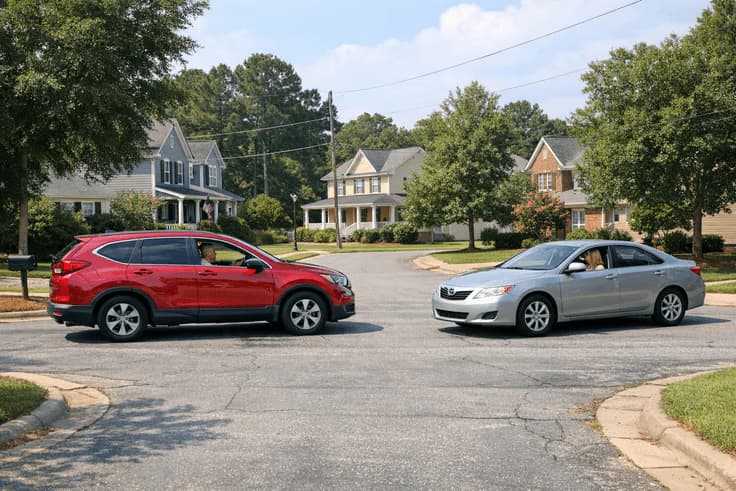
No sign. No light. Just two roads meeting. At these spots in North Carolina, you yield to:
- Any vehicle already inside the intersection
- A vehicle coming from your right if you both arrive simultaneously
- Anything creating an immediate hazard
This one trips people up.
The "yield to the right" rule is simple on paper. Under test anxiety or real driving stress, people blank on it completely. If you arrive at the same moment as another car, the driver on the left gives way. That's it.
Four-way stops versus two-way stops
Four-way stop: first to arrive, first to go. Same-time arrival means the driver on the left yields to the one on the right. Done.
Two-way stops are sneakier. Stopped traffic must yield to the cross traffic that doesn't have a stop sign. This specific scenario appears on the nc on the road driving test constantly because new drivers either freeze too long or pull out way too early. Neither works.
Left turns
Left turns are a favorite trap.
Even with a green light, if you're turning left you must yield to oncoming vehicles going straight or turning right, plus pedestrians already crossing or about to enter the crosswalk. A green light does not mean go blindly.
On busy corridors-think Independence Blvd in Charlotte or the Wade Ave ramps around Raleigh-signal changes come fast and turn lanes are short. Don't chase a yellow. NC testers want to see that you resist the "I thought I could make it" impulse.
Pedestrian Right-of-Way Rules in NC
North Carolina protects pedestrians aggressively, and the DMV tests this way more than most people anticipate.
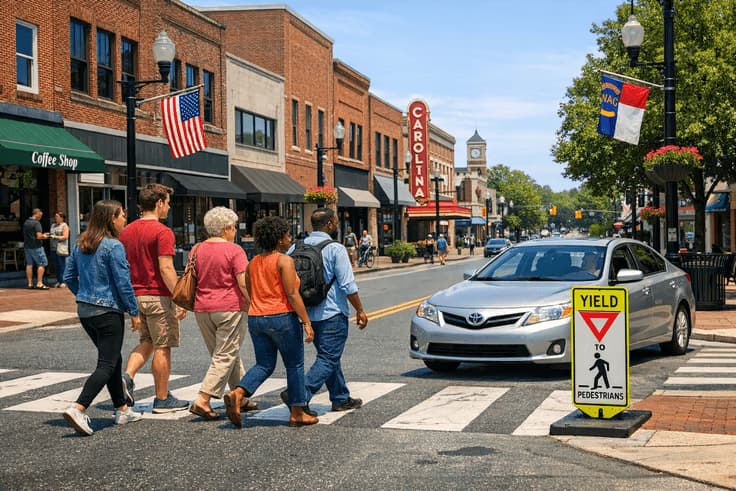
Pedestrians generally hold the right-of-way:
- At marked crosswalks and most unmarked crosswalks at intersections
- When a walk signal is displayed
- When they're already in the roadway and you can safely stop
This one trips people up.
Here's the misconception that burns people: thinking pedestrians only matter where paint is on the road. In plenty of city intersections across Cary, Wilmington, and downtown Durham, crosswalk markings are faded or gone entirely. If it's an intersection, the crosswalk is still implied. Treat it seriously.
Turning drivers need to be especially alert. Right on red is allowed after a full stop unless a sign says otherwise, but you still yield to pedestrians crossing with the signal. That question shows up in almost every version of the test, and the wrong answer usually involves one tiny word difference.
Tiny word. Big outcome.
Emergency Vehicles and Special Situations
Flashing lights and a siren mean yield immediately. Pull right and stop, unless that creates a worse danger.
Act early.
In practice, multi-lane roads like I-40 through the Triangle or I-85 near High Point are where this gets chaotic. Drivers panic, brake randomly. The DMV wants steady, predictable movement from you-not last-second swerving.
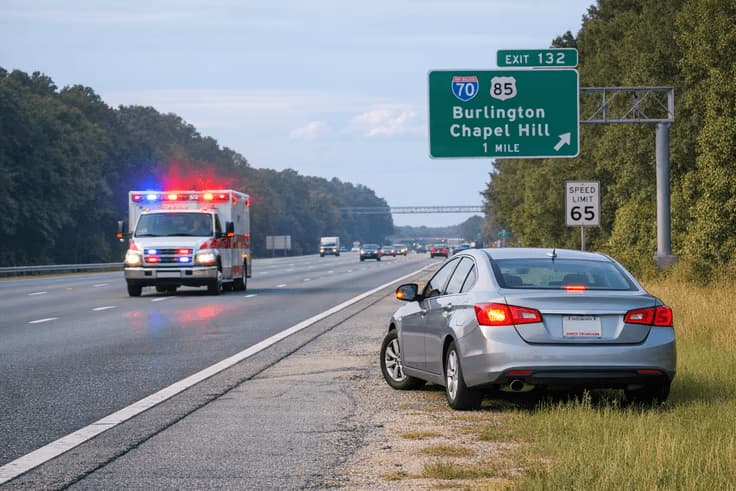
North Carolina's Move Over law matters here too. When emergency vehicles, tow trucks, or certain service vehicles are stopped with lights flashing, you either:
- Change lanes away from them
- Slow down significantly if you can't move over
- Pass with real caution
This one trips people up.
The driving test dmv nc exam includes Move Over questions because they're about applied judgment, not rote memorization. Knowing the law isn't enough. Knowing when and how to act on it-that's the point.
Common Right-of-Way Mistakes on the NC Test
People don't miss right-of-way questions because the material is hard. They miss them because they rush. The diagrams look basic, but details hide in plain sight.
Mistakes that keep showing up:
- Assuming the bigger or busier road automatically has priority
- Blanking on "yield to the right" at uncontrolled intersections
- Turning right on red without checking for pedestrians first
This one trips people up.
Another common error is misreading arrival order at a four-way stop. The DMV loves multi-car scenarios. If you're running through driving test practice NC material at home, try saying the answer out loud before selecting it. Who stopped first. Who's on the right. Who's turning left.
Say it. Then click.
Watch for layered situations too. One car turning left, one going straight, a pedestrian stepping off the curb-all at once. The correct response is almost always yield and wait, even when you technically have a green. NC values patience over speed every single time.
How NC Right-of-Way Rules Differ from Other States
The basic principles aren't wildly different. The testing philosophy is.
More scenarios. More nuance.
Compared to neighboring states, North Carolina puts heavier weight on pedestrian protection and defensive decision-making. That's why nc driving road test requirements so often center on intersections, crosswalks, and your reaction when another driver does something unpredictable.
NC also cares about practical lane behavior. Cruising in the left lane when you're not passing can earn you a citation for impeding flow. That's not a textbook right-of-way issue, but it reflects the same idea: roads have order, and ignoring it has consequences.
Distraction matters too. Texting while driving is banned statewide. If you're not paying attention, you miss every right-of-way cue that keeps you and everyone else safe.
Every one.
Best Way to Learn and Remember Right-of-Way Rules
Memorizing bullet points won't save you. Pattern recognition will, because the test hands you situations and asks what you'd do-not what you'd recite.
Here's what actually works for people preparing for the road portion and the written exam:
- Run through intersection diagrams daily, not weekly
- When you're stuck between two answers, default to yielding
- Build a mental script: pedestrians first, then oncoming traffic, then the vehicle on your right
This one trips people up.
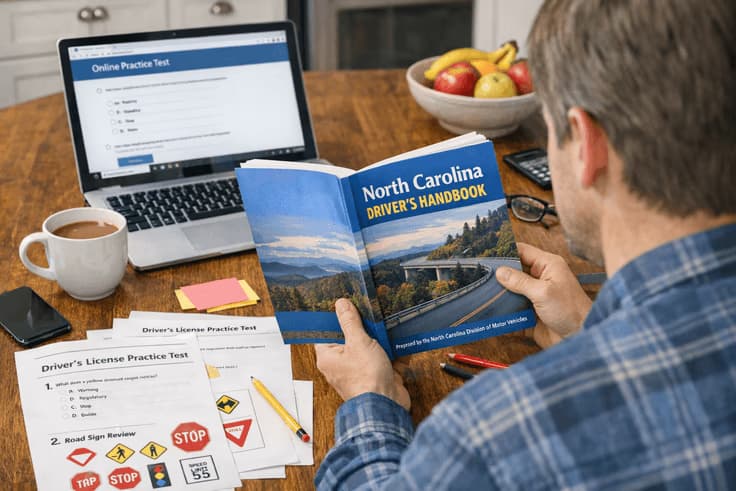
If you're getting ready for the on-the-road driving exam in NC, spend some time observing before you practice driving. Head to an area with lots of intersections and foot traffic-downtown Raleigh, Uptown Charlotte, the university blocks in Greensboro or near Duke in Durham. Watch how yielding actually plays out. Call out who should go as you approach each intersection.
Quietly. To yourself.
One last thing. Focus on the exact words the DMV uses in its questions. Yield, stop, must, may, immediately. These are not interchangeable, and North Carolina questions regularly hinge on the single word you glazed over because you were reading too fast.
That's the whole game, honestly.
Right-of-way isn't about being aggressive or bold on the road. It's about being correct and composed. If you can manage that under pressure-on the permit test, the road test, or real afternoon traffic on Capital Blvd-you'll be fine.
Share