CDL Air Brakes Practice Test NY: The Questions That Trip Most Drivers
The air brakes portion of New York's CDL exam is where people who felt ready suddenly don't feel ready anymore. Not because the content is unreasonable. Because the questions are built to check whether you actually understand what's happening inside the system, or whether you just memorized labels on a diagram and hoped for the best.
It's picky.
If you're already looking into a cdl practice test ny air brakes guide, that's smart. The NY DMV doesn't hand out points for close guesses, especially when a question sneaks in one word - "may" instead of "must" - and you're reading too fast to catch it.
What the NY Air Brakes Test Includes
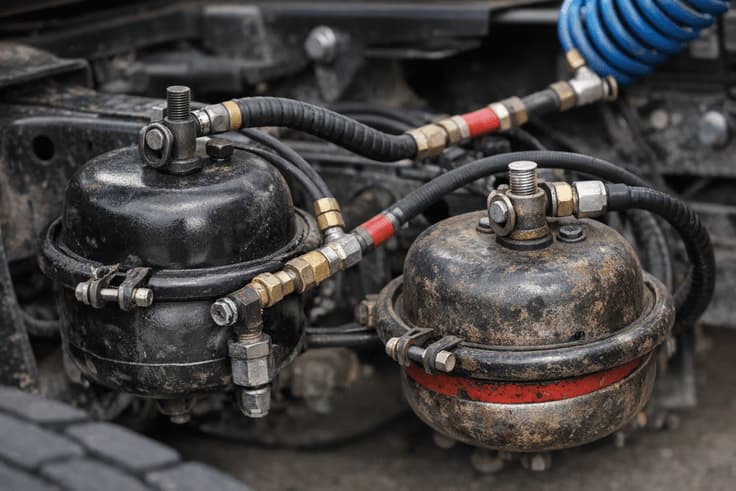
Most people start studying air brakes by learning vocabulary. Compressor, governor, tanks, slack adjusters, all of it. That's fine as a starting point, but New York's test expects more than definitions. It wants you to connect a component to what actually happens when it works - and more importantly, when it doesn't.
Think about it like: "If this part fails, what goes wrong next?"
The DMV organizes air brakes content around three areas: parts, operation, and safety procedures. In practice though, those categories blur together. You'll get questions that start with a definition and end by asking what decision you'd make on a snowy highway outside Buffalo or while crawling through midtown Manhattan traffic.
You'll see questions on:
- System components and their function
- Normal pressure ranges and when warning devices kick in
- Pre-trip inspection steps and pass-fail thresholds
This one trips people up.
New York leans hard into cause-and-effect. If you've taken an air brakes cdl practice test ny and walked away thinking "two answers looked right," that's usually because one answer is true in general, but the other one matches the exact condition described in the question. Subtle difference. Costs people points constantly.
Most Difficult Air Brake Questions in NY
Some questions are hard because they're multi-step and you have to hold three facts in your head at once. Others are hard because a single word flips the correct answer entirely.
Read slowly.
Here's where people consistently lose points on the NY air brakes exam.
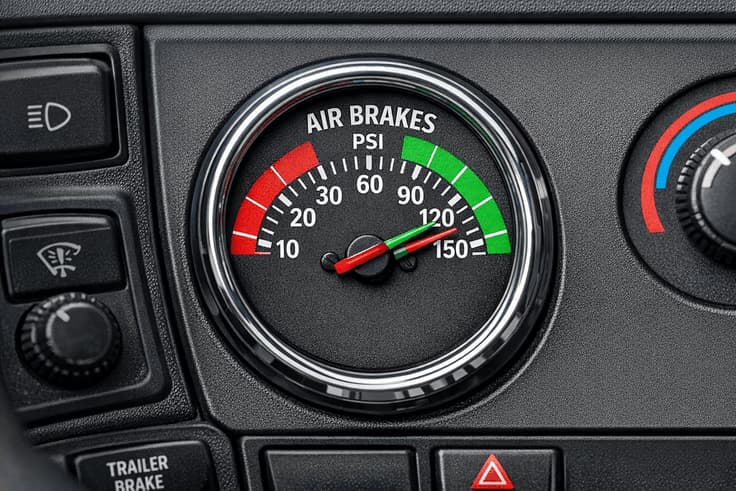
Pressure levels and warning thresholds. New York loves asking about gauge readings, when warnings should activate, and what you're supposed to do in response. These aren't trivia numbers. They're safety triggers, and the test treats them that way. If the question describes pressure dropping, don't jump straight to the fix - figure out what the system is signaling first, then pick the response that matches safe procedure.
Failure response scenarios. You'll get situations like air pressure building too slowly, low air warnings coming on, or parking brakes applying on their own. The trap is choosing the answer that sounds proactive but actually skips a required step.
Stop. Secure it.
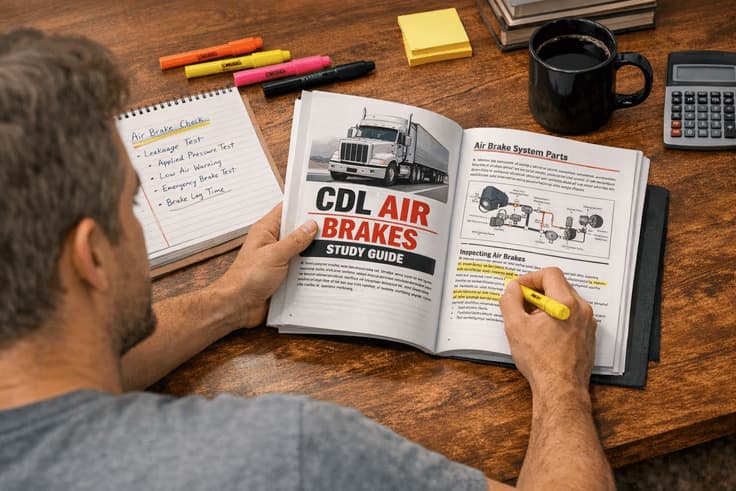
Brake inspection logic. A lot of applicants can recite the inspection steps but can't explain what each step proves. NY will describe a check and then ask what it tells you about leakage, spring brakes, or the governor cut-out. And the wording gets tight - time pressure on test day makes people skim, and they miss "while driving" versus "during the pre-trip." That distinction matters.
Why Air Brakes Are Harder Than Other CDL Sections
Other CDL sections can feel like collecting rules. Air brakes feels like troubleshooting a machine. Shallow studying gets punished here faster than anywhere else on the exam.
It's a system.
New York also expects you to apply knowledge to actual driving conditions. In New York City you're stopping every block, dealing with aggressive lane changes, and leaving way less following distance than you'd prefer. Upstate near Syracuse, you might be managing long downgrades in winter with road salt and ice patches. The test reflects those realities by emphasizing safe braking decisions over terminology recall.
Common Mistakes That Lead to Failure
Most failures on this section come from a short list of predictable mistakes. They're all avoidable - but only if you recognize them before test day.
Mixing up stopping distance concepts. People lump "reaction distance," "brake lag distance," and "braking distance" into one mental bucket and treat them interchangeably. On air brakes questions, brake lag is its own thing.
Brake lag exists.
If you ignore it, your answer might look reasonable and still be wrong.
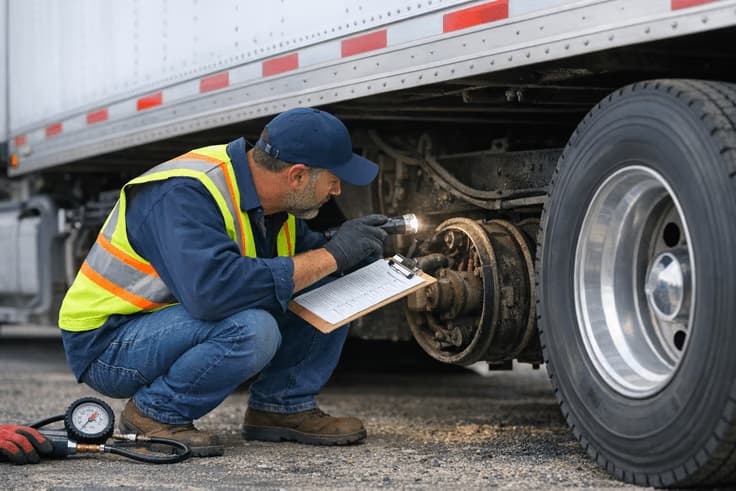
Skipping inspection details. Applicants study until they can recite the pre-trip sequence, then they stop. But NY asks what the result of each check means. If you don't know what you're actually proving with a given step, you'll freeze when the question is worded in reverse.
Treating pressure questions like guesswork. If you "kind of remember" the numbers, you'll miss the question. New York uses pressure-related items as a filter because commercial drivers need to respond to gauge readings without hesitating.
Numbers matter.
NY vs Other States: Air Brake Test Differences
If you've been using practice materials from Ohio or Texas or wherever, be careful. New York tends to include more scenario-based questions and more "what should you do next" logic than a lot of other states.
More scenarios. Less memorizing.
NY's driving environment plays into this too. Urban congestion around NYC, Yonkers, and Mount Vernon means constant stops and tight gaps between vehicles. Meanwhile, drivers around Albany, Rochester, and Utica deal with more seasonal hazards and longer stretches where brake management really matters. The DMV test leans into safe operation under all of those conditions.
Also - and this is the part that catches people off guard - NY questions regularly include small details that change the correct answer:
- Whether the vehicle is moving or parked
- Whether you're on a grade
- Whether you're mid-inspection or mid-drive
This one trips people up.
One word shifts the right answer, and if you read at normal speed you'll miss it.
How to Study for the Air Brakes Test Effectively
If you're prepping for the dmv ny cdl permit test, the best thing you can do is stop treating air brakes like one big chapter. Break it into smaller chunks and drill each chunk until you can explain it out loud in plain language without looking at your notes.
Keep it simple.
A solid approach looks like this:
- Learn the components and understand the airflow path first
- Master the pre-trip checks and what each check actually proves
- Take timed practice questions to train yourself to read carefully under pressure
This one trips people up.
When you work through a NY air brakes CDL practice test, don't just mark answers right or wrong. Write one sentence explaining why the correct answer is correct. That's what builds the "scenario muscles" New York is actually testing. It's annoying. It works.

If you're also studying for a cdl b permit practice test ny or the cdl class a permit test ny, the air brakes section can feel like it slows your momentum. It does. But it's also one of the fastest ways to build real safety knowledge because it forces you to think like a driver, not someone gaming a multiple-choice exam.
Slow down. Win points.
One more practical tip: take at least a couple of practice sets on your phone somewhere noisy - a break room, a busy café, wherever. Not because it's fun. Because that's closer to the distraction level you'll face on test day, and it trains you to stop skimming.
How Passing the Air Brakes Test Affects Your CDL
Passing the air brakes knowledge test matters more than people realize. If you don't pass it, you end up with an air brake restriction stamped on your license, which limits what vehicles you can legally operate.
Restrictions hurt.
If you're aiming for broader commercial work across New York State - routes through New Rochelle, Schenectady, or down into NYC - removing that restriction keeps more trucks and more employers on the table. It also tells companies you can handle safety-critical systems and inspections without cutting corners.
That's the whole point of this section. Not to trick you. To make sure you're actually ready for what the job demands.
Be ready.
Share