Ohio Maneuverability Test: Layout, Scoring & Tips
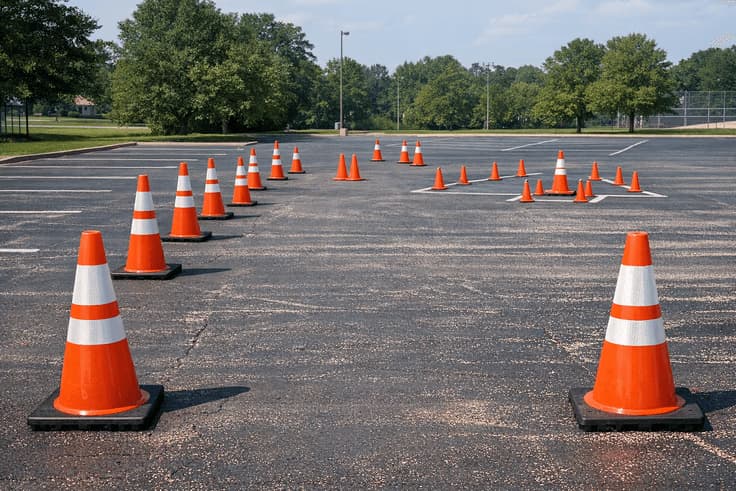
The ohio maneuverability test is the section of the driving exam that gets inside people's heads. It's weirdly artificial. Cones in a parking lot, low speed, no traffic - and yet it knocks out otherwise decent drivers on a regular basis. The reason isn't skill. It's unfamiliarity.
In Ohio, you have to pass it as part of the full road exam through the Bureau of Motor Vehicles. First-time applicants across Akron, Dayton, Parma, Canton, Lorain, and Hamilton don't usually fail because they're bad behind the wheel. They fail because they never ran through this specific pattern enough times beforehand.
Good news though. It's learnable.
What Is the Ohio Maneuverability Test and Why It Matters
The maneuverability portion of the ohio maneuverability driving test is all about low-speed vehicle placement. Can you put your car exactly where it needs to be without jerking the wheel or panic-braking? That's what the examiner wants to see. Think parking-lot precision, not highway confidence.
Slow speed. Tight space.
They're evaluating a short list of things:
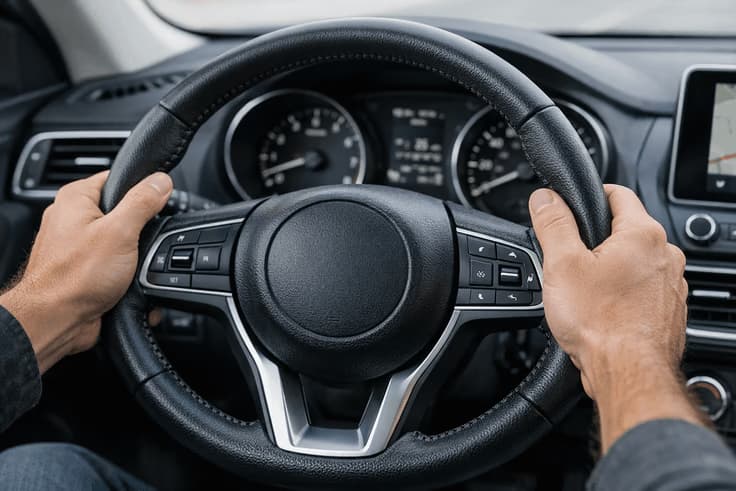
- Smooth steering without overcorrecting
- Controlled speed, both forward and in reverse
- Spatial awareness of your bumpers, especially while backing
This one trips people up.
It matters because this section is a hard gate. You can nail the road portion of the ohio driving test maneuverability requirement and still walk away without a license if you pile up too many points on the cones. That's frustrating, but it's the system.
Ohio Maneuverability Test Layout Explained
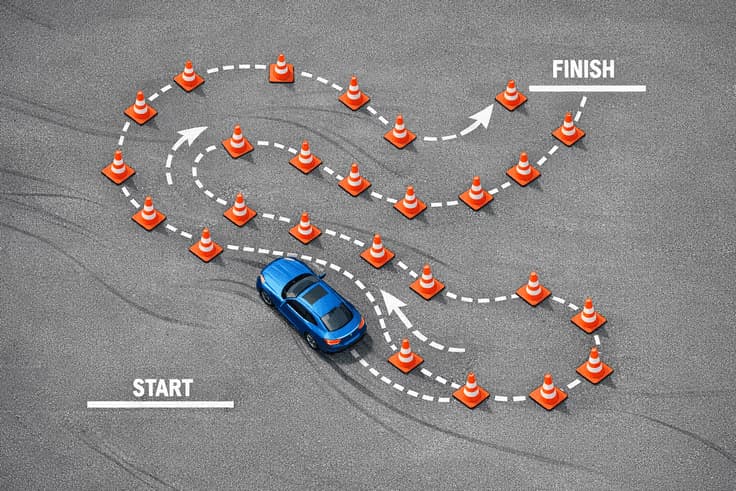
The ohio maneuverability test layout is built around cones forming a narrow corridor you drive into forward and reverse out of at an angle. Exact cone spacing might shift a little depending on which testing site you're at, but the structure is the same everywhere. If you learn the method, it'll transfer from a BMV lot in Dayton to a suburban location near Parma without any issue.
Picture this.
Two cones sit at the entrance forming a gate. Past them, more cones create a lane - but they're offset, not straight. One pair sits deeper on the left, another pair deeper on the right. You can't just drive in and reverse straight back. You angle in, straighten, then angle out the opposite way.
Here's the general flow:
- Line up outside the course, centered on the entry gate
- Pull forward through the cones, steering into the offset corridor
- Stop when your car reaches the far end position
This one trips people up.
Then you reverse. You steer the opposite direction, threading back through the offset and out the entry gate. It's basically an S-shape going in and a mirrored S-shape coming back out.
What makes it feel harder than it actually is? The offset. Your brain wants symmetry, and there isn't any. You have to place the car precisely, then undo that placement in reverse, which feels backwards in every sense.
Every site also has quirks. In Akron, some locations near the Central Interchange area have tight pavement edges that make you feel boxed in by curbs even though you have room. In Lorain, wind across open lots can make your grip tighten up without you noticing. Small things. Still manageable.
How Scoring Works in the Ohio Maneuverability Test
Ohio maneuverability test scoring uses a point system. You start at zero and the examiner adds points for each mistake. Accumulate too many and you fail this section regardless of how the rest of the exam goes.
Not mysterious. Just strict.
The common point-earning mistakes include:
- Hitting or displacing a cone
- Crossing outside the boundary of the course
- Excessive stopping or hesitation that signals loss of vehicle control
This one trips people up.
Here's a detail people miss: a cone tap and a cone knockdown are both costly, though severity matters. And crossing outside the course boundary is usually a heavy penalty - sometimes an automatic fail depending on how far you go.
Under time pressure, something interesting happens. Two "safe" options look equally right, and most people pick the one that feels calmer, which is usually stopping too early. That forces a sharper reverse angle and almost always leads to clipping a cone on the way out.
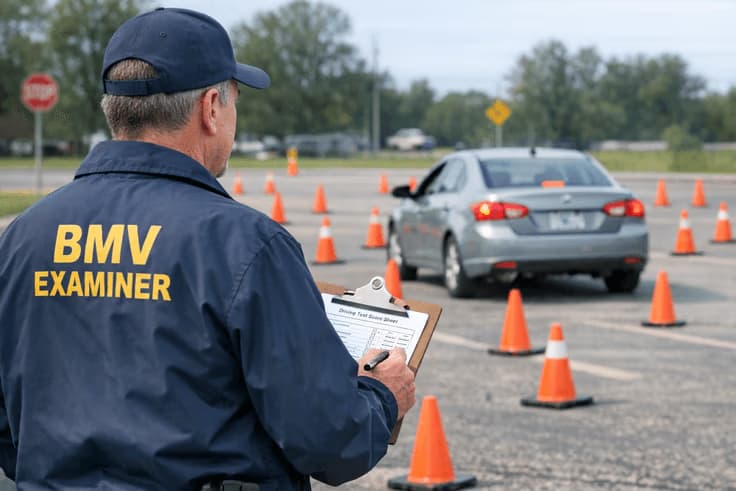
Examiners also watch how you handle the vehicle overall. Jerky inputs, rushed corrections, repeated adjustments - all of that makes cone contact more likely. The scoring isn't about style. Control matters.
If you're looking up the scoring rules for the bmv maneuverability test ohio locations use, the safest mindset is to assume every cone contact counts and practice until you can run the course clean. That gives you a real cushion on test day.
Step-by-Step Guide to Completing the Maneuverability Course
Here's the simplest way to approach the maneuverability course at any Ohio BMV testing site. Same routine, every time.
Set up first.
1) Line up at the entrance gate
Get your car straight and centered between the entry cones before you start moving. If you're already crooked at the start, everything downstream gets worse.
2) Drive forward into the course
Once you pass the entry cones, look ahead toward the far cones - not down at your hood. Steer one smooth arc into the offset lane. Don't rush.
One clean arc.
3) Stop at the correct point
You'll either be told when to stop or you'll know based on when your vehicle reaches the far end. Don't creep forever. Don't stop short either.
Pause. Breathe.
4) Reverse out, steering the opposite direction
Turn your head. Use your mirrors. Back slowly. As the rear of your car clears the inside cones, unwind the steering to straighten, then guide yourself back toward the exit gate.
Slow is fast.
5) Exit through the gate cleanly
Back out without touching anything and without leaving the boundary. Once you're through, stop when instructed.
Done.
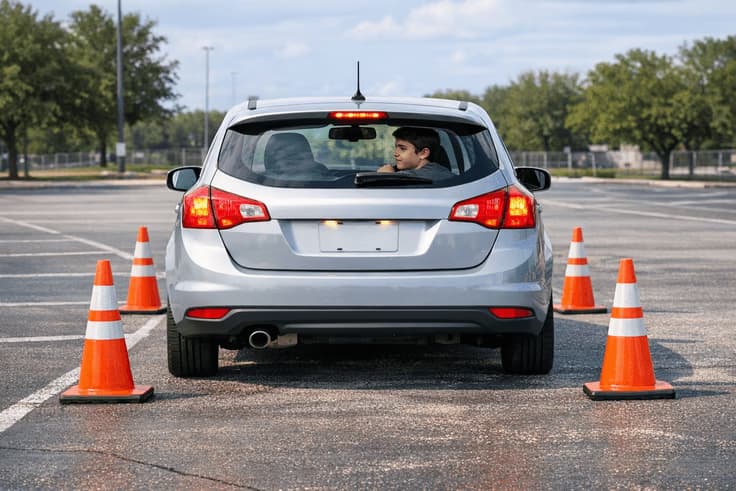
If you practice this sequence in an empty lot in Canton or Hamilton - even just twenty minutes a few days running - you'll start to feel the shape of the course physically. That's when it clicks.
Common Mistakes and How to Avoid Them
Almost every mistake traces back to one of two problems: turning too late on entry, or trying to fix a small error too quickly.
Oversteering happens.
The big ones:
- Turning the wheel too sharply going in, which wrecks your reverse angle
- Stopping too early and then needing extreme steering to recover
- Backing too fast and chasing cones with rapid corrections
This one trips people up.
The fix is practicing with a consistent reference point. When your shoulder lines up with a specific cone, that's when you begin your steering input. Not when you "feel ready." Feelings shift dramatically on test day.
Don't stare at one cone either. Scan. Your eyes need to move between the mirror view and the next open space you're aiming for.
And one more thing - you can be cautious without being frozen. Excessive stop-start driving creates more corrections, not fewer.
Ohio Maneuverability Test FAQs
Is the ohio maneuverability test hard? Challenging at first because it's unfamiliar. With repetition it becomes almost boring. That's the goal.
How many attempts do I get? You can reschedule and retake after more practice if you don't pass. Check your local BMV testing location for current scheduling rules.
What causes an immediate failure? Major boundary violations or severe cone impacts can trigger an outright fail. Smaller errors add points until you hit the limit.
Are all locations identical in cone distances? The pattern is standardized but spacing can vary slightly by site. That's exactly why learning control and reference points matters more than memorizing one set of measurements.
Beginner Tips for Passing the Maneuverability Test
If you want to know how to pass maneuverability test ohio applicants consistently struggle with, focus on calm repetition over marathon practice sessions.
Consistency wins.
Try these ohio maneuverability test tips:
- Practice 15 to 20 minutes at a time across several days instead of cramming one long session
- Set up small markers like cups or cones to recreate the offset pattern in an empty lot
- Pick one steering method - hand-over-hand or shuffle - and commit to it so you're not improvising under pressure
This one trips people up.
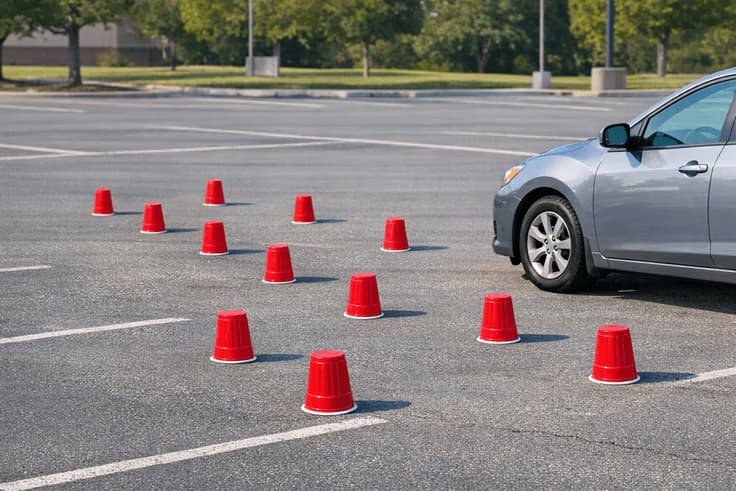
On test day, keep Ohio's general testing culture in mind. Examiners want controlled, legal, predictable driving. Low speed, full stops when required, clear head checks when backing. Nothing flashy.
One last thing - if you've been practicing around busier corridors like Dayton near I-70/I-75 or in Parma's tighter suburban streets, don't let traffic energy follow you onto the test course. The maneuverability section is not a race. It's accuracy and placement.
Quiet hands. Slow wheels.
You've got this.
Share