Can a Rider Course Waive the Virginia Motorcycle Skills Test? (2026)
Yes. If you finish an approved Virginia Rider Training Program course, that can take the place of the virginia motorcycle road test at the DMV. The completion certificate waives the road test requirement. You still have to pass the written knowledge test though. No way around that one.
So whether you live out in Virginia Beach, over in Norfolk or anywhere else in the state and you've been eyeing a Class M, I'd look at the course first, since you get real coaching on a bike and walk away with the waiver at the end (just double-check the current waiver rules and any fees on the Virginia DMV site, because I won't quote numbers that can change).
Can a Rider Course Replace the Virginia Motorcycle Skills Test?
Yes. Pass a Virginia Rider Training Program course and you can usually skip the dmv virginia motorcycle driving test. That's the official position from the Department of Motor Vehicles.
But the knowledge test is separate. The written exam still comes first, because that's what gets you your motorcycle learner's permit, and the course doesn't do anything to get you out of it.
The way I see it, the DMV is giving you credit for putting in real hours on a bike with somebody coaching you. You demonstrate skills in a controlled environment with instructors watching. If you pass the course, the DMV trusts that you've already shown what the road test would measure.
Before you sign up anywhere, pull up the virginia motorcycle license waiver details on the Virginia DMV site, since what a friend told you a couple of years back might not be how it works now.
What Is the Virginia DMV Motorcycle Skills Test?
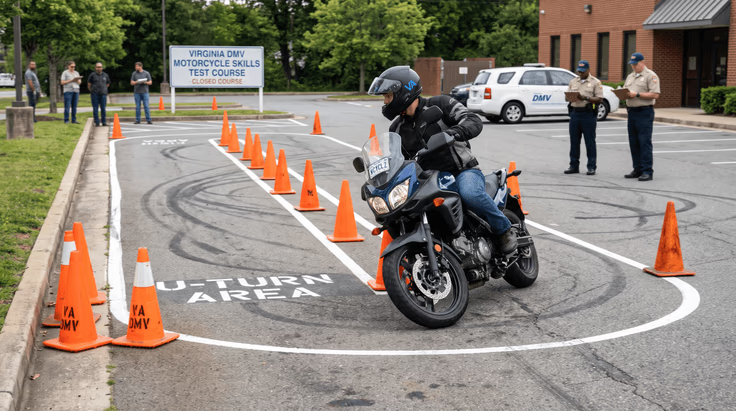
If you go the DMV route, the dmv virginia motorcycle driving test happens on a closed course with an examiner watching you ride. Slow control. Tight turns. Swerving. Quick braking. You're scored on each one.
You must bring your own motorcycle. It has to be properly registered and insured. If you don't own a bike yet, that rules out this route.
The test is by appointment only. Not every office runs it, so you might end up riding a ways to one of the approved locations, and I'd call ahead instead of just showing up.
Common failure points? The ones I see most are a foot dropping down halfway through a tight U-turn and a stall or a wobble on the quick stop. One mistake can end the test. A lot of my students hear that and decide they'd rather practice those moves on a course bike first.
How the Virginia Rider Training Program (VRTP) Waiver Works
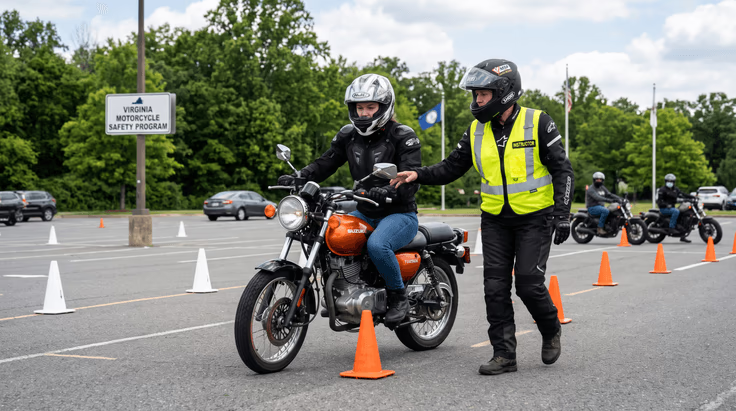
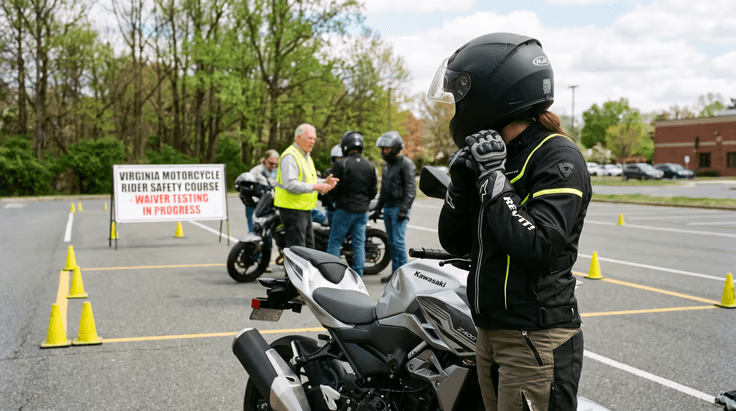
There are VRTP courses for people who've never ridden and also ones for riders who already have some miles under them. Most beginner courses provide the motorcycle. You show up with a helmet and gloves. They hand you a bike.
You spend hours on drills. Clutch control. Head turns. Emergency braking is part of the range drills. Instructors correct you in real time. At the end, you take a skills evaluation. Pass that, and you get a completion certificate.
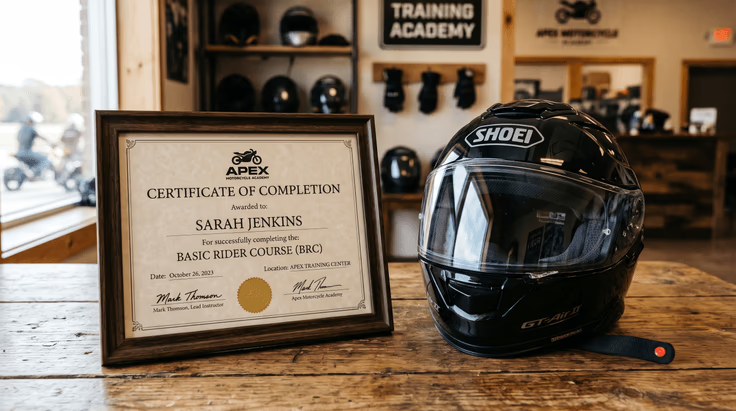
That certificate is what waives the DMV skills test. You take it to the DMV, and they add the Class M designation without making you repeat the road test.
Benefits go beyond the waiver. You get coaching from people who ride. Some insurers discount approved course graduates. And since the school hands you a bike, you can take the class before you've spent a dime on a motorcycle of your own, which I think is the smart order anyway.
The Virginia DMV website keeps a list of approved training sites, so start there when you're picking one. They list certified training sites. Some are at community colleges. Others are private schools. If you're up in Northern Virginia or down around Hampton Roads you'll usually have a few to pick from.
Which Route Is Right for You: Skills Test or Course?
If you've been riding for years and already have a bike that's registered and insured, the DMV skills test might be the faster way for you. Show up. Pass. Done.
But if you're new, the course is the better route. It builds confidence. You learn proper technique instead of guessing. And you avoid the risk of failing the road test and having to rebook.
Cost is a factor. The course isn't free. But think about what a failed road test costs you in time off work and another wait for an appointment, and then add the coaching you get on the course, and for most new riders I'd say it comes out ahead.
Wait times matter too. DMV appointments can be weeks out. Rider courses fill up in spring and summer, especially near Virginia Beach and Richmond. Plan ahead.
Whichever way you go, Virginia wants you in a helmet and eye protection when you ride. Some schools will loan you a helmet for class, but I'd show up in your own if you have one, since it'll fit right and you'll be wearing it on the street later anyway.
Steps to Get Licensed Using a Rider Course
Here's the path if you use the course route.
First up is the knowledge test for your learner's permit, and for that I'd read the Virginia Motorcycle Operator Manual all the way through, not just skim the chapters that look hard. Take practice tests.
Second, enroll in an approved VRTP course. Choose a beginner course if you're new. Experienced courses exist too.
Third, complete the course. Pass the on-bike evaluation. Get your completion certificate.
Fourth, go to the DMV. Present your certificate. Pay whatever fees apply. They add the Class M to your license.
Take your ID and the other documents on the DMV's list with you, because nothing's worse than getting to the counter and being sent home for a missing piece of paper. Confirm current fees on the DMV site. Don't guess.
For the written test, use Drivio's Virginia motorcycle practice tests. Drivio's Virginia motorcycle practice tests mirror the VA motorcycle permit practice test format. Two answers look right sometimes. The more of them you do, the faster you'll spot which one the manual actually backs up.

The exact steps for using the certificate can shift a bit, so I'd read the waiver page on the Virginia DMV site once more right before you go in.
Virginia Motorcycle Skills Test and Waiver FAQ
Can a rider course waive the Virginia skills test? Yes. Finish an approved Virginia Rider Training Program course and it can count in place of the virginia motorcycle road test, so you won't have to ride for a DMV examiner.
Is the written test still required? Yes. You must pass the knowledge test for a learner's permit before the course or before licensing.
What is on the skills test?
- Slow-speed control
- Turning
- Swerving
- Braking
An examiner scores each maneuver.
Do I need my own motorcycle for the DMV test? Yes, if you take the DMV skills test. If you go the course route as a beginner, though, the school puts you on one of their bikes.
How do I find an approved course? Go to the Virginia DMV website and look up the approved training sites, then pick whichever one's closest or has open dates.
These rules do get updated from time to time, so give the Virginia DMV site a look before you pay for anything.
Practical Questions About the Rider Course Route
How long is the VRTP course? Most beginner courses run two to three days. Some are weekend formats. Expect classroom time plus range time.
Does it provide a motorcycle? Beginner courses do. Bring:
- Helmet
- Eye protection
- Gloves
- sturdy clothes, like a jacket, long pants and solid boots
The school you sign up with will tell you if they want anything else.
How much does it cost? Prices aren't the same everywhere, and they can depend on the school, where it is and what time of year you sign up. Some community college programs are cheaper. Private schools cost more. Don't rely on old numbers. Call and ask.
Does it lower insurance? Often yes. Many insurers discount an approved rider course. When you get your certificate, I'd send a copy to your insurance agent and ask what they'll knock off.
What if I fail the course? It happens, and it's not the end of it, since you can sign up again or ask the school if they offer a second shot at the evaluation. Correct mistakes with an instructor before the DMV.
This one trips people up. They think the course waives everything. No. The written knowledge test is still on you, and the va motorcycle permit practice test drills at /moto/virginia are a good way to get ready for it.
Wherever you're riding, whether that's Chesapeake, Newport News or out past Charlottesville, I'd go with the beginner course, because you skip the road test stress and pick up habits that'll keep you upright for years. Then the license follows.
Share