Washington CDL Requirements: Age, Medical, Cost & Eligibility (2026)
Short version first, the way I'd tell a guy who walks into my yard asking about it. You can get a Washington CDL at 18, but only for driving inside the state. You must be 21 to cross state lines or haul hazmat. You also need a valid Washington driver's license and a DOT medical card. You need proof of ELDT and a passing score on DOL knowledge and skills tests. That's the core of the cdl requirements washington state has, and I'll go through the washington cdl requirements one at a time below, since people lose weeks (and money) doing them in the wrong order.
How Old Do You Have to Be to Get a CDL in WA?
The washington cdl age requirement is straightforward but it splits into two paths. At 18 you're limited to intrastate work, which is still plenty, think a dump truck out in Spokane Valley or freight runs from Kent up to Everett. What you can't do yet is roll over the bridge from Vancouver into Oregon, or head east past Spokane into Idaho, until you're 21.
Once you hit 21 the map opens up, interstate runs and long-haul jobs, plus you can go after the hazmat endorsement. Some federal programs have tested under-21 interstate driving. They are not standard practice. Check current FMCSA and DOL sites before you accept an interstate job.
The age rule affects your job options more than your skill level. I had a 19-year-old student with a Class A who could haul all the way from Tacoma to Spokane but couldn't take a load the few miles over to Post Falls, Idaho, and believe me the companies he talked to cared about that.
Medical and Driving-Record Requirements
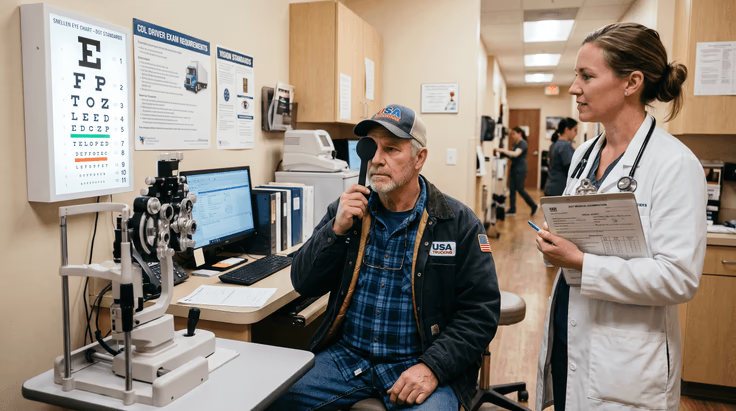
First stop is a DOT physical with a certified medical examiner (they'll look at your eyes, hearing, blood pressure and the rest), and when you pass you walk out with a Medical Examiner's Certificate, which is the thing everybody calls the medical card. That certificate must stay current. If it lapses, the DOL can downgrade your CDL without warning.
Vision is a common failure point. The federal standard is 20/40 in each eye, glasses or contacts are fine, plus at least 70 degrees of side vision, so wear whatever you normally drive in to the exam. This one trips people up because they assume their regular driver's license vision standard is enough. It is not.
The DOL also requires you to self-certify your driving category. You tell the DOL whether you drive interstate or intrastate. You also state whether you need a medical card. If you mark interstate and your card expires, the DOL suspends your CDL. Driving record standards are strict. A DUI will knock you out, and so will leaving the scene of a crash or using a truck to commit a felony. A few speeding tickets close together can get you in trouble too, quicker than most folks expect. The DOL reviews your full driving record. So that ticket from a few years back still counts.
ELDT and Testing Requirements
ELDT is a federal rule, and if it's your first Class A or Class B, you have to get it done with a provider that's on FMCSA's registry before they'll let you take the skills test. This is not optional. It covers theory and behind-the-wheel hours.
After ELDT, you take the DOL written knowledge test for a commercial learner's permit. General knowledge is 50 questions and you need 80%, so 40 right. Air brakes and cargo securement questions are picky, they want the exact number from the manual, not a close guess.
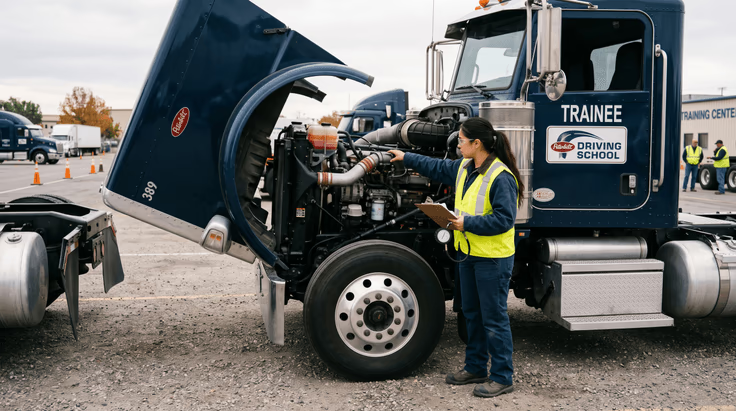
You've got to hold the CLP at least 14 days, and after that you can book the skills test, which has three parts, pre-trip, basic controls and the road drive. Many fail the pre-trip. You have to call out parts and what you are checking for. Not just point. Name each part out loud.
For the written part, I send my students to Drivio's free Washington CDL practice tests at /cdl/washington, and I have them keep going until the air brakes section stops tripping them. Use them.
CDL Classes and Endorsements in Washington
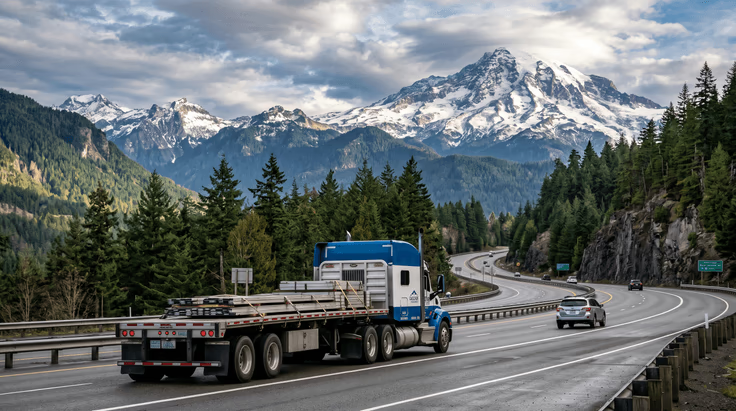
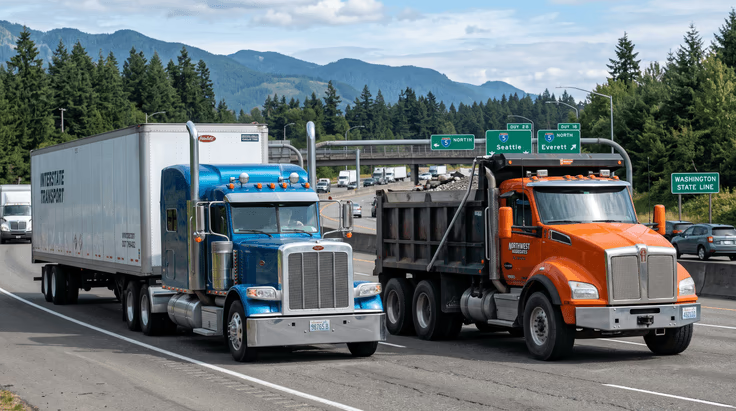
Class A covers combination vehicles with a GCWR of 26,001 pounds or more. And whatever you're pulling has to weigh more than 10,000 pounds. That's your tractor-trailer, your flatbed, most tankers. If you picture the trucks going over Snoqualmie on I-90 in January, those drivers have a Class A.
Class B is a single vehicle at 26,001 pounds or more (it can tow something, as long as the trailer's 10,000 pounds or less), so dump trucks, big box trucks and city buses. King County Metro and Spokane Transit use this class.
Class C is for the smaller stuff that's still regulated, like a shuttle van built for 16 or more people counting the driver, or a lighter vehicle hauling placarded hazmat.
Endorsements add permissions. Passenger (P) for buses. School bus (S) adds a separate background check and skills test. Tanker (N) for liquids. Hazmat (H) requires a TSA background check and fingerprints. Doubles/triples (T) lets you pull multiple trailers. It is common on eastern Washington routes.
My advice is to ask the employer what truck you'd actually be driving before you pick a class. A fuel delivery job in Vancouver might need Class B with tanker and hazmat. If you're pulling doubles out of Kent over to Spokane, you'll want Class A with the T on it.
How Much Does a CDL Cost in Washington?
The washington cdl cost breaks into pieces. DOL sets the CLP and CDL testing fees. Those numbers change. Confirm them on dol.wa.gov before you budget. Do not trust a forum number from 2019.
The DOT physical is its own bill, and clinics around Bellevue or Federal Way don't all charge the same, so I'd call two or three and ask before you book.
ELDT training is the big variable. A limited Class B program might cost a few hundred dollars. A full Class A school with real behind-the-wheel time is several thousand dollars. A few carriers around the Sound will pay for it if you sign on to drive for them for a while. Read that contract carefully.
Endorsement fees add up. Hazmat background checks cost around $86 in addition to the endorsement fee. Each endorsement has its own fee too, so when you budget, add up everything from the permit to the last endorsement, and don't just look at the first test.
Washington CDL Requirements FAQ
What are the CDL requirements in Washington?
The washington commercial drivers license requirements include:
- Age: 18 for intrastate, 21 for interstate or hazmat.
- A valid Washington driver's license.
- A DOT medical card.
- Proof of ELDT.
- Passing the DOL knowledge test, then the skills test.
Can I get a CDL at 18?
Yes, but only for driving within Washington. No crossing into Oregon or Idaho. No hazmat.
Do I need a medical card?
Yes. The Medical Examiner's Certificate is required for non-excepted interstate or intrastate CDL holders. Under wa cdl requirements, keep it current with the DOL.
Is ELDT required?
Yes. If it's your first Class A or B, or you're moving up from B to A, you need it, and you'll also need it for the passenger, school bus or hazmat endorsement.
What does a CDL cost?
It depends on your training path. DOL fees, the DOT physical, and ELDT training together range from a few hundred to several thousand dollars. Confirm current DOL fees on dol.wa.gov.
Common Eligibility Questions From WA CDL Applicants
Got points on your license, can you still get a CDL? Maybe. One speeding ticket usually isn't the end of it, but three or four movers in a short stretch looks like a habit, and that's where it gets hard. The DOL reviews your record. A recent DUI is a hard disqualifier for a CDL.
What class does my job need?
- Class A: you're pulling a trailer over 10,000 pounds and the whole rig is 26,001 or more.
- Class B: single heavy vehicle.
- Class C: passengers or hazmat without heavy weight.
Do I need ELDT for just a Class B? Yes. The federal rule applies to Class B applicants too. No shortcut there.
How current must my medical card be? Always. The DOL can downgrade your CDL on the day your card expires. Put a reminder in your phone a few months ahead (I use three).
What disqualifies me? These disqualify you: DUI, leaving the scene, felonies involving a vehicle, and certain drug offenses. Also, failing to maintain your medical certification. Some disqualifications are permanent. Some have waiting periods.
Before you pay for training, pull your driving record. Talk to a DOL licensing office. Ten minutes at the counter in Renton or Everett beats finding out after you've paid a school. Then start drilling the knowledge test. Drivio's free Washington CDL practice tests at /cdl/washington help you see exactly where you stand.
Share