Yield Sign Meaning in the US: Rules, Shape, and DMV Test Tips
A yield sign means slow down and let other traffic or pedestrians go first. That's the short version. The longer version matters more, especially if you're studying for your permit exam or just trying not to get honked at during a highway merge.
You'll find this yield sign road configuration at intersections, merge points, and roundabouts - places where traffic should keep flowing but conflicts happen. On the DMV test, the hard part isn't knowing what yield means. It's knowing when "slow down" becomes "actually stop." Two answers often look right under time pressure, and the difference comes down to a single word.
When you're unsure, default to safety and right of way. Not speed.
What Does a Yield Sign Mean?
The core yield sign meaning is this: slow down, scan for conflicts, and let other road users go first if they're already there or would have to brake because of you.
Look. Decide. Act.
A yield sign does not automatically require a full stop. It means you need to be ready to stop if the situation calls for it. That distinction is everywhere on DMV questions.
In practice, yielding looks like this:
- Slow enough to actually read the traffic situation
- Give right of way to vehicles approaching or already in the intersection
- Only proceed when nobody else has to change speed or direction because of you
This one trips people up.
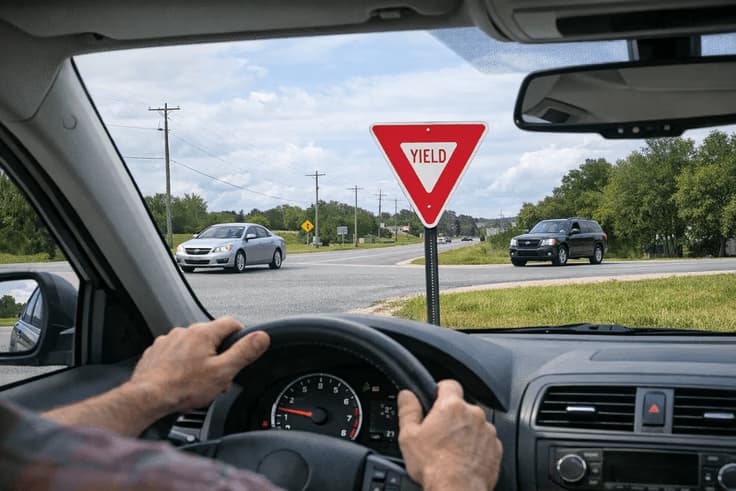
You'll deal with it when crossing a bigger road from a smaller one, blending into a busier lane, or rolling into a roundabout. In heavy traffic, yielding basically becomes stopping anyway. Totally normal.
What Does a Yield Sign Look Like?
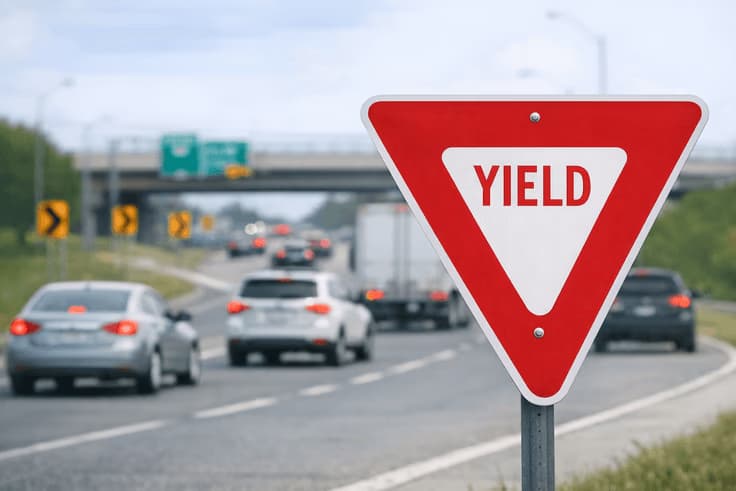
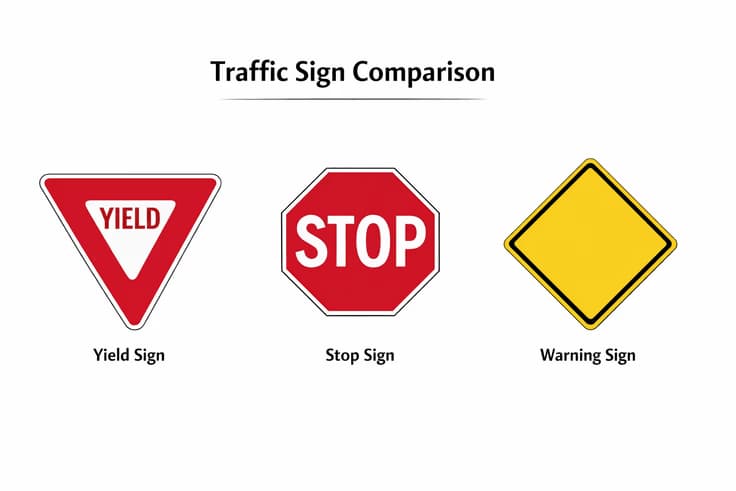
The yield sign is an upside-down triangle. That shape is unique among US road signs, which is the whole point.
Standard colors: red border and text on a white background, with "YIELD" printed in red. The shape is designed so you can recognize it even when the sign is faded, partially hidden, or you're catching it from a weird angle.
Quick comparison so you don't mix things up:
- Stop sign: red octagon, always requires a complete stop
- Yield sign: inverted triangle, stop only when necessary
- Warning signs: yellow diamonds, advisory only
This one trips people up.
If you're prepping for the exam, train yourself to clock the triangle shape first. Then confirm the text. Shape recognition is faster than reading under pressure.
When Should You Stop at a Yield Sign?
Yes, sometimes you genuinely have to stop. Fully stop.
You stop when there's no way to proceed without making someone else react to you. Specifically:
- Cross traffic is close enough that entering would force them to hit the brakes
- Pedestrians are in your path or clearly about to step into it
- You simply can't see well enough to judge what's coming
This one trips people up.
Real example: a yield sign at the bottom of a curved on-ramp. You slow down but the sightline is maybe 80 feet. If you can't confirm the lane is open, you stop. That's it.
And if the road is packed and no gap appears? You wait. Patience isn't optional here.
Yield Sign vs Stop Sign
These two get confused on exams constantly because they both involve right of way. The rules are not the same though.
Stop means you always come to a complete stop - at the limit line, crosswalk, or before entering. Every single time. Yield means slow down, prepare to stop, but keep rolling if you can do it safely while giving priority to others.
So who goes first?
At a yield sign, through traffic and pedestrians generally have priority. You're the one entering their space.
Common DMV test mistakes:
- Treating yield like a suggestion you can blow past
- Forgetting that pedestrians and cyclists count, not just cars
- Reading "may proceed" as "must proceed" when the road looks empty
This one trips people up.
Tiny words matter. "May" versus "must" has tripped up more test-takers than I can count.
Where Are Yield Signs Commonly Used?
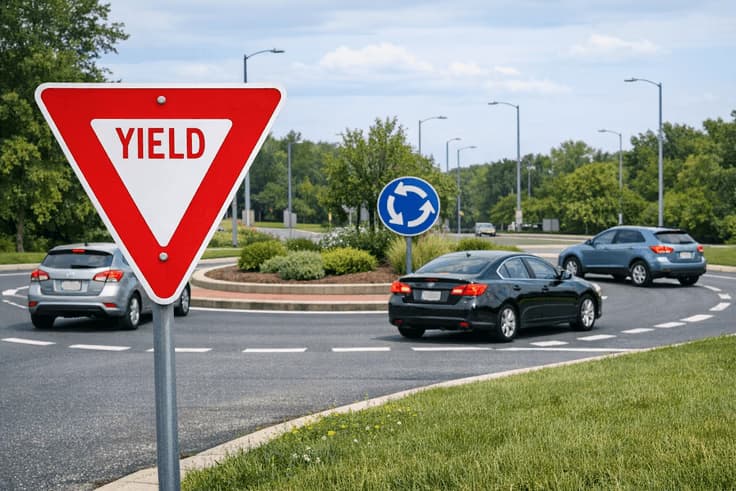
You'll encounter yield signs where traffic is supposed to keep flowing but merging conflicts are likely. Merge lanes. Roundabouts. Uncontrolled intersections where one road is obviously the main route.
Typical spots:
- Highway on-ramps and exit ramps, especially where lanes merge
- Roundabout entries where circulating traffic has priority
- Slip lanes that let you bypass a signal with a right turn
This one trips people up.
If you live near a metro area or drive around airport approaches and dense interchanges, you probably pass a dozen of these signs weekly without thinking about it. They're everywhere near busy arterials and downtown corridors.
DMV Test Tips for Yield Signs
The DMV loves these questions because they test judgment. Not memorization. Judgment.
Read carefully. Then read again.
Here's what to focus on in yield-related questions:
- Who is already in the intersection or crosswalk? They almost always have right of way.
- Are you the one merging, entering, or crossing? Then you yield.
- Is there a "must stop" trigger like a pedestrian, close traffic, or blocked sightline?
This one trips people up.
Trick scenarios they'll throw at you: a yield sign with no visible cars but a pedestrian stepping off the curb. A merge where the ramp ends and you need freeway speed while still technically yielding. A roundabout where you yield to cars already circulating, not the driver entering behind you.
Time pressure makes you misread these. Slow down mentally.
How to Merge on Highway with Yield Sign
This is where new drivers freeze. Understandable.
A yield sign at a highway on-ramp means traffic already in that lane has priority. It does not mean slam on your brakes at the top of the ramp. That's dangerous.
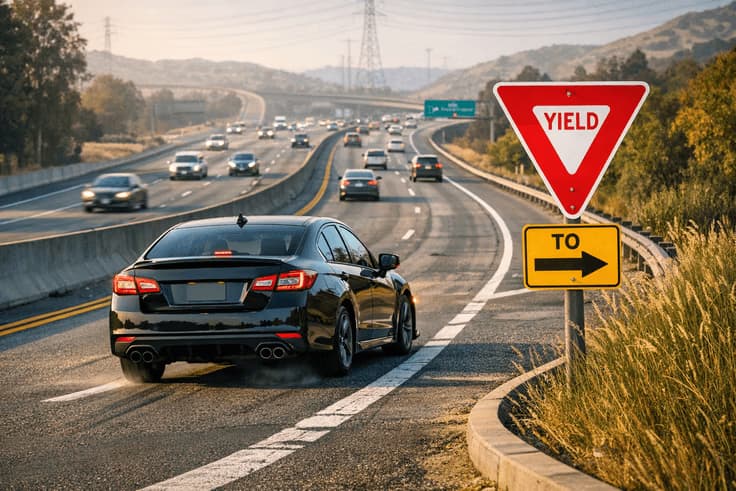
Here's the practical approach:
- Use the ramp to build speed and match the flow of traffic
- Signal early, scan for a gap that works
- Merge only when you won't force someone in the through lane to brake
This one trips people up.
If the highway is jammed and there's genuinely no gap, you slow further and may need to stop at the ramp's end. Not great. But sometimes that's the move.
Understanding how to merge on highway with yield sign is one of those skills the written test covers but real driving teaches you differently. The concept is identical though - give way to whoever's already there.
Common Mistakes Drivers Make
Some errors show up everywhere:
- Assuming "yield" means "I go first because I'm faster"
- Ignoring pedestrians at slip lanes
- Only checking left and missing a cyclist or vehicle from the right
This one trips people up.
Look everywhere. Then go.
Yield Sign FAQ
What does a yield sign mean in everyday driving?
It means slow down, check for anyone who'd be affected by you entering, and give them the right of way. Simple concept, tricky execution.
Do you always have to stop at a yield sign?
No. You stop only when safety demands it - close traffic, pedestrians present, or limited visibility. Otherwise you keep moving through.
Who has the right of way at a yield sign?
Vehicles on the main road and pedestrians in or approaching the crosswalk. You're entering their flow, so you wait for them.
What if two cars reach a yield-controlled merge simultaneously?
The vehicle already in the through lane has priority. If you're both entering a new lane, use gap judgment and don't force the other person to react.
Is a yield sign the same as a stop sign on the DMV test?
Not even close. A stop sign demands a complete stop every time. A yield sign demands slowing and yielding, with a stop only when conditions require one.
How can I recognize a yield sign quickly?
Inverted triangle. Red and white. That shape is unlike anything else on the road, which is exactly the point.
Can you get cited for failing to yield even without a crash?
Absolutely. You can get a ticket for forcing another driver to brake or swerve, collision or not. The violation is the failure to yield itself.
Share