TN Motorcycle Written Test: Visibility and Positioning
The tn motorcycle written test focuses on survival. Think Nashville's downtown loop at five o'clock, or the Memphis freight routes, or those curves outside Chattanooga. The DSD, or Driver Services Division, expects you to understand more than just throttle control. They want to know you can place your bike where other drivers actually see you. That is the whole game here.
Most people think passing the tennessee motorcycle license practice test is about memorizing signs. It's not. It's about judgment. Where do you put your wheels when a semi is merging onto I-40? How do you handle a blind right-hander on Monteagle Mountain? That's the kind of stuff they ask.
Lane Positioning to Be Seen on Tennessee Roads
You have three lane positions. The three positions are:
- left third
- middle third
- right third
The test wants the spot with the most visibility and an escape route.
In heavy Nashville traffic, avoid the middle third. That's where oil drips from cars and where debris collects. But it's also where you disappear behind the car in front of you. The DSD wants you to think about sight lines. If you're in the left third of the lane, you can see past the car ahead on the right side. If you're in the right third, you can see past on the left side.
Here's the thing. A car in the next lane over? Shift to the far side of your lane. That creates a buffer. That's what the test rewards.
On I-24 or I-65, if you can't spot the driver's face in his mirror, he can't see you. So adjust your position. Speed up a little or back off. I wouldn't hang out by somebody's back bumper for long.
Most riders get hit at intersections, so at a red light in Murfreesboro or Franklin I'd angle toward a way out, clutch in, eyes on the mirrors. The test will ask about this.
This one trips people up. They think lane position is fixed.
See more
The tn motorcycle written test focuses on survival. Think Nashville's downtown loop at five o'clock, or the Memphis freight routes, or those curves outside Chattanooga. The DSD, or Driver Services Division, expects you to understand more than just throttle control. They want to know you can place your bike where other drivers actually see you. That is the whole game here.
Most people think passing the tennessee motorcycle license practice test is about memorizing signs. It's not. It's about judgment. Where do you put your wheels when a semi is merging onto I-40? How do you handle a blind right-hander on Monteagle Mountain? That's the kind of stuff they ask.
Lane Positioning to Be Seen on Tennessee Roads
You have three lane positions. The three positions are:
- left third
- middle third
- right third
The test wants the spot with the most visibility and an escape route.
In heavy Nashville traffic, avoid the middle third. That's where oil drips from cars and where debris collects. But it's also where you disappear behind the car in front of you. The DSD wants you to think about sight lines. If you're in the left third of the lane, you can see past the car ahead on the right side. If you're in the right third, you can see past on the left side.
Here's the thing. A car in the next lane over? Shift to the far side of your lane. That creates a buffer. That's what the test rewards.
On I-24 or I-65, if you can't spot the driver's face in his mirror, he can't see you. So adjust your position. Speed up a little or back off. I wouldn't hang out by somebody's back bumper for long.
Most riders get hit at intersections, so at a red light in Murfreesboro or Franklin I'd angle toward a way out, clutch in, eyes on the mirrors. The test will ask about this.
This one trips people up. They think lane position is fixed.
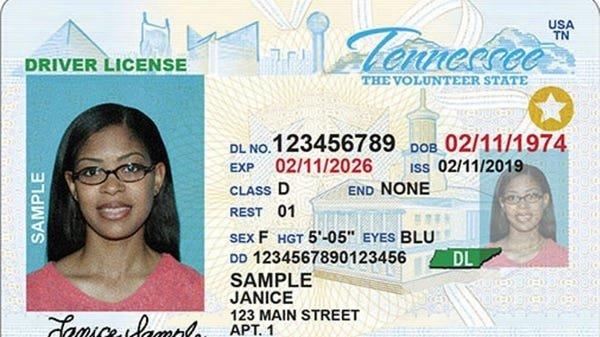
Tennessee3 minEasy11 questions
Tests Verified by Daniel Gonzalez
Experienced teacher & Instructional Designer
"These practice tests are built from the DMV handbook to help you actually learn the rules and pass the driving test with confidence"
Using SEE to Stay Visible in Tennessee Traffic
SEE stands for Search, Evaluate and Execute. It's the mental loop the DSD wants you running constantly.
Search scans three zones:
- ahead
- to the sides
- behind
In Memphis that's folks slamming on brakes on I-240, and in Knoxville it's game day crowds by Neyland Stadium.
Evaluate means you predict the risk. See a mattress tied down loose in a pickup bed? It might fly out. That car creeping forward at a stop sign? I'd figure he hasn't seen you, and size it up before you do anything.
Then Execute is where you actually do something. Change speed. Change position. Change lanes. Act early. Don't wait until the hazard is ten feet away.
Eye contact is huge. At a four-way stop in Clarksville, try to catch the other driver's eye before you go, and if he's on his phone I'd just wait. A wave or a nod helps. But don't trust it completely. People lie with their eyes.
Congestion in Nashville changes everything. You're filtering through tight gaps, watching for doors opening on Broadway, and avoiding party buses. Your position is your voice. It tells other drivers where you are and what you're doing.
Two answers look right on the test. One says "slow down and wait." The other says "maintain speed and move left," and which one's right depends on exactly what the question describes.
How Mountain Curves Test Tennessee Rider Positioning
East Tennessee is beautiful. It's also dangerous. Roads through the Smoky Mountains, Chattanooga, and Johnson City all have:
- blind curves
- steep drop-offs
- falling rock
Lane position is your defense.
On a blind right-hand curve, you want to set up wide to the left side of your lane. That gives you a longer view through the corner. You see the vanishing point sooner. Plus anybody coming the other way and cutting the corner sees you sooner.
Blind left-hander, move to the right side of your lane, not out where the gravel piles up. The DSD test won't ask you to name the vanishing point, but it will ask where you should be positioned to see farthest through a curve.
Monteagle Mountain on I-24 is a long, steep grade. Trucks are slow. Cars are fast. Ride like nobody can see you, keep right unless you're passing, and stay out of the truck's blind spot (no mirrors in view means the driver can't see you).
I-40 through the Pigeon River Gorge, near the North Carolina line, is sharp curves and rock walls. There's no shoulder in places. If you're in the wrong lane position, you have zero room for error. Slow before the curve. Do not brake in it. And look where you want to end up, because if you stare at the guardrail you'll hit it.
Some mornings the Hiwassee River valley fog gets thick enough to swallow your front fender. Use low beams. I'd stay in the right third so you can follow the white fog line, since that's about all you've got to go by.
This one trips people up. They think the fastest line through a curve is the best line. It isn't, you want the line where you see farthest and they see you.
Visibility Questions Tennessee Riders Struggle With
The DSD writes questions to catch riders who only studied the manual once. Watch for "should" versus "must" versus "best." You might get asked where to sit near an intersection when a car's turning left, and the center of the lane isn't it. It's the right third or left third, depending on the turn lane. You want to be as far from the turning car as possible while staying in your lane.
Another common miss is about blind spots. Riders think if they're in the left third of the lane, they're safe from cars on the right. But a car two lanes over might not see you either. So check your mirrors before a lane change and then turn your head and look.
Intersection visibility is a major test point. The test asks about stopping position. You should stop far enough back to see the crosswalk and the traffic light without craning your neck. But not so far back that a car behind you doesn't see you.
Time pressure makes you misread. You see "three feet" and think it's about bicycles. But the question might be about passing a parked car. Read every word.
If you're unsure, go with the spot where you can see the most, be seen the most, and still get out of there.
Practicing Positioning for the Tennessee Test
You can't just read about lane position. You have to drill it. The tn motorcycle permit practice test is your best tool. Take it until you can explain why the wrong answers are wrong.
Start with the DSD motorcycle manual. Read the lane-position section in the DSD manual. Close the manual and draw the three positions. Then write next to each one when you'd use it. That forces recall, not recognition.
Then take a practice test. Miss a question? Go back to the manual. Find the exact paragraph. Read it out loud. Doing that is how it starts to sink in.
I'd also do some runs like it's the real thing. No phone. No music. Time yourself. Answer every question once. Then review. A timed desk session feels closer to the real test.
Ride with a licensed friend. Have them quiz you at stops. "Where would you position for that curve?" Or "Where would you go if that car pulled out?" That builds the judgment the test expects.
Tennessee Visibility and Positioning Motorcycle FAQs
What are the three lane positions for motorcycles?
The three lane positions are:
- left third
- middle third
- right third
Each has a purpose. The left third gives you a view past cars on your right. The right third adds space from oncoming traffic. The middle's often slick with oil and you're harder to see there, so you move around depending on traffic and the road.
How do you stay visible in Tennessee traffic?
Stay out of blind spots, shift position when traffic stacks up, run your headlight in daylight and wear something bright. At intersections in Nashville and Memphis I'd assume you're invisible until a driver reacts, and keep a way out picked.
How should you position for Tennessee mountain curves?
Set up wide before the curve. For a right curve, move to the left third. For a left curve, move to the right third. This widens your sight line through the corner. Brake before the curve, not in it. Look through the turn. Going over Monteagle I'd stay right and give the trucks plenty of room.
Why is lane positioning important for riders?
A motorcycle is small. Drivers don't see it the way they see a car. Your position lets you:
- see hazards sooner
- be seen by others
- keep an escape path
The DSD test asks about positioning because it separates close calls from crashes.
What positioning mistakes fail Tennessee riders?
Riding in the center of the lane by default. Staying in a blind spot.
- Pulling up too close behind the car ahead at an intersection.
- Riding right on the center line through blind curves.
- Not adjusting position when traffic changes.
The test punishes a fixed-rule approach. Lane position is a moving decision.
See more
Using SEE to Stay Visible in Tennessee Traffic
SEE stands for Search, Evaluate and Execute. It's the mental loop the DSD wants you running constantly.
Search scans three zones:
- ahead
- to the sides
- behind
In Memphis that's folks slamming on brakes on I-240, and in Knoxville it's game day crowds by Neyland Stadium.
Evaluate means you predict the risk. See a mattress tied down loose in a pickup bed? It might fly out. That car creeping forward at a stop sign? I'd figure he hasn't seen you, and size it up before you do anything.
Then Execute is where you actually do something. Change speed. Change position. Change lanes. Act early. Don't wait until the hazard is ten feet away.
Eye contact is huge. At a four-way stop in Clarksville, try to catch the other driver's eye before you go, and if he's on his phone I'd just wait. A wave or a nod helps. But don't trust it completely. People lie with their eyes.
Congestion in Nashville changes everything. You're filtering through tight gaps, watching for doors opening on Broadway, and avoiding party buses. Your position is your voice. It tells other drivers where you are and what you're doing.
Two answers look right on the test. One says "slow down and wait." The other says "maintain speed and move left," and which one's right depends on exactly what the question describes.
How Mountain Curves Test Tennessee Rider Positioning
East Tennessee is beautiful. It's also dangerous. Roads through the Smoky Mountains, Chattanooga, and Johnson City all have:
- blind curves
- steep drop-offs
- falling rock
Lane position is your defense.
On a blind right-hand curve, you want to set up wide to the left side of your lane. That gives you a longer view through the corner. You see the vanishing point sooner. Plus anybody coming the other way and cutting the corner sees you sooner.
Blind left-hander, move to the right side of your lane, not out where the gravel piles up. The DSD test won't ask you to name the vanishing point, but it will ask where you should be positioned to see farthest through a curve.
Monteagle Mountain on I-24 is a long, steep grade. Trucks are slow. Cars are fast. Ride like nobody can see you, keep right unless you're passing, and stay out of the truck's blind spot (no mirrors in view means the driver can't see you).
I-40 through the Pigeon River Gorge, near the North Carolina line, is sharp curves and rock walls. There's no shoulder in places. If you're in the wrong lane position, you have zero room for error. Slow before the curve. Do not brake in it. And look where you want to end up, because if you stare at the guardrail you'll hit it.
Some mornings the Hiwassee River valley fog gets thick enough to swallow your front fender. Use low beams. I'd stay in the right third so you can follow the white fog line, since that's about all you've got to go by.
This one trips people up. They think the fastest line through a curve is the best line. It isn't, you want the line where you see farthest and they see you.
Visibility Questions Tennessee Riders Struggle With
The DSD writes questions to catch riders who only studied the manual once. Watch for "should" versus "must" versus "best." You might get asked where to sit near an intersection when a car's turning left, and the center of the lane isn't it. It's the right third or left third, depending on the turn lane. You want to be as far from the turning car as possible while staying in your lane.
Another common miss is about blind spots. Riders think if they're in the left third of the lane, they're safe from cars on the right. But a car two lanes over might not see you either. So check your mirrors before a lane change and then turn your head and look.
Intersection visibility is a major test point. The test asks about stopping position. You should stop far enough back to see the crosswalk and the traffic light without craning your neck. But not so far back that a car behind you doesn't see you.
Time pressure makes you misread. You see "three feet" and think it's about bicycles. But the question might be about passing a parked car. Read every word.
If you're unsure, go with the spot where you can see the most, be seen the most, and still get out of there.
Practicing Positioning for the Tennessee Test
You can't just read about lane position. You have to drill it. The tn motorcycle permit practice test is your best tool. Take it until you can explain why the wrong answers are wrong.
Start with the DSD motorcycle manual. Read the lane-position section in the DSD manual. Close the manual and draw the three positions. Then write next to each one when you'd use it. That forces recall, not recognition.
Then take a practice test. Miss a question? Go back to the manual. Find the exact paragraph. Read it out loud. Doing that is how it starts to sink in.
I'd also do some runs like it's the real thing. No phone. No music. Time yourself. Answer every question once. Then review. A timed desk session feels closer to the real test.
Ride with a licensed friend. Have them quiz you at stops. "Where would you position for that curve?" Or "Where would you go if that car pulled out?" That builds the judgment the test expects.
Tennessee Visibility and Positioning Motorcycle FAQs
What are the three lane positions for motorcycles?
The three lane positions are:
- left third
- middle third
- right third
Each has a purpose. The left third gives you a view past cars on your right. The right third adds space from oncoming traffic. The middle's often slick with oil and you're harder to see there, so you move around depending on traffic and the road.
How do you stay visible in Tennessee traffic?
Stay out of blind spots, shift position when traffic stacks up, run your headlight in daylight and wear something bright. At intersections in Nashville and Memphis I'd assume you're invisible until a driver reacts, and keep a way out picked.
How should you position for Tennessee mountain curves?
Set up wide before the curve. For a right curve, move to the left third. For a left curve, move to the right third. This widens your sight line through the corner. Brake before the curve, not in it. Look through the turn. Going over Monteagle I'd stay right and give the trucks plenty of room.
Why is lane positioning important for riders?
A motorcycle is small. Drivers don't see it the way they see a car. Your position lets you:
- see hazards sooner
- be seen by others
- keep an escape path
The DSD test asks about positioning because it separates close calls from crashes.
What positioning mistakes fail Tennessee riders?
Riding in the center of the lane by default. Staying in a blind spot.
- Pulling up too close behind the car ahead at an intersection.
- Riding right on the center line through blind curves.
- Not adjusting position when traffic changes.
The test punishes a fixed-rule approach. Lane position is a moving decision.
25000
practice tests completed by Tennessee learners this month