CO Permit Test Questions About Snow and Ice Driving
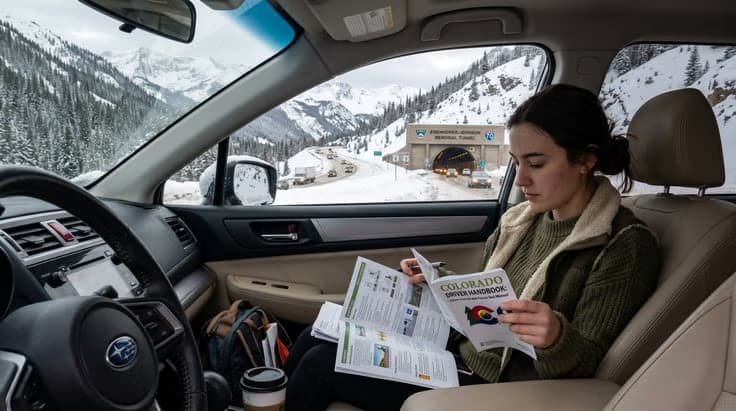
Most people walk into the Colorado permit test thinking winter driving is just common sense. Slow down, leave room, don't be stupid. Then they hit the snow‑and‑ice section and suddenly every answer looks right. It humbles you. Even drivers who grew up cruising dry highways around Colorado Springs or Pueblo get tripped up the first time a question mentions black ice climbing toward the Eisenhower Tunnel.
The Division of Motor Vehicles doesn't treat winter driving like bonus material. In this state it's survival knowledge, plain and simple. That's why the Colorado driving permit test drills deep on traction loss, skid control, and mountain awareness. You're not just memorizing numbers. You're proving you understand how fast everything goes wrong when the temperature drops and the pavement glazes over.
Why Colorado Tests Winter Driving More Than Most States
Flatland states can throw in a couple questions about wet roads and call it good. Colorado can't. Between the Front Range and the high country, a driver might leave sunny Denver at ten in the morning and hit a full whiteout near Vail Pass by lunch. The DMV knows this. So the dmv colorado permit test spends real time on how traction vanishes, how stopping distances triple-sometimes quadruple-and why a clear sky at 10 a.m. means nothing when you're coming back through the foothills after dark.
Aurora to Fort Collins looks like an easy commute until a fast‑moving storm drops visibility to near zero on I‑25. Lakewood drivers catch black ice on 6th Avenue ramps. Even Greeley, far from ski traffic, gets those deceptive mornings where the road looks wet but it's actually a sheet. The test writers build questions around these exact scenarios because they happen every winter. Not occasionally. Every single one.
The Most Common Snow and Ice Questions on the Colorado Permit Test
Following distance shows up first. In normal conditions three seconds works. On snow‑packed roads the test expects you to increase that significantly. Six seconds minimum. Sometimes more. Two answers will look right because one says "four seconds" and another says "six or more." People grab four seconds thinking that sounds cautious enough. It's not.
Black ice recognition pops up repeatedly. What it looks like, where it forms, what you should do the moment you suspect it. Skid recovery shows up, too. Rear wheels slide right, do you steer right or left? The wording messes with your head because you overthink it. Steer into the skid. Always.
Reduced speed during chain laws, proper braking on downgrades, and how to handle a sudden whiteout appear constantly. Time pressure makes you misread the chain law question. It asks whether you must carry chains or actually install them during a Traction Law. Know the difference.
How to Control a Vehicle on Icy Colorado Roads
Smoothness matters more than anything. Jerk the wheel and you're sliding. Stomp the brake and you're sliding. The colorado dmv home test questions emphasize gradual inputs because most skids start with a driver overreacting. If you feel the tires lose grip, ease off the gas. Don't slam anything.
Braking technique depends on what you're driving. Got anti‑lock brakes? Press and hold. Steady pressure. The system pulses for you. Older vehicles without ABS need threshold braking-pumping carefully so the wheels don't lock. The test draws a clear line between the two. This one trips people up.
Steering during a skid confuses almost everyone at first. Rear end swings left, you steer left. Your eyes should look where you want the vehicle to go, not at the guardrail you're afraid of kissing. Target fixation is real. The permit test assumes you already know that staring at the obstacle guarantees you'll hit it.
What Drivers Should Know About Black Ice in Colorado
Black ice isn't black. It's transparent. That's why you don't see it until you're already on top of it. Bridges freeze first because cold air circulates underneath. Shaded curves on mountain highways hold ice long after the sun has melted everything else. Thornton and Westminster might feel dry at 8 a.m., but the on‑ramp to I‑25 could be glazed over if the overnight temperature dipped just enough.
The colorado dmv driving test and the permit exam both hammer temperature awareness. When the air hangs right around freezing and the road looks damp, assume it's ice. Questions ask what pavement temperature causes the most danger. It's the freezing point, but the test wants you to recognize that bridges and overpasses drop below that mark faster than regular roadway. Arvada drivers near creek crossings and underpasses learn this quickly. Cold air underneath. Bridges first. Always.
Why Snow Driving in Colorado Is Different from Other States
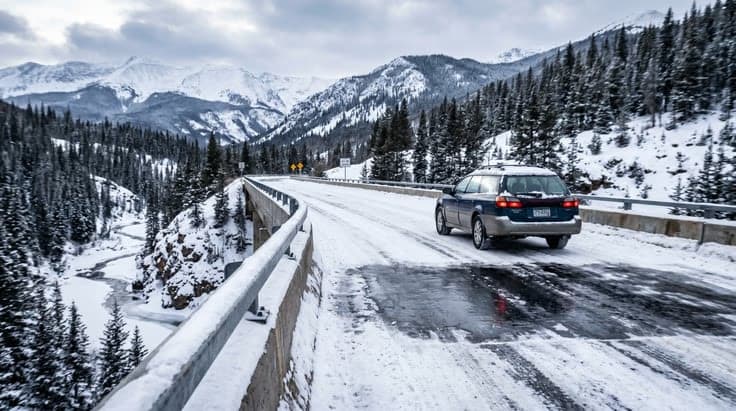
Other states get snow. They don't get 7% grades for miles while climbing to a tunnel at 11,000 feet. Colorado adds elevation, steep curves, and weather shifts so fast a routine drive turns demanding in ten minutes. The Colorado driving permit test reflects that. You'll see questions about using lower gears on descents, watching for runaway truck ramps, and yielding to uphill traffic on narrow mountain roads.
The I‑70 corridor between Morrison and Dotsero sees conditions change inside of a single song on the radio. A driver leaving Denver might not even need wipers, but by the time they reach Georgetown the Traction Law is active and snow is piling up. The exam tests whether you know what that law requires. 3/16 inch tread depth. Snow tires, M+S rated, or AWD/4WD. Or chains. During severe weather the Chain Law kicks in and you must install them. Not carry. Install.
Colorado Winter Driving Laws Drivers Forget Most Often
Traction laws confuse people. Many think having all‑wheel drive means they're automatically compliant. The test makes it painfully clear that AWD alone isn't enough. Your tires still need adequate tread. 3/16 inch minimum. Below that, even the best four‑wheel‑drive system can't grip. Glare ice doesn't care about drivetrain.
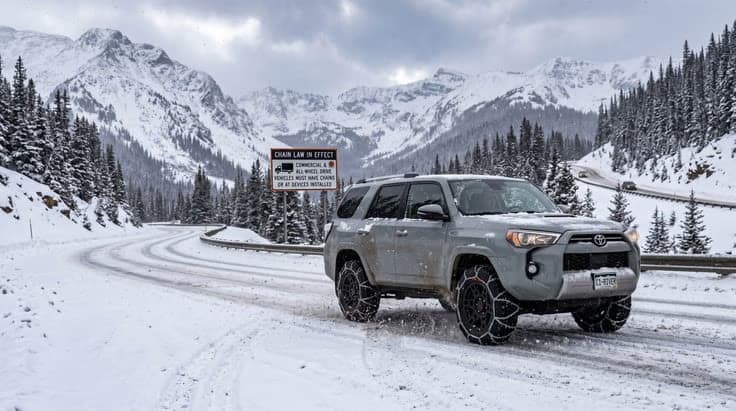
Chain laws are separate. During a Code 16 Chain Law, every vehicle must have chains or an approved alternative traction device installed. Not just carried. Installed.
Move Over laws still apply in the middle of a storm. See a stranded vehicle with hazards flashing or an emergency vehicle on the shoulder? Move over or slow down significantly. Snowplows count. Don't pass them in echelon formation. The test sometimes asks what "echelon" means. It's plows working side by side, staggered, clearing multiple lanes at once. Passing them is illegal and dangerous.
What's the biggest confusion? The difference between Traction Law and Chain Law. Here's a quick breakdown:
- Traction Law requires 3/16 inch tread and either snow tires, M+S rated, or AWD/4WD. You don't need chains yet.
- Chain Law (Code 16) means chains must be installed on all vehicles, no exceptions.
- Move Over law still applies to plows working in echelon-you can't pass that staggered row.
This one trips people up.
The Best Way to Study Winter Questions for the Colorado Permit Test
Don't just memorize numbers. Understand the why behind them. Stopping distance quadruples on ice compared to dry pavement. The test might ask how long it takes to stop at 30 mph on a slick road versus a dry one. Knowing the ratio matters more than the exact footage.
Practice tests help you recognize patterns. The Colorado DMV home test format mirrors the real exam closely enough that repeated exposure builds speed and confidence. Focus on hazard scenarios. What do you do when visibility drops suddenly? How do you react when you hit an unexpected ice patch mid‑curve? These judgment‑based questions reward calm, correct decisions over quick guesses.
Review the traction law details until they feel automatic. Know the difference between Traction Law and Chain Law. Know that studded tires are legal year‑round in Colorado. Remember that even if you're from out of state, you must comply with the I‑70 mountain corridor rules from September through May.
Colorado weather doesn't care if you're a new driver or a veteran. The permit test makes sure you respect it. Walk in knowing how snow and ice change everything about controlling a vehicle, and you'll pass the winter section without second‑guessing yourself. Then you just have to actually drive in it, which is a whole different kind of test.
Share