How to Drive Safely on CO Mountain Roads
You feel it the moment the road tilts upward and the air gets thin. The Colorado road test isn't just about parallel parking in a quiet suburb. It's about proving you can handle a state where the pavement climbs past 11,000 feet and the weather rewrites the rules by the minute. The Division of Motor Vehicles (Department of Revenue) isn't trying to trick you. They're trying to make sure you won't freeze up when the asphalt disappears into a cloud on Floyd Hill.
I've watched too many drivers from flat states show up in Denver or Colorado Springs thinking mountain driving is just a scenic version of a highway commute. It's not. And the test knows that.
Why Mountain Driving Changes Everything
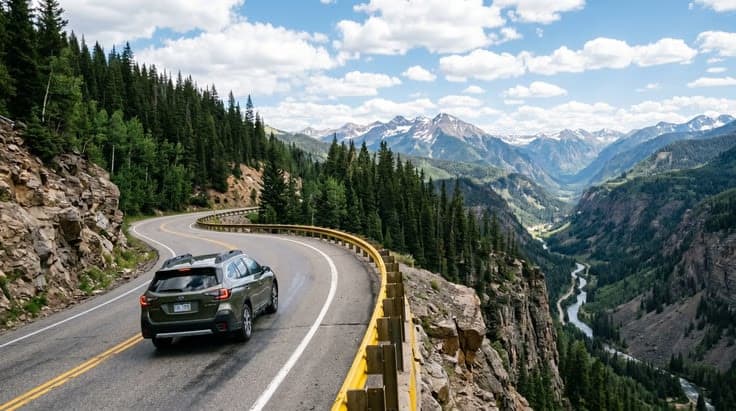
Colorado roads don't just go up. They twist, narrow, and drop off into nothing. On a steep descent coming back from the Eisenhower Tunnel, your brakes aren't your friend if you ride them. They heat up. They fade. Then you're in trouble.
The DMV wants you to downshift. Let the engine do the braking. If you're practicing for your permit test Colorado study guide material, memorize that point. It shows up.
The Mistake That Fails People Instantly
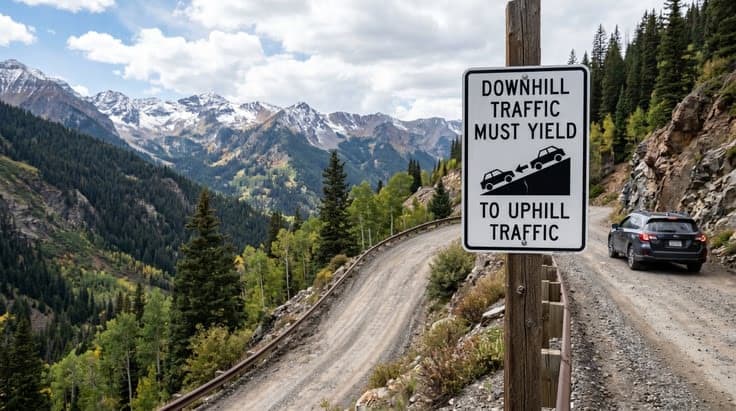
Riding the brakes downhill is the big one. But there's another. On a two lane road with no shoulder west of Lakewood, a downhill vehicle must yield to an uphill one. It's not a courtesy. It's physics. The car climbing needs momentum and space.
This one trips people up.
- Downhill yields to uphill on narrow grades
- Use lower gears, not constant braking, on long descents
- Pull into a turnout if five or more cars stack up behind you
That last bullet feels like a suggestion. It's a law. And the written knowledge test likes to phrase it in a way where two answers look right.
The Signs You Cannot Ignore
Advisory speed signs on a yellow background are not the legal speed limit. They tell you what's safe for that curve. But the actual limit might be higher. You need to know the difference.
Drivers bombing down from Fort Collins into the Poudre Canyon see these constantly. The colorado road signs practice test often includes a runaway truck ramp sign. You must know what it means before you ever need one. If a truck is barreling behind you, don't swerve into that ramp thinking it's a scenic pull off. It's filled with gravel to stop a 40 ton vehicle.
Weather That Lies to You
Black ice looks like wet pavement. It forms on bridges first. In Aurora or Thornton, a sunny morning can turn into a hail storm by 3 p.m. The traction law on the I-70 corridor kicks in from September to May. You need 3/16 inch tread depth and either snow tires, all weather tires with the mountain snowflake symbol, or four wheel drive.
If the Traction Law is active and you slide into a ditch near Vail Pass without proper equipment, you get a ticket. Not a warning. The DMV test asks about this. The phrasing can be tricky. "May" use chains versus "must" use chains. Read every word.
Sharing Roads That Weren't Built for Sharing
Boulder cyclists are everywhere. Colorado law gives them the right to treat a stop sign as a yield. You still have to give three feet. You can cross a double yellow to pass a bicycle if it's safe. The test expects you to know that.
On mountain roads, deer and elk don't check for cross traffic. Dusk near Greeley or Pueblo means scanning the shoulders. Not just the road.
What the Score Means
People fixate on the number. What is the minimum score to pass road test colorado? It's 80 percent. But thinking about the percentage while your examiner holds a clipboard makes you grip the wheel too tight. Focus on the basics. Full stops. Proper lane position. Smooth inputs. The score takes care of itself.
The colorado driver's license test isn't harder than other states. It's just more specific. A driver from Kansas doesn't deal with an 8 percent grade or a sudden snow squall on their test route. You might.
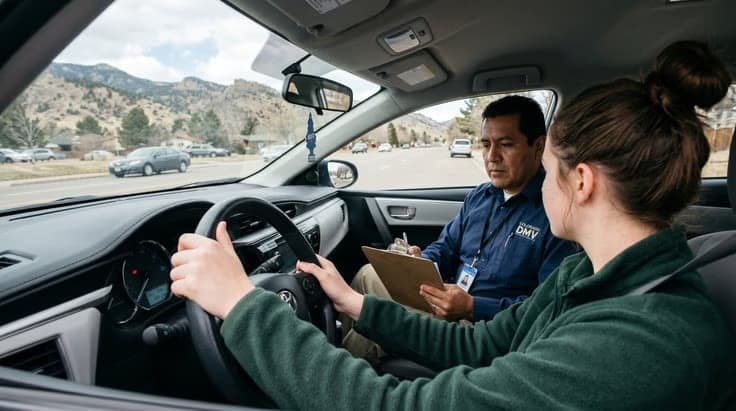
Before You Schedule
Practice on hills. Real ones. Not the gentle slope in a Westminster parking lot. Drive from Golden up Lookout Mountain. Feel how your car reacts when the transmission downshifts. Check COtrip.org before you head out. The state's 511 system shows live road conditions. It's a habit the DMV wants you to build.
The night before, sleep. The morning of, check your lights and tires. When the examiner gets in, they're not looking for perfection. They're looking for awareness. A driver who glances at the rearview mirror before braking on a downhill curve in Colorado Springs passes. A driver who stares straight ahead and hopes for the best doesn't.
Share