Florida CDL Test Questions That Fail Most Truck Drivers
A lot of applicants are surprised by how tricky Florida CDL test questions can be. Not because the material is impossible, but because the CDL general knowledge exam is packed with safety rules, “best answer” wording, and scenarios that punish sloppy reading. It’s not a driving test. It’s a judgment test.
Here’s what’s going on behind the scenes. The CDL general knowledge test is the baseline written exam that Florida uses to confirm you understand commercial driving fundamentals before you move on to endorsements or skills testing. In Florida, the Department of Highway Safety & Motor Vehicles (DHSMV) pulls questions straight from the handbook concepts, but the phrasing can feel different on the actual screen. That’s why preparation matters.
Read that again.
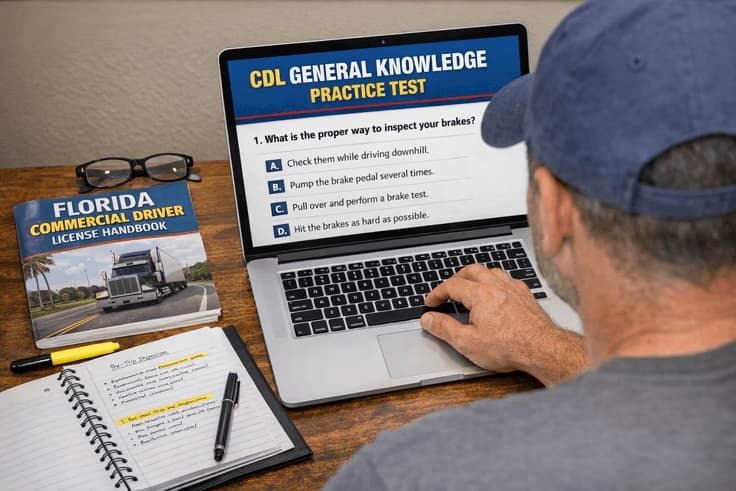
If you’re in Jacksonville, Miami, Tampa, Orlando, or anywhere else in the state, you’ll see the same theme: people fail because they “kind of knew” the rule, rushed, and picked the wrong option when two answers looked right. A solid cdl general knowledge practice test Florida routine helps you learn the format, the wording, and the traps before you’re under time pressure.
Practice first. Then test.
Understand the CDL General Knowledge Test Format
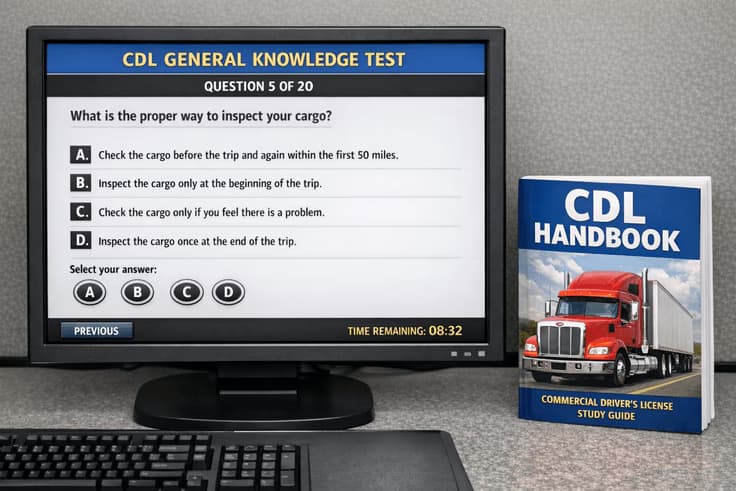
The Florida CDL general knowledge test is multiple choice and based on the official CDL handbook concepts. DHSMV offices and approved testing sites follow the same standards, even if the experience feels different depending on where you test. Miami locations can feel hectic. Smaller offices near places like Cape Coral or Tallahassee might feel calmer. The questions are still the questions.
Expect a set number of questions and a required passing score, both defined by Florida’s CDL testing rules and the handbook guidance. The bigger point is this: you don’t pass by “common sense.” You pass by knowing the specific rule the handbook is looking for.
Details matter.
Most failures come from three patterns:
- Misreading “may” versus “must.”
- Forgetting that the safest answer is often the correct one.
- Mixing up car-driving habits with commercial vehicle rules.
This one trips people up.
Study like it’s a system, not trivia. Take notes on why an answer is right, not just which one is right. That’s what makes practice tests useful instead of just repetitive.
Road Safety Questions That Confuse CDL Applicants

Road safety questions are everywhere on the cdl general knowledge test, and they’re easy to miss because they sound familiar. Safe following distance, space management, and speed control don’t feel “technical,” so people under-study them. Then they miss them.
It happens fast.
Following distance is a big one. CDL questions often test that you understand how weight, speed, and weather change your stopping space. Florida rain is the perfect example. A sudden downpour on I-4 near Orlando or I-95 through Fort Lauderdale can turn a normal gap into a near-miss in seconds. The test expects you to think like a professional: increase following distance early, slow smoothly, and avoid hard braking.
Not optional.
Common road safety concepts that show up as florida cdl test questions include:
- How far ahead you should scan and why scanning reduces surprises
- When to reduce speed before curves, exits, or work zones
- How to handle tailgaters without creating a bigger risk
This one trips people up.
Also, watch for wording that asks what you should do “first.” Two answers can be safe, but only one is the first step. That’s where time pressure makes you misread.
Air Brake and Vehicle Control Questions
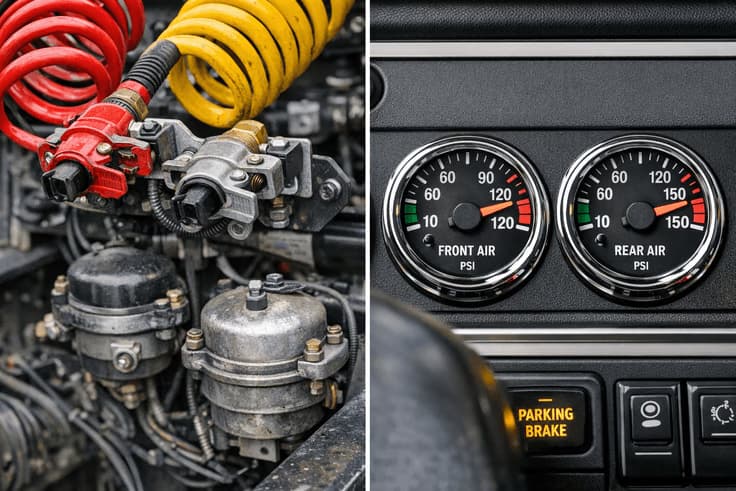
Air brakes are where a lot of people lose points, even if they’ve driven trucks before. The questions aren’t trying to trick you. They’re checking whether you understand how air systems behave under real conditions.
Brake lag is real.
Many drivers underestimate how far a commercial vehicle travels during brake lag and reaction time. That’s why the exam focuses on stopping distance, proper braking techniques, and downhill control. If you’re used to a pickup or car, your instincts can betray you.
Key topics that frequently appear in cdl test questions and answers:
- Brake lag and why you need to start braking sooner
- How to control speed on downgrades without overheating brakes
- The difference between controlled braking and stab braking, and when each is appropriate
This one trips people up.
Vehicle control questions often combine multiple ideas at once: speed, weight, road surface, and visibility. Think of a wet bridge in Jacksonville with crosswinds, or a sudden storm on the Turnpike. The safest choice is usually the one that reduces speed early and avoids abrupt steering.
Slow early.
Cargo Safety and Load Securement Questions
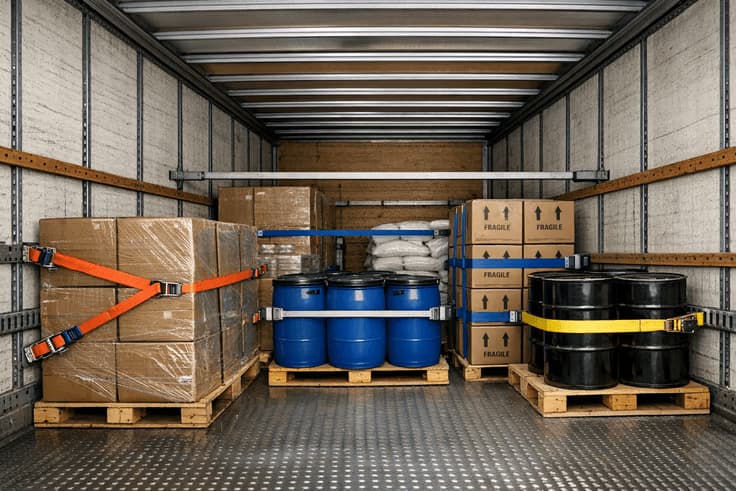
Cargo questions can feel like “common sense,” but the test expects specific knowledge about balance, weight distribution, and securement consequences. Miss a couple here and you’re suddenly below passing.
It adds up.
You’ll see florida cdl test questions about how cargo shifts, what happens when weight is too far back, and why uneven loading affects steering and braking. Even if you’re not taking a specific endorsement yet, the general knowledge exam still checks that you understand the basic risks.
Focus on the physics:
- High center of gravity increases rollover risk, especially on ramps and curves
- Loose cargo can shift during braking and change your stopping behavior
- Improper distribution can reduce traction on steering axles or drive axles
This one trips people up.
In real life, a small shift can feel like nothing until it isn’t. The test wants you to respect that. Especially on Florida’s wide, fast arterials where turns happen quickly and traffic is unpredictable, like in Hialeah or near downtown Tampa.
Hazard Awareness and Defensive Driving
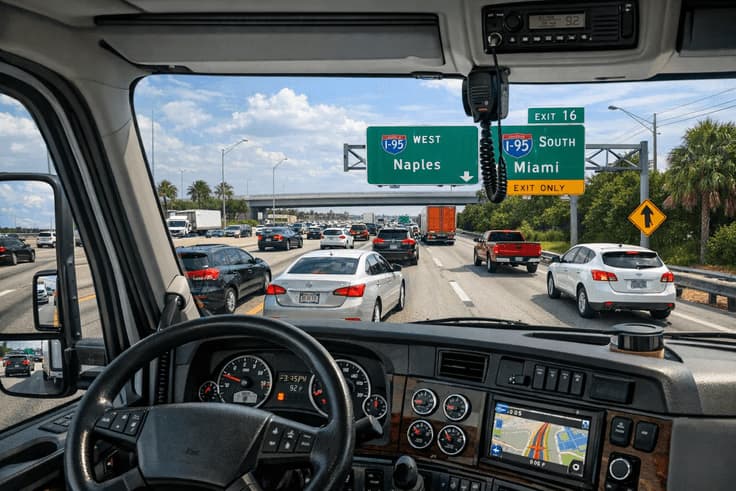
Hazard awareness is a major theme in the cdl general knowledge exam. Florida is full of situations that reward drivers who scan early: tourists making sudden lane changes near Orlando attractions, aggressive merges on Miami expressways, and fast-moving traffic on I-275 between Tampa and St. Petersburg.
Stay scanning.
The exam often asks what you should be watching for, how far ahead you should look, and how to respond when something “might” happen. That “might” is important. Defensive driving is about preventing the emergency, not winning it.
Common hazard-related concepts include:
- Seeing hazards early by scanning 12 to 15 seconds ahead
- Leaving an escape route, not just a following gap
- Identifying “high-risk zones” like intersections, ramps, and work areas
This one trips people up.
And yes, Florida-specific realities can influence how you think. Sudden heavy rain, low visibility, and hydroplaning risk are everyday events here. Florida also requires headlights when wipers are on, and the state has unique rules like allowing hazard flashers while moving in extremely low visibility on high-speed roads. Those details can shape the “best answer” mindset, even when the question is generic.
Be ready.
The best way to sharpen this is repetition with feedback. A good cdl general knowledge practice test Florida set forces you to think in scenarios, not slogans.
Study Strategies to Pass the Florida CDL Test
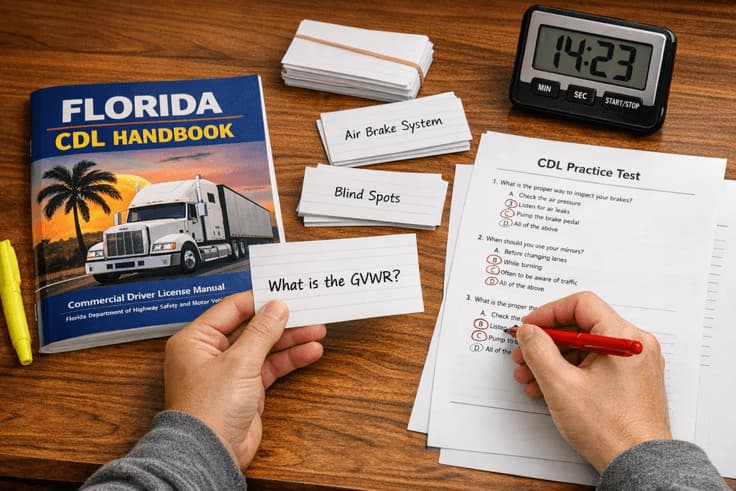
If you want to pass, you need a plan that matches how the questions are written. Reading the handbook once is rarely enough. Memorizing random answers is worse because the test will change the wording and you’ll panic.
Don’t gamble.
Use a three-part approach:
- Read the handbook sections, then explain them back in your own words
- Take practice exams and review every missed question until you can teach it
- Rotate topics so you don’t get “good” at one section and weak in another
This one trips people up.
When you review cdl test questions and answers, don’t just mark the right option. Write one sentence about why the other options are wrong. That’s how you avoid falling for “two answers look right” on test day.
One more tip: practice under mild time pressure. Not extreme. Just enough to simulate that real testing feeling where you start skimming and miss a key word like “except” or “least.”
Slow down.
Also, keep your Florida reality in mind. If you’ll be driving around Miami, Fort Lauderdale, or Orlando, you’ll deal with dense traffic, toll roads, and fast lane changes. If you’ll be running through Jacksonville or up toward Tallahassee, you may see long stretches, weather shifts, and different enforcement patterns. The exam is statewide, but your mindset should be professional everywhere.
And remember: for official info and requirements, DHSMV is the agency you’re dealing with. When in doubt, match your studying to DHSMV guidance and the handbook language.
Conclusion
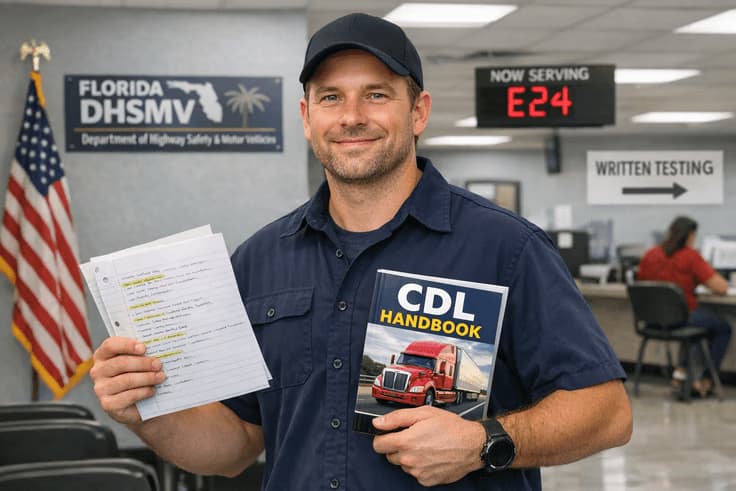
Most failures aren’t about intelligence. They’re about rushing, guessing, and missing small wording details in Florida CDL test questions. Study the handbook, drill weak areas, and use a cdl general knowledge practice test Florida routine until the logic feels automatic.
Do it daily.
A short checklist helps: scan rules, braking rules, space management, and cargo basics. Review, test, repeat. Then walk into the DHSMV process ready.
Also, feel free to check our other articles - 7 Things to Practice Before Taking the Florida Road Test and What is the minimum passing score for the permit test in florida
Share