Seven Things to Practice Before Taking the Florida Road Test
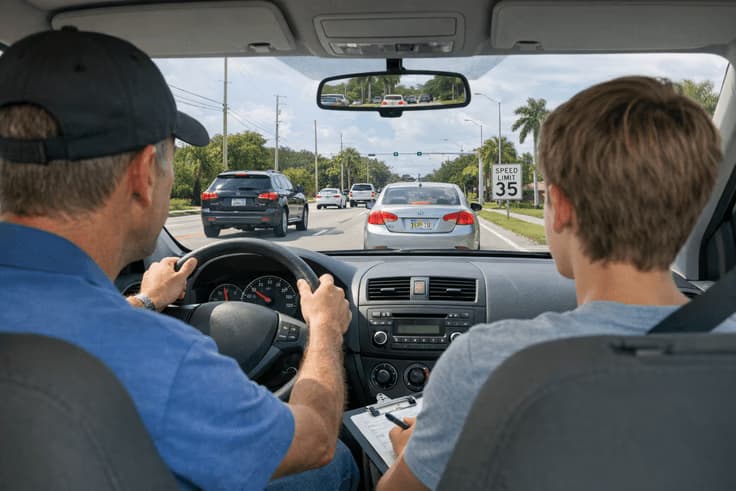
The Florida road test is the last step before you get your license, and it happens out on real roads with real traffic. No flashcards. No guessing what the examiner “wants.” You’re simply showing you can drive safely without coaching.
If you’ve been asking what is a road skills test, it’s basically a short drive where someone watches how you start, stop, turn, scan, and follow the rules like it’s normal. Because it should be. The Florida driving road test is less about being perfect and more about being steady, predictable, and aware when something changes fast, like a car creeping out of a driveway or a pedestrian hovering near a crosswalk.
Florida road test requirements come from the DHSMV, and you’ll take the exam at a local office or an approved third-party site. In busy places, Miami, Orlando, Tampa, Jacksonville, Fort Lauderdale, practice matters even more, because the “easy” moments disappear quickly. Time pressure makes you misread things. It happens.
Understand What the Florida Road Test Evaluates
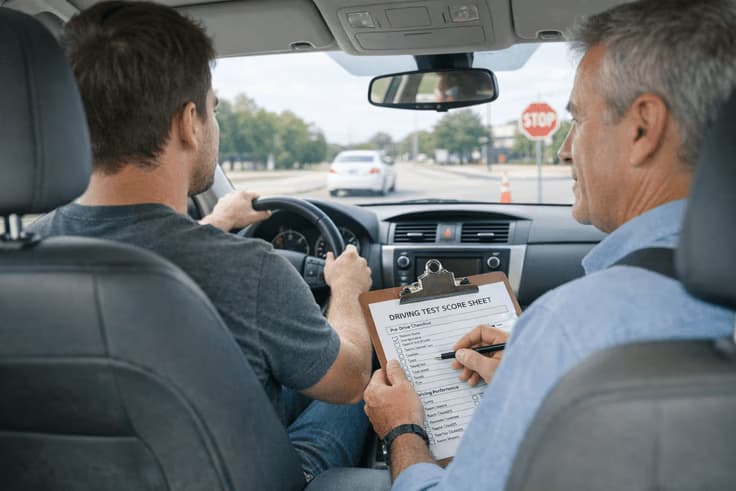
Examiners aren’t looking for fancy driving. They’re looking for safe habits that don’t fall apart under light stress. The road test is not the Florida written driving test, where you prove you know the rules. Here, they watch whether you actually use them.
They’ll focus on a few big themes:
- Vehicle control: staying in your lane, smooth speed changes, calm braking
- Awareness: mirrors, blind spots, intersection scanning, pedestrians and cyclists
- Rule-following: full stops, proper yielding, correct signals and lane choice
This one trips people up.
Little errors can stack up, and one major mistake can end the test early. That’s why it helps to understand what they’re evaluating: not how fast you learn, but how consistently you behave.
Florida adds its own flavor, too. Sudden summer downpours can drop visibility in seconds, especially around Orlando or Tampa. Tourist drivers do weird last-second lane changes near airports and theme parks. Multi-lane roads with lots of median openings are everywhere. Stay calm.
Be boring.
Practice Smooth Steering and Vehicle Control
Before you obsess over complicated intersections, make the basics automatic. The best road tests look uneventful. That’s the goal.
Practice the fundamentals until your body does them without thinking:
- Keep both hands on the wheel and steer in small, smooth movements
- Hold a steady lane position instead of drifting and correcting
- Brake early and gently, not late and hard
This one trips people up.
Drive slower. Really.
A lot of Florida roads are wide, straight, and faster than they feel. You can accidentally creep above the limit without meaning to. Practice holding a steady speed on 35–45 mph roads like the ones you’ll see all over St. Petersburg, Tallahassee, and Jacksonville. Examiners notice if braking makes the car “nod” forward.
One Florida habit to build: headlights on when wipers are on. Make it automatic. When rain hits hard, it’s not just about you seeing—it’s about being seen.
Master Proper Turning Techniques
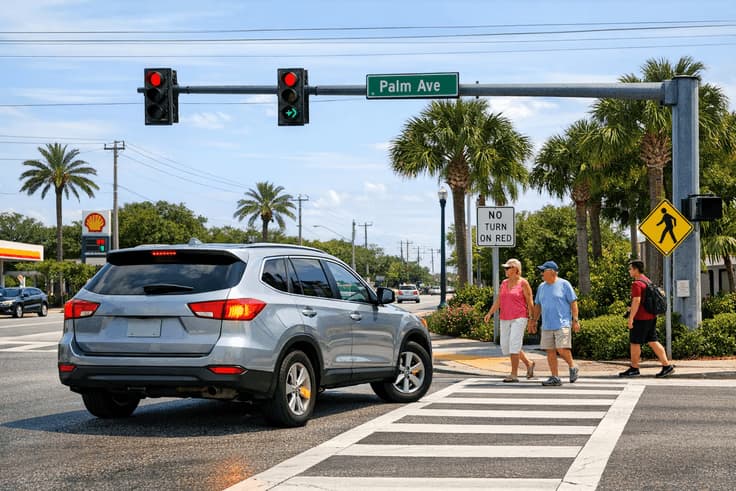
Turns are where people quietly lose points. A late signal. A wide swing. Forgetting to check for pedestrians. It adds up fast.
Use a simple routine and repeat it every time:
- Check mirrors, then signal early (not at the last second)
- Slow down before the turn, not while you’re in it
- Finish in the correct lane without drifting
This one trips people up.
Look left-right-left. Every time.
Florida intersections can be chaotic, especially in Miami and Fort Lauderdale where lanes split and traffic moves aggressively. Around Orlando near I‑4 ramps, you’ll see drivers merge late or stop suddenly. Your best move is to set up early pick your lane early, signal early, and don’t “dive” into the turn.
Also: practice right turn on red the right way. Florida usually allows it unless a sign says otherwise, but you still need a complete stop first. A rolling stop is obvious from the passenger seat. Obvious.
Learn How to Park and Reverse Safely
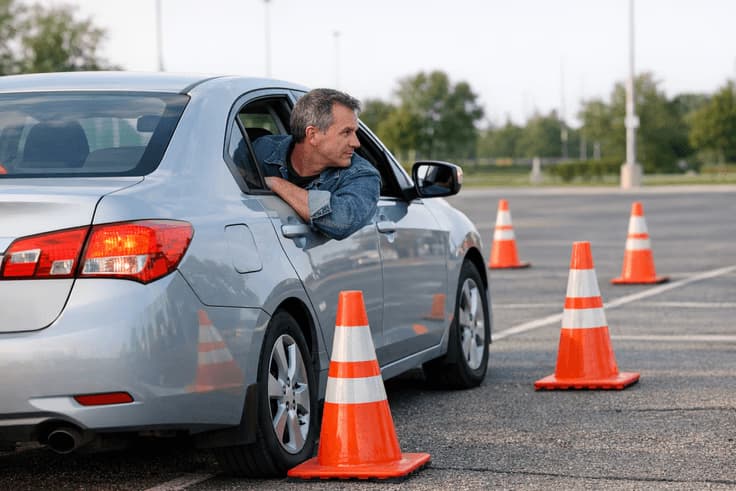
Parking and reversing are common parts of the road skills exam, even if the driving route is short. They want to know you can move the car backward without panic, guesswork, or rushing.
Practice backing up in a straight line at a crawl. Use mirrors, yes, but don’t lock onto one mirror like it’s the only thing that exists. Turn your head. Check both sides. Examiners love seeing active scanning.
Slow. Slower.
Try a quiet lot early in the day, then try a different one when it’s busier. Lots feel completely different when there are people cutting behind cars or SUVs blocking sightlines. In Tampa or Jacksonville shopping areas, bigger vehicles make spaces feel tighter. Near beaches around St. Petersburg, pedestrians pop out between cars constantly.
A good rule: when reversing, your foot should already be ready to brake. Always.
Obey Traffic Signs and Road Rules
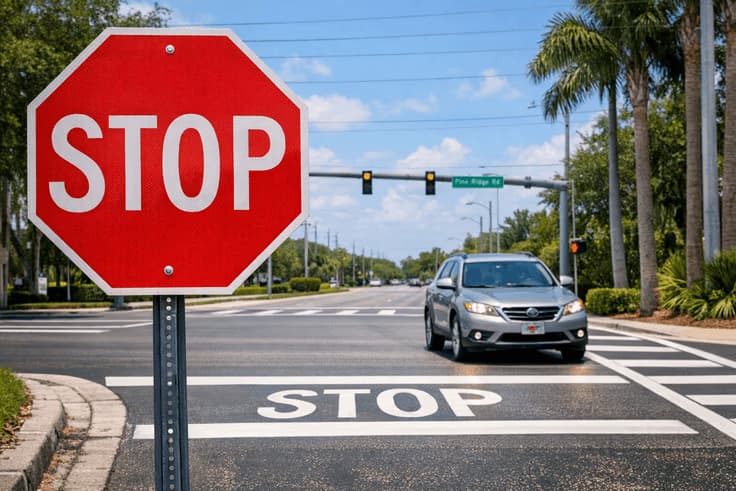
On the Florida road test, you have to recognize signs and react correctly without hesitation. This is where Florida written driving test prep helps, but only if you turn knowledge into behavior.
Stop signs are the classic trap. People stop “near” the sign instead of at the correct stopping point. If there’s a stop line, stop at the line. If there’s no line, stop before the crosswalk. If there’s no crosswalk, stop before entering the intersection. Simple, until you’re rushed. Also, one tiny detail from studying: sometimes two answers look right, like “may” versus “must.” On the road test, only the real rule counts.
Stop. Then go.
Yield signs matter too, especially on slip lanes and right-turn channels you see all over Florida. Yield means slow down and give the right of way when needed. It does not mean “merge and hope.”
Speed limits matter, too. Watch for school zones and work zones. And while the left-lane “slowpoke” rule isn’t always a direct road-test item, lane discipline makes you look confident and in control.
Rain rule reminder: Florida allows hazard lights while moving in extremely low visibility on high-speed roads, but it’s not your default move. If visibility is fine, don’t cruise with hazards on. Instead, slow down, increase following distance, and keep headlights on.
Build Confidence in Real Driving Situations
Confidence doesn’t come from reading. It comes from reps. Try to practice in a few different environments so the test route doesn’t feel like a surprise movie you walked into halfway through.
Aim for a mix:
- Residential streets for stop control and scanning
- Basic intersections for right-of-way choices
- Light multi-lane roads for lane changes and speed control
This one trips people up.
Practice where you’ll test.
If your exam is in Miami, practice one-way streets and quick lane decisions. If you’re testing near Orlando, get used to tourist-heavy roads where people brake with no warning. In Jacksonville, practice merges, and if bridges are common near your area, drive them wind and rain can change how the car feels. In Cape Coral or Port St. Lucie, long straight stretches can tempt you to speed without realizing it.
One extra drill that helps: “commentary driving” with a friend. Quietly say what you see “crosswalk ahead,” “car backing out,” “light might change.” You won’t do this during the test, but it trains your brain to scan ahead instead of reacting late.
Breathe. Seriously.
Conclusion
Passing the Florida road test is mostly about consistency. Smooth control. Clear signals. Full stops. Good scanning. If you practice the skills that show safe decision-making and you follow DHSMV standards, you’ll meet Florida road test requirements without feeling like the route is a gamble.
Use the checklist daily. Ten minutes helps. Repetition wins.
Also, feel free to review our other articles - How to pass the driving test in California?
Share