Low Shoulder Sign: Meaning, Shape, and DMV Test Tips
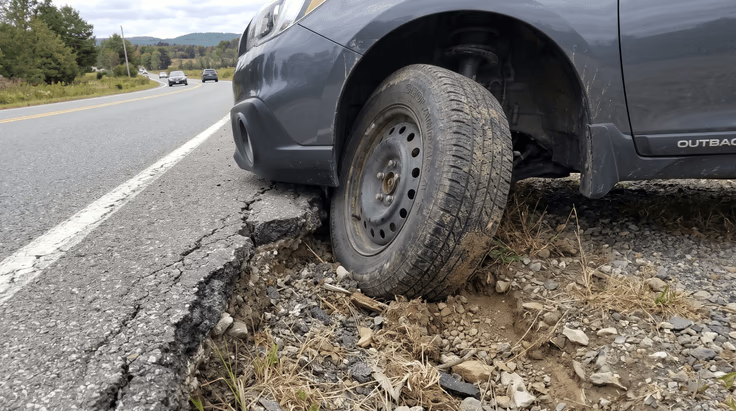
When you pass a low shoulder sign, somebody's telling you there's a drop-off right where your lane ends. That is the whole message behind the low shoulder sign. Don't go thinking it's got anything to do with gravel or mud, because all it's saying is the pavement's sitting up higher than whatever's next to it, and if one tire slides over that lip you'll feel the whole car lean before you've had a chance to think about it.
The Department of Motor Vehicles would like you to spot this thing well before you feel it under the car, and honestly I've had students who never gave shoulder height one thought till the day a wheel went off the road. The DMV permit test uses this sign to check your reaction. Yanking the wheel hard left is what they're hoping you won't pick, since overcorrecting at speed can throw you over the center line or even roll the car, and I'd want you remembering that part on test day and every day after.
What Does the Low Shoulder Sign Mean?
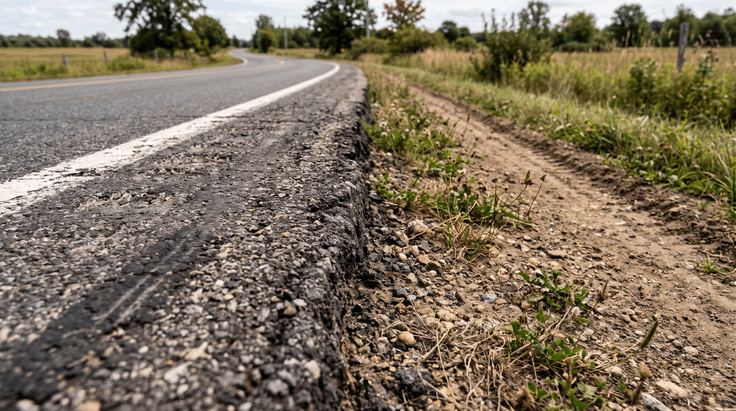
What does low shoulder mean? The low shoulder sign warns of a drop-off at the lane edge. Think of your lane as a shelf with the shoulder sitting a step below it, so I'd keep all four tires up on the paved part, and if one slips off anyway you just bring it back nice and easy. That last part matters most.
I explain it to new drivers on their first country road like this. A shoulder that's level with the road will forgive you a bit, since your tire rolls off and rolls back on without much fuss. With a drop-off that tire ends up below the pavement and scrubbing along the edge of it, so if you crank the wheel to get back it'll grip all at once and the car can lunge sideways toward the next lane. You'll also notice the sign doesn't tell you to stop or do anything in particular, it's only letting you know what's waiting at the edge, and how you drive past it is on you.
What Does the Low Shoulder Sign Look Like?
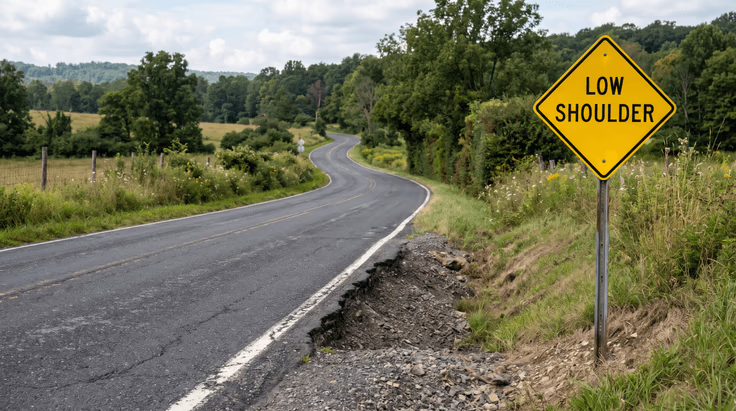
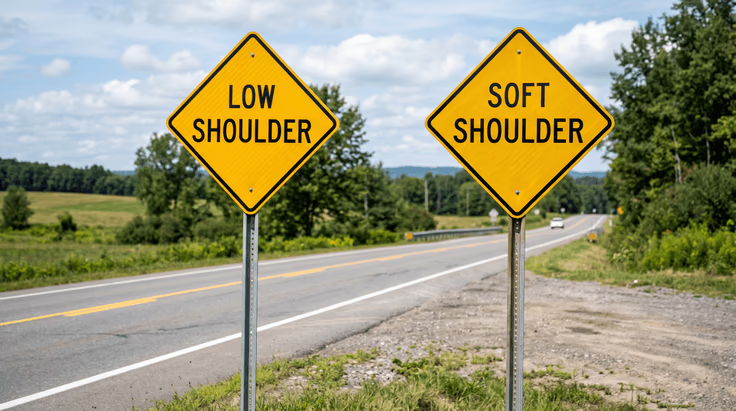
This shoulder drop off sign is a yellow diamond. You'll see black letters on it spelling out LOW SHOULDER, and sometimes there's a distance plaque bolted on underneath so you've got some idea how far ahead the hazard runs. It is a word-message road-condition sign. No symbol. Just text.
I like that about it, actually, because you don't have to decode a little picture, you only have to read two words. The yellow color and the diamond shape are what you'd get on plenty of other warning signs, so as soon as you catch that shape from a distance you should already be thinking something's coming up that could bite you. If all you've got is a glimpse of yellow and you can't read it yet, ease up a touch and look over at the edge of the road while you get closer. On the test they might just show it to you and ask what kind of sign it is, and you'd want to go with a road-condition warning.
What Should You Do at a Low Shoulder Sign?
When you see a low shoulder road sign, I want your hands steady and your eyes out ahead, because your whole job from there is keeping your wheels on the pavement. Say you drift off the edge anyway (maybe you looked down at the radio for a second), and what you don't do is overcorrect. Come off the gas, let the car settle down with that one tire still riding low, and then ease back onto the road slowly and straight, with a small turn of the wheel and not a big one. I'd be extra careful about the drop-off in curves too, since that's where a car naturally wants to wander wide and you've got less room to sort yourself out.
Stomping on the brakes while one side of the car's lower than the other isn't going to help you either, so I tell students to stay off that pedal or touch it lightly until things calm down. Then take a quick look for traffic before you steer back on, because the lane you're returning to might not be empty.
I'd expect to see this edge a lot on older country roads up north, where hard winters chew away at the ground beside the pavement.
Low Shoulder vs. Soft Shoulder Sign
A common mix-up on the test is low shoulder versus soft shoulder. They are not the same. Low shoulder means the shoulder is below the pavement level. Soft shoulder means the shoulder material is soft and weak. One is about height. The other is about firmness. Two answers look right on the permit test because both warn about leaving the travel lane. The test checks height versus firmness.
How it plays out on the road is a bit different, too. With a low shoulder your worry is the lip at the edge of the pavement, and with a soft shoulder it's your tires sinking into ground that can't hold the weight of the car, which I'd be thinking about after a lot of rain. Either way I'd stay up on the pavement and only pull over if I had to.
Where Is the Low Shoulder Sign Used?
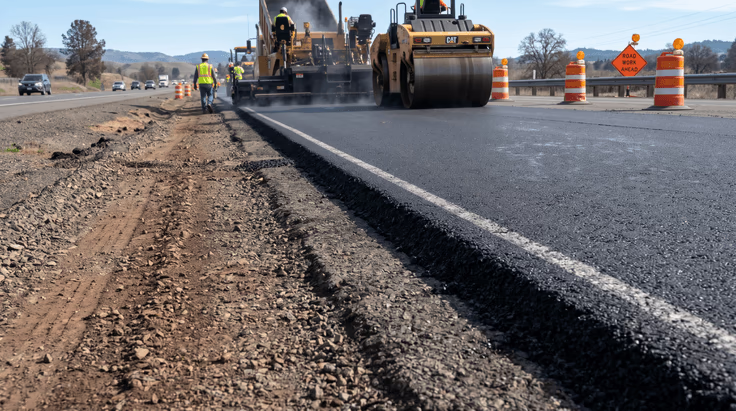
Roads recently repaved with a raised surface.
You'll also find it on highways where the shoulder's settled over the years and out on rural two-lane roads that don't have curbs to hold anything in place, and I'd keep an eye out around construction areas, where crews can leave edge drop-offs sitting for a while as they work.
The repaving one makes sense when you picture it, since a fresh layer of asphalt goes down on top of the old road and lifts the lane while the shoulder stays right where it was. Until somebody comes along and builds that shoulder back up, you've got a step there. Settling's more of a slow thing, with rain washing dirt away from the edge year after year. I wouldn't assume the sign's permanent, either, so pay attention to it on the days it's up even if it's a road you drive all the time.
Passing through a small town with road work going on, you'll likely spot one of these set up right by the cones.
DMV Test Tips for the Low Shoulder Sign
For the DMV test, remember the low shoulder sign meaning is a warning about a vertical drop at the pavement edge. The correct answer is don't overcorrect the wheel. Don't confuse it with soft shoulder. It is a yellow road-condition warning. Don't assume the sign is only about the side of the road. The test asks for the vertical drop hazard.
When I quiz students on this one I have them say it out loud a couple of times, low means lower than the road and soft means soft ground, and they usually stop mixing them up after that. If you get a scenario question where your right wheels have gone off the edge, look for the answer that has you slowing gently and easing back on, and skip anything with sudden braking or a sharp turn of the wheel. And if they ask about color, it's yellow with black letters, same as the other road-condition warnings you've been studying.
This is a sign about patience. So when a tire drops off the edge, leave the wheel alone for a second, ease off the gas little by little and steer back once you feel like you've got the car under you again, because I've never thought the drop-off by itself was what wrecks people. The panic is.
Low Shoulder Sign FAQ
What does the low shoulder sign mean? It warns that the shoulder is lower than the paved lane.
What does the low shoulder sign look like? You'll be looking for a yellow diamond with LOW SHOULDER written across it in black.
What should you do if a wheel drops off the shoulder? Whatever you do, don't go cranking the wheel, just ease off the gas and steer back when the car feels steady again.
Is a low shoulder sign the same as a soft shoulder sign? No. Low shoulder is about height. Soft shoulder is about material firmness.
Where is the low shoulder sign used? On repaved roads, rural two-lane roads, and construction edge drop-offs.
Is the low shoulder sign a warning sign? Yes, it's a yellow road-condition warning, so it's telling you about the road ahead and isn't giving you an order the way a stop sign would.
Should I slow down for a low shoulder sign? The sign doesn't post a speed, but I'd take a little off if the road's narrow or curvy, since you'll have more time to react if a wheel does wander off the edge.
Share