Slippery When Wet Sign: Meaning, Shape, and DMV Test Tips
Pretty much every kid I take out on their first rainy lesson ends up asking me about the slippery when wet sign somewhere around the second or third one we pass. What I tell them is that past that sign the road turns slick once rain or ice or mud gets on it, and the car needs a lot more room to stop than they'd think. The permit test is mainly checking that you'd slow down and go easy on the brakes, and that's the bit I'd hang onto.
What Does the Slippery When Wet Sign Mean?
People ask me what does slippery when wet mean beyond the obvious, and my answer is usually that the tires just stop holding the road as well as they did five minutes ago when it was dry. Rain or ice or mud on top, the car feels about the same to me. The car still moves, it just takes longer to slow down and it'll slide sooner if you push it.
So when you see the sign, slow down before you get to the slick part and open up the gap between you and the car in front of you. I tell students to roughly double the space they'd normally leave. You also want to avoid sudden moves with your hands and feet. I've watched a student hit the brakes hard on a wet off-ramp once and feel the back of the car get light, and he drove like a grandpa for the rest of the lesson after that.
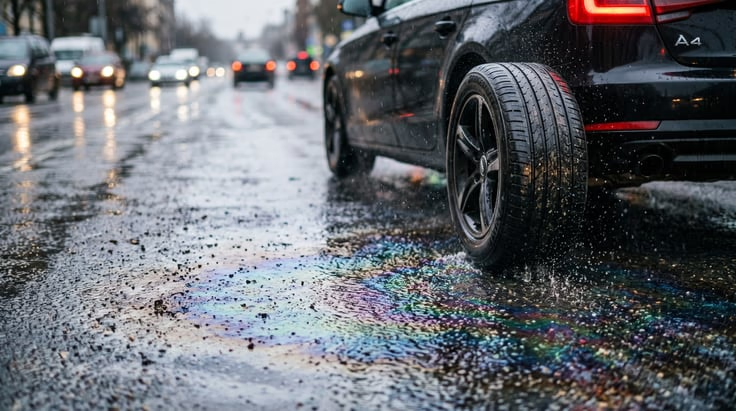
Honestly the worst rain is often the first bit of drizzle after a dry stretch of days, not the big storm. All the oil and dust that's been sitting on the pavement floats up and turns the top of the road kind of greasy, and it stays that way until enough rain falls to rinse it off. So the slippery when wet sign meaning comes down to this one point for me. The road's going to give you less grip than you're used to, so I do everything a bit earlier and a bit softer.
What Does the Slippery When Wet Sign Look Like?
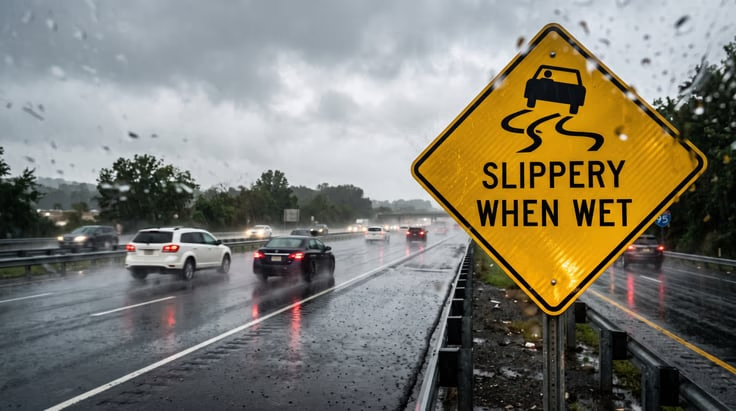
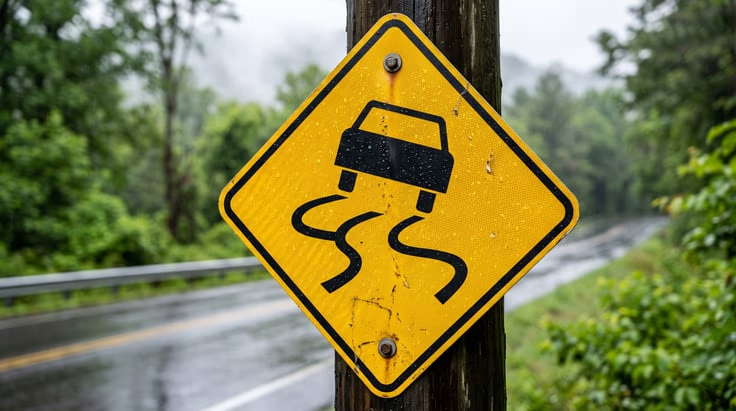
My students usually notice a slippery road sign way before they can read the picture on it, because of that yellow. It's a yellow diamond, which is the shape used for warning signs in general (curve signs, merge signs and deer crossing signs use it too). Yellow diamond means "something about the road is about to change, pay attention."
The symbol is a black car with two curvy skid lines trailing behind it. Those wavy lines are meant to show the rear end of the car swinging out, which is exactly what happens when a car starts to slide on a wet road. I've had students say it looks like the car is drunk, and honestly that's not a bad way to remember it.
Sometimes there's a little rectangle bolted under it that just says WHEN WET. I see that pair mostly before curves and right before bridges, which makes sense to me, that's where a slide would hurt the most.
What Should You Do When the Road Is Slippery?
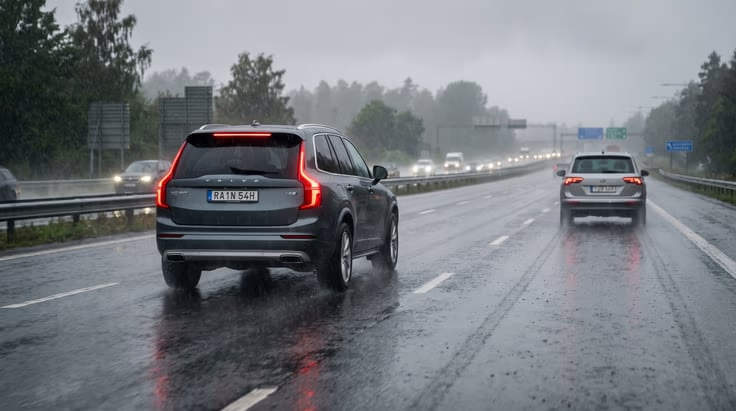
I want your foot off the gas a good bit before the wet part so the car has already bled off speed when you get there. If you're still at full speed when you reach it you're kind of behind already.
For stopping I want you on the brake sooner than feels normal and pressing it like there's an egg under the pedal. Same deal with the steering wheel and the gas, no quick jerks, because a tire that's barely holding on doesn't take much to let go. And leave extra space behind the car ahead, more than you think you need.
If you wait until the car is already sliding to do something about it, you've waited too long. Smooth steering and soft braking are what keep the tires holding the road in the first place. When I ride along with new drivers on a rainy afternoon, the most common mistake I see is braking at the usual spot and then pushing harder when the car doesn't slow down like it normally does. Starting a few car lengths sooner would have made that whole problem go away.
On a wet curve I'd have my braking done before I start turning in, then I'd just hold the wheel still and ride it out. Braking hard halfway around a wet bend is the move I'd worry about most, it asks too much of the tires at once.
Slippery When Wet vs. Bicycle Slippery When Wet
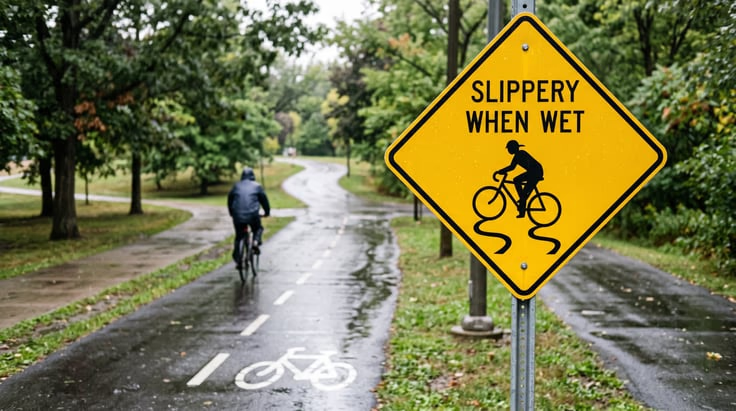
You should know there's a bike version of this sign too, and the test does like to mix the two up. The regular one shows a skidding car. The other one shows a bicycle with the same kind of skid lines.
The car version is there to warn drivers on the main roadway. The bike one goes up along bike lanes and bike paths. Bike tires are skinny, and things like a wet metal grate or a painted stripe can slide a bike out from under somebody pretty fast.
On the permit test it's easy to glance at the picture and pick the wrong one. Take a second and look at what vehicle is actually in the symbol before you answer. A car in the picture means it's the regular slippery when wet road sign, and a bike in the picture means it's the bike one.
Where Is the Slippery When Wet Sign Used?
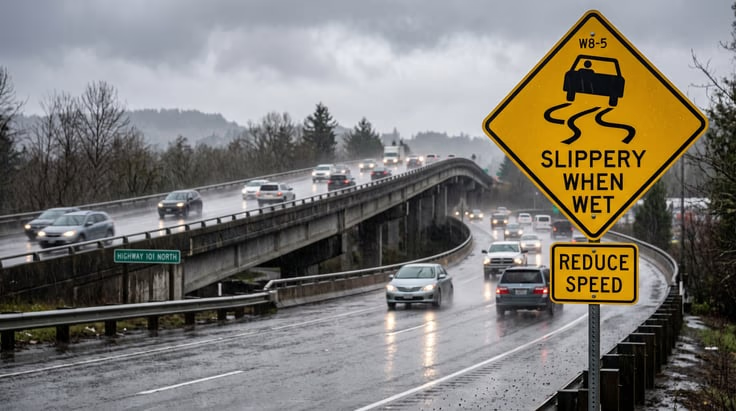
The slippery when wet road sign usually goes up where water or ice hangs around on the pavement after the rest of the road has dried.
A lot of the ones I see are on bridges and overpasses, since those ice up quicker than the road around them. You'll also find the sign on roads with smooth or worn pavement where the surface has been polished down by years of traffic. Curves get them, and so do low spots where runoff or oil ends up crossing the lane after a storm.
Bridges deserve the most attention out of all of those. A bridge has cold air going under it and over it, so it loses its heat quicker and can freeze up while the road before it is still just wet. That can be true with the thermometer reading a couple degrees above freezing. On a cold wet morning I'm slowing down for every bridge on my route whether it looks icy or not.
DMV Test Tips for the Slippery When Wet Sign
I've had students miss this one on the practice test because they read too fast and grabbed an answer that sounded fine. The question usually asks what you do when you see the sign, and one of the choices might say to keep a steady speed and not brake, which sounds careful but isn't right. You want the one about slowing down and braking gently, every time it shows up.
When my students study this sign the night before, I have them remember that the skidding-car picture means slick when wet and you slow down and brake gently. Bridges and spots in the shade stay slick longer than the rest of the road because they don't get the sun to dry them off. And they need to keep the car sign and the bike sign straight, since a lot of people mix those two up.
If a question brings up a bridge or overpass in cold or wet weather, go with the answer that has you slowing down before you get on it, not once you're already up there.
Slippery When Wet Sign FAQ
What does a slippery when wet road sign mean? That part of the road gets slick when there's rain or ice or mud on it. I'd slow down before I got there and keep my braking and steering gentle the whole way through.
Is the slippery when wet sign only for rain? No. Anything wet on the road counts for this one. Snow and ice count, mud counts, and in October a pile of wet leaves on the road can be about as slick as anything else.
What shape is the slippery when wet sign? It's a yellow diamond, which is the standard shape for warning signs. Inside there's a black car with the squiggly skid marks behind it.
What is the difference between slippery when wet and bicycle slippery when wet? The picture. If there's a car in it, it's for drivers on the road, and if there's a bike, it's put up along bike lanes and paths.
Where are you most likely to see this sign? I see it mostly on bridges and overpasses, and before some curves. It's also posted on roads with worn, smooth pavement and in low spots where water or oil runs across the road.
What should you not do when the road is slippery? Hard braking is the big one, and after that yanking the wheel or flooring it. Any of those can make the tires let go and start a skid.
Does the DMV test ask about this sign often? Yes, it comes up a lot as a warning sign question. They usually want to know whether you understand the right thing to do when you see it, not just what the sign is called.
Share