Speed Limit Sign: Meaning, Rules, and DMV Test Tips
My nephew was sure he knew this sign cold. Then the permit test asked what it actually means and he picked the wrong answer, like a lot of people do. The speed limit sign meaning is narrower than most of us drive like it is. The number is the most you're allowed on that road when the weather's dry, it's daylight and traffic is light, and it isn't a target (and it definitely isn't a minimum).
I've watched new drivers lose easy points on this one because they answered the way people drive, not the way the law reads. Below is how the handbook actually puts it, plus the spots where test-takers slip.
What Does the Speed Limit Sign Mean?
If a friend asks you what does a speed limit sign mean, the honest short answer is that it's a ceiling. If the sign says 55, you can do 55 on a clear afternoon with the road to yourself. You can't do 56. Plenty of drivers swear there's a 5 mph grace zone baked in somewhere, and I've never found it written in a single state handbook. Cops may let it slide sometimes, but the test won't.
Here's the part that catches people. The posted number assumes ideal conditions. Rain, fog, a dark two-lane road with deer around? You're expected to go slower, and every state has a "basic speed" rule that says so. People do get written up for unsafe speed at 45 in a 55 when it's snowing sideways, which feels harsh until you've seen a car in the ditch.
Whatever number you last passed is still the rule until a new sign replaces it. Out on a rural highway that might be ten miles. In a downtown it can change three times in a mile, from 35 to a 25 school zone and back again.
What Does the Speed Limit Sign Look Like?
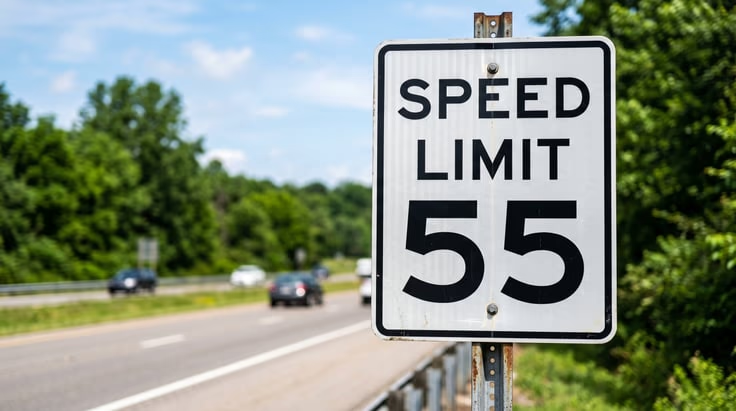
White rectangle, taller than it's wide. Black border. The words SPEED LIMIT up top in black capitals and a big number underneath. No arrows, no pictures, nothing cute. On a normal city street it's about 24 by 30 inches. On the interstate they make it a lot bigger so you can read it at 70.
Color is the thing to remember. White rectangular signs are regulatory, which just means they're the law, same family as a no-turn-on-red sign. Yellow is a warning. Orange is construction. If a test picture shows a white sign with a number on it, you're looking at a rule, not advice.
Sometimes there's a little extra plaque bolted underneath. TRUCKS 55 is common on rural interstates, NIGHT 45 shows up on some twisty state roads, and school plaques usually say WHEN FLASHING or give hours such as 7
to 8 AM. The plaque tells you who the limit is for, or when it's on. There's also a cousin, the minimum speed sign. It looks almost identical except for the word MINIMUM, and it tends to live on interstates where a truck crawling at 30 would get rear-ended.What Should You Do at a Speed Limit Sign?
Glance at your speedometer and get to the number or under it. Simple enough. The timing matters though. Rolling into a small town where 55 turns into 35, the idea is to already be at 35 when the sign goes by, not coasting down a block later while the local deputy watches. Most towns put a yellow warning sign before it with the new number and AHEAD on it, and I start braking there.
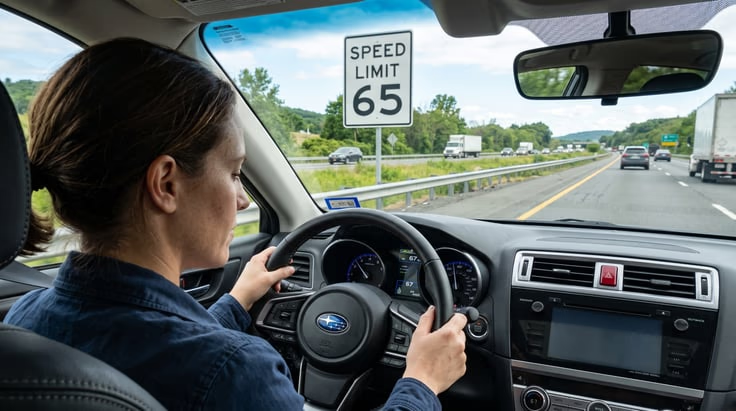
The posted speed is the top end of what's allowed, and there are plenty of days when it's too fast. Wet roads and fog are the obvious ones. Hills where you can't see over the crest, rush hour on the beltway, a work zone with guys standing next to the barrels, a side street on a Saturday when kids are riding bikes, all of those call for less.
The speed limit sign rules only say you can't go over. They don't say you have to drive right at it. Going way under isn't a free pass either. Doing 40 in the left lane of a 65 just makes everybody behind you brake and weave, so match the road in front of you.
Speed Limit Sign vs. Advisory Speed Sign
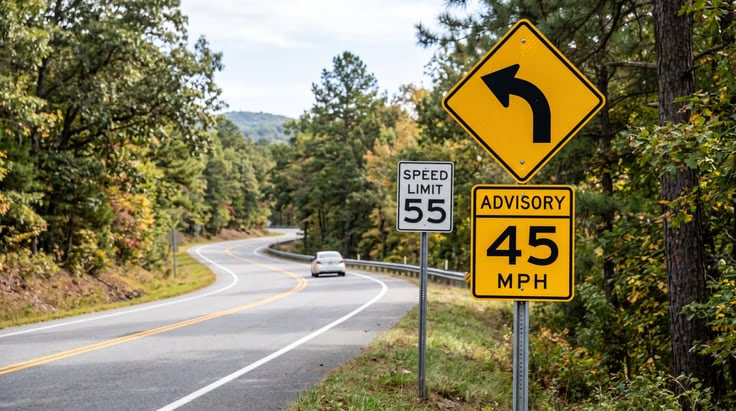
This pair shows up on permit tests constantly, so it's worth a minute. The speed limit sign is the white one. Legal maximum. The advisory speed sign is a small yellow plaque, usually square, hanging under a yellow curve sign or an exit ramp sign. It just shows a number and MPH.
The yellow plaque isn't a law. It's what the traffic engineers think is a comfortable speed for that curve in good weather. Take a 25 MPH ramp at 35 and you're not technically breaking a speed limit. You are, however, finding out how much grip your tires have left. I'd take the hint.
Test trick: check the color before you read the number. White means you must obey it. Yellow means somebody is giving you advice. If the question asks which one an officer can ticket you for, it's the white one.
Where Is the Speed Limit Sign Used?
You'll find them on every road type I can think of, from the interstate to a gravel county road, and the design never changes. Crews put one up wherever a new zone begins, which is why the first sign after an intersection or a city line is the one you go by.
A few places where I'd bet on seeing one:
- Right after a "City Limit" or town line sign
- After a freeway on-ramp merges in
- At both ends of a school zone
- Anywhere the legal limit changes, like 65 dropping to 55 before a construction area
What if there's no sign at all? Then state law fills the gap. Many states default to 25 mph on residential streets and 55 on rural two-lanes, though some go 30 or 65 instead. The exact numbers are in your state handbook, and they do turn up on tests now and then.
DMV Test Tips for the Speed Limit Sign
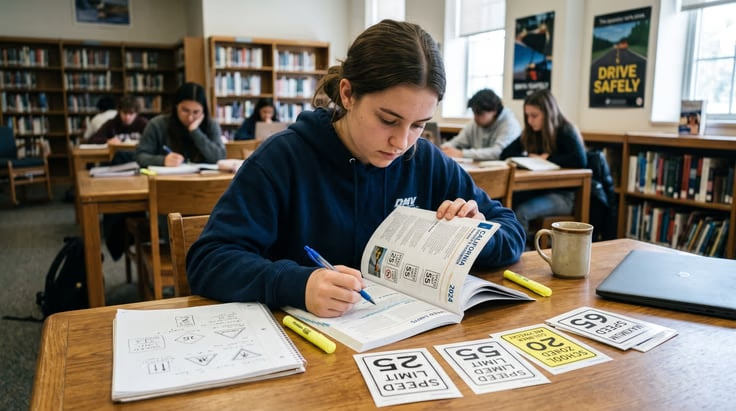
Almost every test question on this sign is really asking one of four things. Is the number a maximum (yes) or a minimum (no)? Can weather, darkness or traffic require you to go slower (yes)? Is the yellow advisory plaque a law (no, the white sign is)? And are white rectangles regulatory (yes, so you obey them)?
Don't click until you've read every option to the end. If an option calls it a minimum speed sign, cross it off. If one says you can drive the posted speed in any weather, cross that off too. The right answer usually mentions ideal conditions or a "safe speed." And if you get a picture of one white sign showing SPEED LIMIT 65 and MINIMUM 45, both numbers are real limits on that road.
Also worth ten minutes of your time: the default school zone and residential speeds for your state. They come word for word from the handbook, and skipping them is how people lose free points.
Speed Limit Sign FAQ
Is the speed limit sign a minimum speed? No. It's the maximum in good conditions. A separate sign that actually says MINIMUM SPEED handles the low end on some highways.
Can I drive faster if everyone else is speeding? No. "Everyone was doing 75" has never gotten anybody out of a ticket. Each driver is judged on their own speed, not the pack's.
What should I do if the road is wet or icy? Go below the posted number. The sign was set for dry pavement, and on black ice I've seen 30 in a 55 turn out to be too quick.
Is a yellow advisory speed sign the same as a speed limit sign? Nope. The yellow plaque is a suggested speed for a curve or ramp. The white sign is the actual maximum speed sign for the road, the one you can be ticketed under.
What does a white rectangular sign mean? That shape and color mark a regulatory sign, which is a law posted on a pole, whether it's about speed, turns or parking. You follow it.
How long does a speed limit apply? Until you pass another speed limit sign with a different number, or a sign that ends a special zone like a school zone.
Will the DMV permit test ask about speed limit signs? Expect it. I haven't seen a state written test yet without at least one question on this sign or on how it differs from the yellow advisory plaque.
Share