What's on the California Motorcycle Written Test?
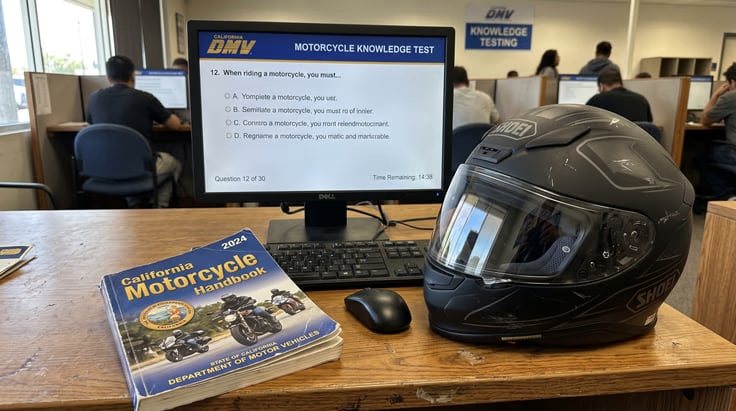
Here's the deal up front. The California motorcycle knowledge test is a multiple-choice exam. It comes from the California Motorcycle Handbook. Most riders see about 25 questions. You need an 80% score to pass. The count does move around now and then, so I'd pull up dmv.ca.gov the week you test and see what it says right now (the 80% part hasn't budged).
I'm going to go through what's on it, the California rules that show up a lot, and how I'd study if I wanted to pass on the first visit. When you're ready to practice, Drivio's California motorcycle practice tests live at /moto/california and they're set up like the real thing.
How Many Questions and What Score to Pass?
It's all multiple choice, and you'll usually get somewhere around 25 questions. For the CA DMV motorcycle written test you need 80% right, which on 25 questions works out to roughly 20 correct before you can leave happy. The DMV does tweak the count every so often, so give dmv.ca.gov a look before your appointment.
Every question comes from the California Motorcycle Handbook. Not from YouTube. Not from your friend who rides a Harley. The handbook is the source.
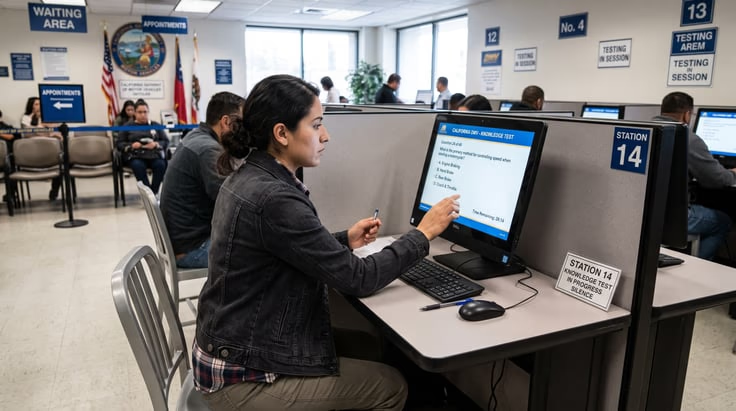
You take the test at a DMV office. There's no online proctoring for this test. You'll sit at a DMV terminal and answer questions. Pass it and you earn your M1 instruction permit. That permit allows legal practice. It comes with strings attached though, since you can't carry a passenger and you have to stay off the freeway while you're on it.
Topics Covered on the California Motorcycle Test
The test covers a lot of ground. Here's what actually shows up.
Proper gear and DOT helmets show up. Motorcycle controls and what they do appear. Safe starting and stopping are common topics. Lane positioning and why it matters. You'll get asked about blind spots, both the ones you can't see into and the ones you're sitting in for the cars around you, plus how to swerve or brake hard when something pops up in front of you.
Group riding rules.
This one trips people up.
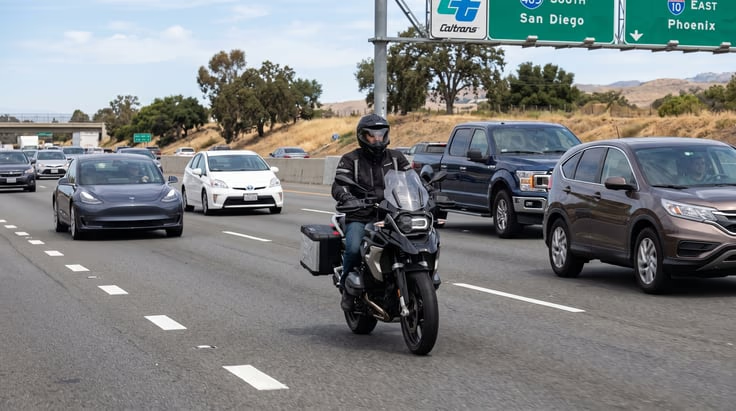
California specifics also appear. Lane splitting is legal here, but only when done safely. The test wants you to know what "safely" means. If you plan on carrying someone, there are rules about that too, and the bike needs a proper passenger seat and footrests before anybody climbs on the back.
Expect a few questions on riding in rain, riding after dark and what happens if you ride impaired, so I wouldn't skip those chapters even if they look boring compared to the lane-splitting stuff. Those are the sections my students tell me they skimmed, and then they act surprised when two or three questions come straight out of them.
The controls questions are mostly common sense once you've sat on a bike, but if you haven't, spend a little extra time on that chapter. Knowing which hand works the front brake and which foot shifts is the kind of thing the test assumes you've already got down.
Lane Splitting and Other California-Specific Rules
California explicitly legalized lane splitting. That means questions about it show up. What the DMV really cares about is whether you're splitting at a safe, prudent speed, so if traffic on the 405 is crawling along at 30 mph and you're shooting between the cars at 45, that's not what they had in mind. The DMV wants you to know the difference between legal and reckless.
Helmet law is strict. Here everyone on the bike wears a DOT-compliant helmet, rider and passenger both, no matter how old they are or how short the trip is. No novelty helmets. No half shells that don't meet federal standards.
Your headlight has to be on during the day, too, not just at night. Passenger equipment rules also matter. Before you put a friend on the back, the bike has to have a seat for them and footrests they can actually reach.
The handbook gets updated, and the wording on these rules matters, so make sure the copy you're reading is the current one from the DMV and not some old PDF somebody saved years ago. The California motorcycle written exam often tests small legal wording differences.
What the Questions Look Like and How It's Scored
Format is straightforward. Multiple choice, one best answer, taken on a DMV terminal. You'll tap or click your answer and move on.
80% correct. On a 25-question test, that's about 20 right. Get fewer and you fail.
Failing isn't the end of the world, because you're allowed to take it again. DMV retake rules apply. How long you wait and what it costs to try again can change from year to year, so I'd look that up on dmv.ca.gov before you book a second visit.
How to Pass the California Motorcycle Test First Try
Here's a plan that works.
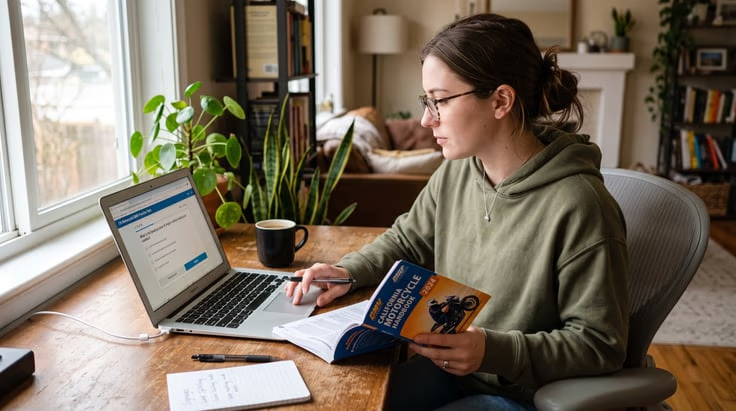
First, read the California Motorcycle Handbook. Not skim. Read. Highlight the stuff you don't know.
Second, take practice tests. Repeatedly. The format should mirror the real thing.
Third, drill the topics people miss. Lane splitting. Lane positioning. Hazard avoidance. On many questions, two choices seem correct. Keep doing practice rounds and you'll start catching the little word in the wrong answer that gives it away.
After that, I'd just keep testing yourself until you're clearing 80% every single time, with some room to spare. That's how to pass motorcycle written test california. Not once. Consistently.
When you miss a question on a practice test, go find the page in the handbook it came from and read the whole paragraph around it. It takes a couple extra minutes but it's the fastest way I know to stop missing the same kind of question twice.
Drivio has free California motorcycle practice tests at /moto/california. Use them. They're built for this.
California Motorcycle Written Test FAQ
How many questions are on the California motorcycle test? Most people get about 25 on the California DMV motorcycle written test, but the number has been known to change, so check dmv.ca.gov before you go in.
What score do I need? 80% to pass. That's stable.
Is lane splitting on the test? Yes. You'll see questions on safe and legal lane splitting.
Is it multiple choice? Yes. Each one has a single best answer, and you pick it on the screen at the DMV.
Can I retake it if I fail? Yes. You'll have to follow whatever the DMV's current retake rules are, and there may be a fee, so look those up on dmv.ca.gov first.
Which handbook should I study? The California Motorcycle Handbook. Only that one.
Beginner Questions About the Motorcycle Knowledge Test
How hard is the California motorcycle written test? I'd call it middle of the road, as long as you've read the handbook and done a handful of practice tests. It's very passable. Students who walk in without studying, though, usually end up coming back for a second try.
How long should I study? For most of the riders I work with, about a week of steady studying gets them there. Half an hour each evening will stick better than one five-hour session the night before.
Can I take it the same day as my car test? Maybe, but I wouldn't plan your day around it, because every DMV office handles its schedule a little differently. Call ahead.
What do I bring? Bring:
- Your ID
- Proof of residency if needed
- Money for the application fee
The exact list can change, so double-check it on dmv.ca.gov the day before.
What happens after I pass? You get your M1 instruction permit. Then you practice. Later you take a skills test and get your full license.
Slow down on the real test. Read every answer before choosing. You'll be fine.
For more practice, head to Drivio's California motorcycle practice tests at /moto/california.
Share