Added Lane Sign: Meaning, Shape, and DMV Test Tips
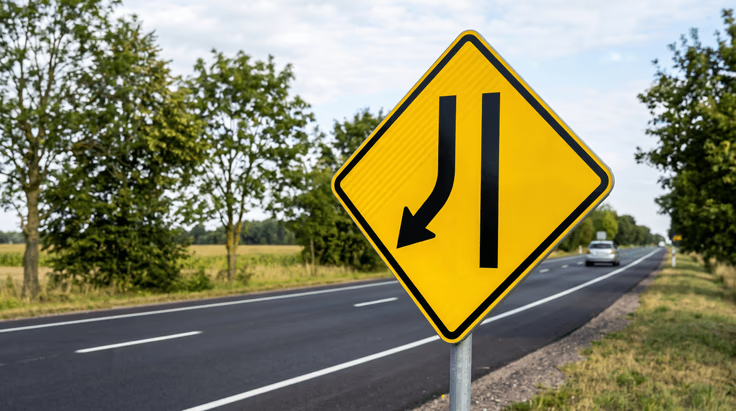
Students read the added lane sign page in the handbook once, nod, and move on. Then on the test it's sitting right beside the merge sign and they guess. Look at the drawing. Two roads come together and you still have two lanes after. Compare that shape with a merge sign. No blending.
What it's telling you is that a fresh lane shows up on the right side for whoever's coming in off the ramp. Nobody squeezes. Nobody waits. On the permit test they put it there to see if you'll mix it up with merging, and I've watched good students do exactly that.
What Does the Added Lane Sign Mean?
What does an added lane sign mean? A new lane opens on the right. Entering traffic gets its own lane. Since there's room for everybody, you don't stop or slow down for the ramp cars, and they don't stop for you. I'd just hold my lane for a bit and let them get up to speed over there. The test question is really asking if you would treat it as a merge. With a merge, two lanes of cars turn into one lane. An added lane keeps them separate at first.
So the added lane sign meaning really comes down to space. The road is getting an extra lane, the traffic that's joining slides into that lane, and the traffic already on the road keeps going where it was. Nothing ends. Once that sinks in you won't miss it again.
What the Added Lane Sign Looks Like
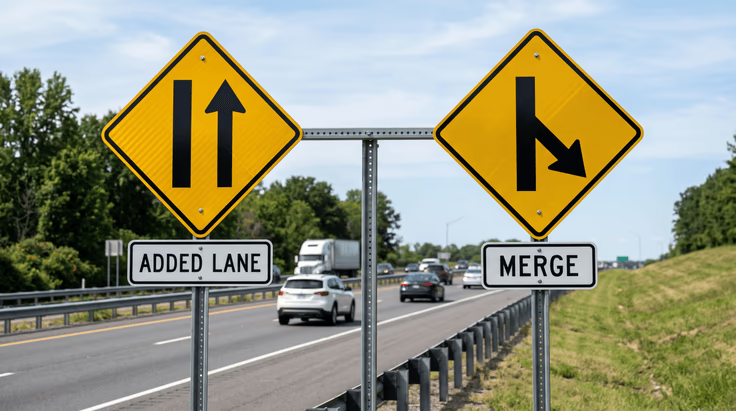
What the added lane sign looks like matters more than people think. It's a yellow diamond, same family as other warning signs. Inside there's a black drawing, a straight road with a second one curving in from the right, and up top they're just two lines side by side. On the added right lane sign that right line is your new lane and it keeps going. That parallel line is the whole point. If the lines blend into one, that's the merge sign. Two separate lines all the way up means added lane. On the DMV computer the pictures are small. Look at the top of the drawing and count lines. Two means added lane.
What to Do at an Added Lane
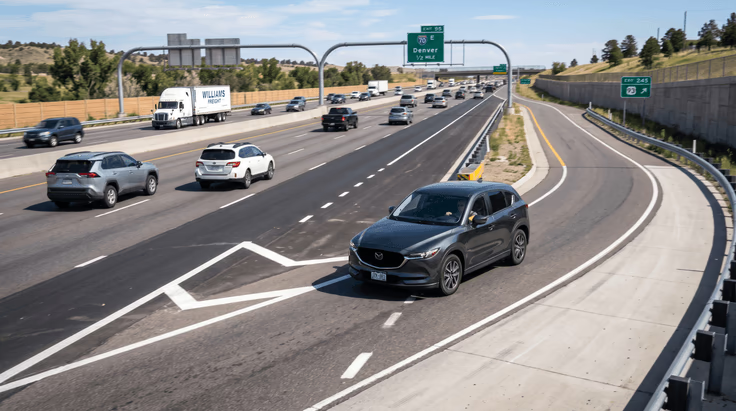
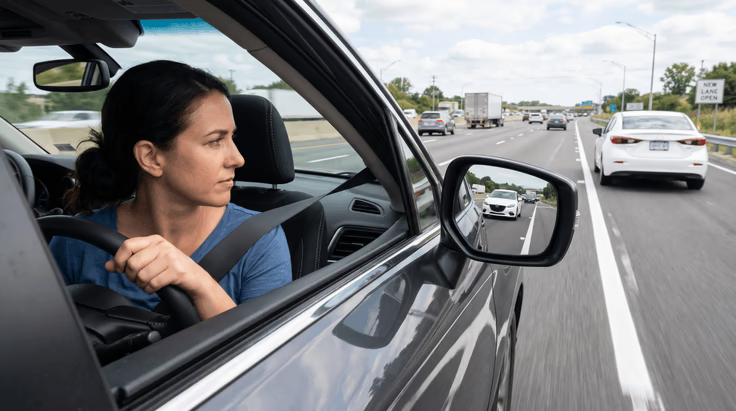
At an added lane, your job is pretty easy. Stay put. Don't jerk the wheel over because a sign went by. Want the new lane? Take it later, after the ramp traffic is in and moving. You aren't stuck yielding to anybody at that point, and if a guy in a pickup wants to come over, let him, but you're not obligated to move. Watch for drivers who jump over early anyway. They exist everywhere from Dallas to El Paso. People sometimes cut across the second the new lane opens up, before it's even fully there, so I'd keep an eye on your mirror and leave a little extra room ahead.
Now flip it and say you're the one on the ramp. Your ramp just becomes a lane, so get up to speed in it and stop worrying about a gap. Later on, mirror, shoulder check, blinker, then over when it's open. Your lane isn't going anywhere. That's a pretty different feeling from a true merge, where the ramp lane runs out and you have to find a spot before it does.
Added Lane Sign vs Merge Sign
Added lane sign vs merge sign. This comparison shows up constantly on permit tests. An added lane sign means a new lane appears. No merge is needed. On a merge sign the two lines run together into a single lane, so the traffic has to share what's left. Someone must yield. The DMV asks which sign requires yielding. Parallel lines after the join mean no immediate yield. One blended lane means someone has to give.
Here's how I'd put it to a nervous student. Added lane, everybody keeps a lane for a while. Merge, the ramp lane dies out and somebody has to slow down or speed up to fit. So a question about which sign means you may have to give way points to the merge sign. A question about which sign gives entering cars their own lane points to the added lane sign.
Where the Added Lane Sign Is Used
Any place the road gets an extra lane, you might see it. On-ramps that turn into a real lane instead of tapering off. Freeway entrances where three lanes become four. Past a junction where the highway widens out. Anywhere entering traffic keeps its own lane. Around Austin, you'll spot them where frontage roads feed into main lanes. Around Fort Worth, they pop up near interchanges. Think of it as a heads-up that you're about to have more room, which is the opposite of what most warning signs tell you.
DMV Test Tips for the Added Lane Sign
DMV test tips for the added lane sign. Look at where the lines go after the roads come together. If they keep running side by side, there's no forced merge and nobody has to yield right away. Mixing it up with the merge sign is the most common miss. Most wrong answers I see are people picking "yield" when the drawing shows a lane being added. You'll get a merge choice and an added lane choice, and if you rush they both kind of sound okay. The parallel lines are your clue.
A couple of other habits help. Read the question all the way through, because sometimes it's about meaning and sometimes it's about what you do. Still stuck? Put yourself on that ramp in the picture. Does your lane keep going or end? Keeps going means added lane. Ends means merge. Do a few road sign practice quizzes before test day, because the added lane and merge signs tend to come up close together.
Added Lane Sign FAQ
FAQ time, quick and clean.
Is an added lane the same as a merge? No. An added lane gives entering traffic its own lane. A merge forces two lanes into one.
Do I have to yield at an added lane sign? Not immediately. The ramp cars have their own lane and aren't crossing in front of you, so stay where you are. Do glance at your mirror, somebody always hops over early.
What does the added lane sign look like? A yellow diamond with two roads joining and then running parallel. No blending into a single lane.
Where is the added lane sign usually placed? A bit before an on-ramp or junction where a right lane gets added. Freeways and big multi-lane highways, mostly.
Why does the DMV test this sign? On a small screen it looks close to the merge sign, and the two mean different things for who yields. The test checks that you know an added lane removes the immediate yield.
Can I merge later at an added lane? Yes. You can merge when you choose to, but you're not forced to do it right at the sign.
What color is the added lane warning sign? It's yellow with a black symbol, like other warning signs, and shaped like a diamond.
So when you spot the added lane warning sign, read it as good news, because the road is picking up an extra lane. Nobody's making you squeeze over or give way the second you pass it. Just keep the merge sign straight in your head, since that's the one where the lanes really do come together.
Share