Florida DMV Practice Test Online: Road Rules
Florida road rules feel obvious-until you're staring at a DHSMV question and the wording starts to blur. That's why this Florida DMV practice test page focuses on the stuff that actually gets tested: who goes first, who waits, and what you must do (even if it feels annoying). No guessing. No panic.
Picture real Florida driving for a second. Jacksonville bridge merges. Miami express lanes. Orlando's I‑4 madness. Tampa Bay traffic on a Friday. Same story everywhere: the rules decide right of way, lane position, and what counts as a legal move. Learn it once and it travels with you, whether you're in St. Petersburg, Fort Lauderdale, Hialeah, Cape Coral, Tallahassee, or Port St. Lucie.
And yes-two answers can look right. Time pressure makes you misread "may" vs "must." Tiny words matter.
See more
Florida road rules feel obvious-until you're staring at a DHSMV question and the wording starts to blur. That's why this Florida DMV practice test page focuses on the stuff that actually gets tested: who goes first, who waits, and what you must do (even if it feels annoying). No guessing. No panic.
Picture real Florida driving for a second. Jacksonville bridge merges. Miami express lanes. Orlando's I‑4 madness. Tampa Bay traffic on a Friday. Same story everywhere: the rules decide right of way, lane position, and what counts as a legal move. Learn it once and it travels with you, whether you're in St. Petersburg, Fort Lauderdale, Hialeah, Cape Coral, Tallahassee, or Port St. Lucie.
And yes-two answers can look right. Time pressure makes you misread "may" vs "must." Tiny words matter.
Florida3 minEasy10 questions

Tests Verified by Daniel Gonzalez
Experienced teacher & Instructional Designer
"These practice tests are built from the DMV handbook to help you actually learn the rules and pass the driving test with confidence"
Key Road Rules on the Florida DMV Test
Right of way is the backbone of Florida road rules. It's the theme that keeps showing up, especially in those simple little intersection diagrams that suddenly feel complicated. Read slowly. Then decide.
At a four-way stop, the first vehicle to stop should be the first to go. If two vehicles stop at the same time, the driver on the left yields to the driver on the right. Easy rule. Big points.
Intersections are everywhere in this state, from downtown one-ways to wide multi-lane roads with constant turn lanes and surprise U‑turns. The test usually comes back to a few fundamentals:
- Yield to pedestrians in a crosswalk (marked or unmarked) when they're in your lane or close enough to be in danger.
- When turning left, yield to oncoming traffic and to pedestrians crossing the street you're turning onto.
- At a stop sign, stop before the crosswalk or stop line-no rolling past it.
This one trips people up.
Lane rules matter, too, and Florida is picky about the left lane. It's not just "keep right if you're slow." On roads with two or more lanes going the same direction, you can't camp in the left lane and block faster traffic-even if you think you're already doing the speed limit. Move over.
Headlights are another favorite because the rule is so short. If your wipers are on, your headlights must be on. Full stop.
Then there's the Move Over law, expanded in 2024. When you approach certain stopped vehicles with lights or warning signals, you're required to change lanes away if you can do it safely. If you can't move over, you must slow down-typically 20 mph below the posted speed limit (or to 5 mph if the limit is 20 mph or less). Not optional. Move over.
Common Road Rule Questions on the Test
A lot of road-rule questions are designed to catch the "sounds polite" answer instead of the legal one. They also love wording tricks-especially the difference between what you can do and what you must do.
Right on red is the classic. Florida generally allows a right turn on red after a complete stop, unless a sign says "NO TURN ON RED." That stop has to be real, not a slow creep. Wheels stop.
Left on red shows up less often, but it's a very "testable" fact. In Florida, you can turn left on red if you're turning from a one-way street onto another one-way street, you come to a complete stop first, and there's no sign prohibiting it. Many people miss that.
School bus questions get tricky when divided highways are involved. If there's a physical median or barrier separating directions of travel, traffic on the opposite side generally doesn't have to stop for a bus stopped on the other side. If it's only a painted line, then both directions stop. That detail matters.
Lane marking questions are another DHSMV staple, especially now that so many Florida metros use managed lanes. In places like I‑95 Express in Miami, I‑295 express lanes around Jacksonville, or I‑4 Express in Orlando, crossing double white lines-or driving over plastic lane separators-is illegal. The exam loves, "What does this line mean?"
Weather rules can pop up in surprising ways. Florida does allow hazard lights while moving only in extremely low visibility conditions on higher-speed roads (often referenced as 55 mph or more). Otherwise, hazards are mainly for stopped vehicles or emergencies. That one's niche. Still fair game.
And yes, even golf carts can be part of the road rules section. Since Oct. 1, 2023, drivers under 18 need at least a learner's permit to operate a golf cart on public roads, and adults must carry photo ID. Where carts are allowed depends on local rules-often on streets posted 30 mph or less-so it comes up in certain communities more than others.
How to Prepare for the Florida Road Rules Test
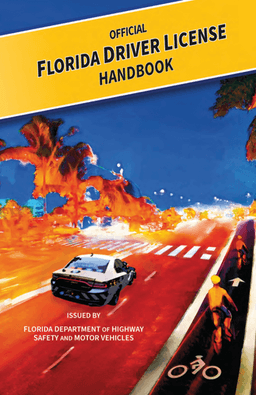
Start with the Florida Driver Handbook, especially the road rules and traffic control sections. Then practice. Then practice again. Repetition wins.
A good fl practice road rules test doesn't just check memorization-it trains you to recognize what the question is really asking. The DHSMV tends to recycle scenarios and swap a few words. That's where people slip.
Try a simple routine that's easy to stick with:
- Read one handbook section, then take a short set of practice questions immediately.
- Review every missed question and rewrite the rule in one sentence.
- Take a fresh set the next day to confirm it actually stuck.
This one trips people up.
When you review, don't just look at the "correct answer." Ask yourself: who had the right of way, and why? If you can explain it out loud without guessing, you're ready for the real thing.
If you want one more edge, use a florida dmv practice test online in short bursts instead of cramming for hours. Your accuracy stays higher, and the wording feels less sneaky over time.
Sleep helps. So does reading carefully.
See more
Key Road Rules on the Florida DMV Test
Right of way is the backbone of Florida road rules. It's the theme that keeps showing up, especially in those simple little intersection diagrams that suddenly feel complicated. Read slowly. Then decide.
At a four-way stop, the first vehicle to stop should be the first to go. If two vehicles stop at the same time, the driver on the left yields to the driver on the right. Easy rule. Big points.
Intersections are everywhere in this state, from downtown one-ways to wide multi-lane roads with constant turn lanes and surprise U‑turns. The test usually comes back to a few fundamentals:
- Yield to pedestrians in a crosswalk (marked or unmarked) when they're in your lane or close enough to be in danger.
- When turning left, yield to oncoming traffic and to pedestrians crossing the street you're turning onto.
- At a stop sign, stop before the crosswalk or stop line-no rolling past it. This one trips people up.
Lane rules matter, too, and Florida is picky about the left lane. It's not just "keep right if you're slow." On roads with two or more lanes going the same direction, you can't camp in the left lane and block faster traffic-even if you think you're already doing the speed limit. Move over.
Headlights are another favorite because the rule is so short. If your wipers are on, your headlights must be on. Full stop.
Then there's the Move Over law, expanded in 2024. When you approach certain stopped vehicles with lights or warning signals, you're required to change lanes away if you can do it safely. If you can't move over, you must slow down-typically 20 mph below the posted speed limit (or to 5 mph if the limit is 20 mph or less). Not optional. Move over.
Common Road Rule Questions on the Test
A lot of road-rule questions are designed to catch the "sounds polite" answer instead of the legal one. They also love wording tricks-especially the difference between what you can do and what you must do.
Right on red is the classic. Florida generally allows a right turn on red after a complete stop, unless a sign says "NO TURN ON RED." That stop has to be real, not a slow creep. Wheels stop.
Left on red shows up less often, but it's a very "testable" fact. In Florida, you can turn left on red if you're turning from a one-way street onto another one-way street, you come to a complete stop first, and there's no sign prohibiting it. Many people miss that.
School bus questions get tricky when divided highways are involved. If there's a physical median or barrier separating directions of travel, traffic on the opposite side generally doesn't have to stop for a bus stopped on the other side. If it's only a painted line, then both directions stop. That detail matters.
Lane marking questions are another DHSMV staple, especially now that so many Florida metros use managed lanes. In places like I‑95 Express in Miami, I‑295 express lanes around Jacksonville, or I‑4 Express in Orlando, crossing double white lines-or driving over plastic lane separators-is illegal. The exam loves, "What does this line mean?"
Weather rules can pop up in surprising ways. Florida does allow hazard lights while moving only in extremely low visibility conditions on higher-speed roads (often referenced as 55 mph or more). Otherwise, hazards are mainly for stopped vehicles or emergencies. That one's niche. Still fair game.
And yes, even golf carts can be part of the road rules section. Since Oct. 1, 2023, drivers under 18 need at least a learner's permit to operate a golf cart on public roads, and adults must carry photo ID. Where carts are allowed depends on local rules-often on streets posted 30 mph or less-so it comes up in certain communities more than others.
How to Prepare for the Florida Road Rules Test
Start with the Florida Driver Handbook, especially the road rules and traffic control sections. Then practice. Then practice again. Repetition wins.
A good fl practice road rules test doesn't just check memorization-it trains you to recognize what the question is really asking. The DHSMV tends to recycle scenarios and swap a few words. That's where people slip.
Try a simple routine that's easy to stick with:
- Read one handbook section, then take a short set of practice questions immediately.
- Review every missed question and rewrite the rule in one sentence.
- Take a fresh set the next day to confirm it actually stuck. This one trips people up.
When you review, don't just look at the "correct answer." Ask yourself: who had the right of way, and why? If you can explain it out loud without guessing, you're ready for the real thing.
If you want one more edge, use a florida dmv practice test online in short bursts instead of cramming for hours. Your accuracy stays higher, and the wording feels less sneaky over time.
Sleep helps. So does reading carefully.
25000
practice tests completed by Florida learners this month