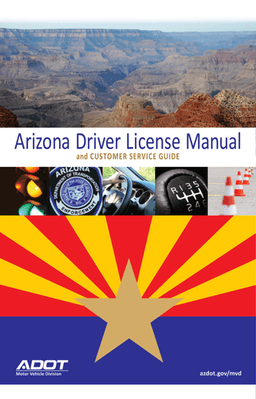
Arizona Drivers Permit Test Practice: Smart Driving Techniques for Real Roads
How to Stay in Control at Arizona Freeway Speeds
Merging onto the Loop 101 in Scottsdale isn't a suggestion. It's physics. The Arizona MVD written test leans hard into this. You can't just click through an online practice permit test AZ and hope muscle memory saves you. Real freeways here don't wait. The I-10 through Phoenix flows at 75, and every car around you acts like it's running late for something important. Your steering inputs shrink at that speed. Your eyes have to look way past the hood. Staring at the bumper ahead in Chandler? That means you're already behind. Way behind.
The test will toss lane positioning at you. Keep right except to pass. Not a preference. Law. Left-lane campers on the US-60 through Mesa cause the kind of rage that makes the news. There's a blowout question too. What do you do when a tire shreds at speed? Two answers look right on this one. One says "brake firmly," the other says "ease off accelerator." Pick the second one. Always. Stomping the brake mid-blowout sends weight forward and spins you. No.
Reaction timing isn't a theory. On a surface street in Tucson you might glance at your phone at a red light. On the Loop 202, a two-second glance takes you across three lanes. The MVD knows this. They'll ask about scanning. Mirrors. Every 5 to 8 seconds. Not 10. Not when you remember.
- Scan your mirrors constantly.
- Avoid jerky wheel movements.
- Signal at least 100 feet before you move.
This one trips people up. They think 50 feet is plenty. It isn't.
Sudden. Small. That's how you steer at freeway speeds. One snap of the wrist can roll an SUV. Just look where you want the car to go. Nothing else.
Driving Techniques for Desert Heat and Long Distances
July between Peoria and Surprise feels like a hair dryer on full blast. Your car doesn't like it either. The drivers permit az test wants you to know that treating desert blacktop like a normal road is a fast way to get stranded. Heat cooks tires. Underinflated rubber on I-17 heading north toward Flagstaff? Recipe for a blowout. The test might ask root cause. It's heat buildup. Not old tread.
Hydration is a driving technique. Sounds soft, but a dehydrated driver makes sluggish decisions. The stretch between Tucson and Phoenix is straight and hypnotic. Fatigue sets in like a boring conversation. The fix isn't louder music. It's pulling into a rest stop and walking around. Online practice permit tests often frame this as "driver fatigue" and the correct remedy is always rest. Not coffee. Not rolling the window down. Rest.
Vehicle checks become survival. Coolant. Oil. Never, ever leave a kid or pet in a parked car. In Tempe near ASU, gridlock can pin you on hot asphalt while the AC struggles. If your engine overheats, an MVD question will ask about opening the radiator cap immediately. Don't do it. You wait. The pressure will scald you. Another detail they love: keep the gas tank at least half full. Not for range. It stops the in-tank fuel pump from overheating.
- Carry water for yourself and the radiator.
- Check tire pressure when tires are cold.
- Keep your tank half full minimum.
Time pressure makes you misread that last one as a comfort tip. It's mechanical necessity.
Sudden dust storms turn a road into a wall of dirt. That's coming later. For now, just know the heat demands patience. Not speed.
Safe Braking and Following Distance in Arizona
Glendale rush hour breeds tailgaters. It's a bad habit and the MVD test punishes it. Three seconds. Minimum. If you're towing a boat up to Lake Pleasant? More. Much more. That's the fixed object rule: when the car ahead passes a sign, you count one-Mississippi, two-Mississippi, three. If you're there before three, you're too close.
Stopping distance at 65 mph isn't just braking. It's thinking distance plus braking distance. Most people forget the thinking part. Perception delay. You see the lights, your brain processes, foot moves. That all takes time. At 75 on the 101, the distance is enormous. A question might list a braking-only figure, but the correct answer includes perception and reaction. Watch for that.
Arizona dust storms make following distance even more critical. If you're glued to someone's bumper and the world goes brown, you'll hit them before you know what happened. You can't see. Cushion is everything. Someone cuts into that cushion? Fine. Back off and rebuild it. Don't get angry. Get safe.
- Use the three-second fixed object count.
- Double your distance at night or on gravel.
- Never pump anti-lock brakes; stomp and steer.
This one trips people up. Old advice said to pump. Modern cars don't need it.
Once you're safe, you breathe. That's all there is to it.
Why Arizona Driving Techniques Differ from Nearby States
Flagstaff feels like a different planet. But even the desert techniques here are unique. New Mexico has wind. Colorado has mountain passes. Arizona gives you both, plus a massive urban grid that fuses Phoenix, Mesa, Chandler, and Gilbert into one restless organism. You don't get slow, winding colonial roads here. You get 45 mph arterials with suicide lanes and drivers who treat yellow lights like a challenge.
The MVD test reflects that aggression. It isn't about parallel parking on a quiet street. It's about judging gaps on Scottsdale Road when traffic moves at 50. The questions drill into visual scanning and prediction. Red light runners are common, especially at intersections with cameras. You look left, right, left again. Every. Single. Time.
Dust storms separate Arizona from everywhere else. You won't see a haboob in Denver. The test has a specific question about the "pull aside, stay alive" technique. You pull completely off the road. Turn off your lights. Take your foot off the brake. Why? If your taillights are on, drivers behind will think you're a lane of traffic and follow you into a collision. It's counterintuitive, and it's guaranteed to show up.
- Turn off all lights, including hazards.
- Stay buckled even when parked.
- Wait until the storm passes completely.
This one trips people up. Instinct says leave hazards on. Wrong.
Two states over, they'd never test that. Here, it's day one stuff.
Mistakes Arizona Drivers Make Most Often
Overcorrecting is the big one. You drift onto the rumble strip on the US-60 near Mesa. The noise scares you. You yank the wheel left. That's how rollovers happen. The MVD test wants you to ease off the gas, look where you want to go, and steer gently back. Don't fight the car. Look there, not at the ditch.
Another classic: failing to yield on a left turn. Phoenix yellow lights are short. Drivers try to beat the red, end up blocking the box, or hitting oncoming traffic. The test frames this as right-of-way. A green light doesn't mean "go." It means "go if clear." May vs must. That tiny wording difference fails people on the written test all the time.
Space cushion blindness is everywhere. On the I-10 through Tucson, cars pack together. If the car ahead jams the brakes, chain reaction. The test asks about scanning 12 to 15 seconds ahead. Not just the taillights in front. You need to see the problem forming three cars up. If you can't, you're driving blind.
- Look where you want the car to go, not at the obstacle.
- Release the accelerator on a soft shoulder.
- Keep your head on a swivel at intersections.
Time pressure makes you misread "release accelerator" as "brake hard." Don't let it.
One more. People ignore the Stupid Motorist Law. Drive around a barricade into a flooded wash in Tucson? You pay for your own rescue. That's on the test.
Arizona Driving Techniques FAQs
Does Arizona test freeway driving techniques?
It absolutely does. The road test might skip the I-10, but the written knowledge exam from the MVD hammers it. You'll see questions about merging, using the acceleration lane to match traffic speed, and proper exiting. Don't be the person attempting to merge onto the 101 at 45. That's a failing answer. They also test the "move over" law. If an emergency vehicle is stopped on the shoulder with lights flashing, you must vacate the adjacent lane. No exceptions.
How important is following distance in Arizona?
It's everything. The three-second rule is baseline. On Bell Road in Surprise during rush hour, the temptation is to close the gap so no one cuts in. Resist it. The test prioritizes safety over convenience. They'll ask about speed's effect on braking distance. Double your speed, you quadruple the braking distance. Not double. Quadruple. That's a common multiple-choice gotcha. Know the thinking distance, not just the stopping distance.
What driving techniques help during desert conditions?
Visibility management is top. Dust storm? Pull over, lights off, foot off the brake. Heat management? Watch your temperature gauge, turn off the AC if it climbs, and don't push the engine. Mirages on the road ahead in Scottsdale? That shiny patch isn't water. Don't swerve. Also, tell someone your route if you're driving between Phoenix and Tucson. A lonely stretch can become a survival situation fast if your car quits and you have no water.
What mistakes are common among Arizona drivers?
Overconfidence with speed. The test penalizes treating the limit as a suggestion. Another is misjudging the Stupid Motorist Law. You drive into a flooded wash, you get billed. The test ties that to safety and legality. Also, many don't realize seatbelt enforcement is secondary. An officer can't pull you over just for a belt violation. That's on the written exam. And motorcycle lane filtering is legal here in certain conditions; failing to check mirrors for a filtering bike is a mistake that'll fail you.
How does Arizona differ from neighboring states for driving skills?
No toll roads, for starters. That's different from Colorado or Texas. We also have the lane filtering law for motorcycles, which is rare. In stop-and-go traffic on a 45 mph road in Gilbert, a motorcycle can legally filter between cars. You must check your mirrors. The MVD includes this because it's relatively new. Additionally, criminal speeding kicks in at 85 mph or 20 over the limit. That turns a ticket into a criminal charge. The test makes sure you know that hard cutoff.
See more
How to Stay in Control at Arizona Freeway Speeds
Merging onto the Loop 101 in Scottsdale isn't a suggestion. It's physics. The Arizona MVD written test leans hard into this. You can't just click through an online practice permit test AZ and hope muscle memory saves you. Real freeways here don't wait. The I-10 through Phoenix flows at 75, and every car around you acts like it's running late for something important. Your steering inputs shrink at that speed. Your eyes have to look way past the hood. Staring at the bumper ahead in Chandler? That means you're already behind. Way behind.
The test will toss lane positioning at you. Keep right except to pass. Not a preference. Law. Left-lane campers on the US-60 through Mesa cause the kind of rage that makes the news. There's a blowout question too. What do you do when a tire shreds at speed? Two answers look right on this one. One says "brake firmly," the other says "ease off accelerator." Pick the second one. Always. Stomping the brake mid-blowout sends weight forward and spins you. No.
Reaction timing isn't a theory. On a surface street in Tucson you might glance at your phone at a red light. On the Loop 202, a two-second glance takes you across three lanes. The MVD knows this. They'll ask about scanning. Mirrors. Every 5 to 8 seconds. Not 10. Not when you remember.
- Scan your mirrors constantly.
- Avoid jerky wheel movements.
- Signal at least 100 feet before you move.
This one trips people up. They think 50 feet is plenty. It isn't.
Sudden. Small. That's how you steer at freeway speeds. One snap of the wrist can roll an SUV. Just look where you want the car to go. Nothing else.
Driving Techniques for Desert Heat and Long Distances
July between Peoria and Surprise feels like a hair dryer on full blast. Your car doesn't like it either. The drivers permit az test wants you to know that treating desert blacktop like a normal road is a fast way to get stranded. Heat cooks tires. Underinflated rubber on I-17 heading north toward Flagstaff? Recipe for a blowout. The test might ask root cause. It's heat buildup. Not old tread.
Hydration is a driving technique. Sounds soft, but a dehydrated driver makes sluggish decisions. The stretch between Tucson and Phoenix is straight and hypnotic. Fatigue sets in like a boring conversation. The fix isn't louder music. It's pulling into a rest stop and walking around. Online practice permit tests often frame this as "driver fatigue" and the correct remedy is always rest. Not coffee. Not rolling the window down. Rest.
Vehicle checks become survival. Coolant. Oil. Never, ever leave a kid or pet in a parked car. In Tempe near ASU, gridlock can pin you on hot asphalt while the AC struggles. If your engine overheats, an MVD question will ask about opening the radiator cap immediately. Don't do it. You wait. The pressure will scald you. Another detail they love: keep the gas tank at least half full. Not for range. It stops the in-tank fuel pump from overheating.
- Carry water for yourself and the radiator.
- Check tire pressure when tires are cold.
- Keep your tank half full minimum.
Time pressure makes you misread that last one as a comfort tip. It's mechanical necessity.
Sudden dust storms turn a road into a wall of dirt. That's coming later. For now, just know the heat demands patience. Not speed.
Safe Braking and Following Distance in Arizona
Glendale rush hour breeds tailgaters. It's a bad habit and the MVD test punishes it. Three seconds. Minimum. If you're towing a boat up to Lake Pleasant? More. Much more. That's the fixed object rule: when the car ahead passes a sign, you count one-Mississippi, two-Mississippi, three. If you're there before three, you're too close.
Stopping distance at 65 mph isn't just braking. It's thinking distance plus braking distance. Most people forget the thinking part. Perception delay. You see the lights, your brain processes, foot moves. That all takes time. At 75 on the 101, the distance is enormous. A question might list a braking-only figure, but the correct answer includes perception and reaction. Watch for that.
Arizona dust storms make following distance even more critical. If you're glued to someone's bumper and the world goes brown, you'll hit them before you know what happened. You can't see. Cushion is everything. Someone cuts into that cushion? Fine. Back off and rebuild it. Don't get angry. Get safe.
- Use the three-second fixed object count.
- Double your distance at night or on gravel.
- Never pump anti-lock brakes; stomp and steer.
This one trips people up. Old advice said to pump. Modern cars don't need it.
Once you're safe, you breathe. That's all there is to it.
Why Arizona Driving Techniques Differ from Nearby States
Flagstaff feels like a different planet. But even the desert techniques here are unique. New Mexico has wind. Colorado has mountain passes. Arizona gives you both, plus a massive urban grid that fuses Phoenix, Mesa, Chandler, and Gilbert into one restless organism. You don't get slow, winding colonial roads here. You get 45 mph arterials with suicide lanes and drivers who treat yellow lights like a challenge.
The MVD test reflects that aggression. It isn't about parallel parking on a quiet street. It's about judging gaps on Scottsdale Road when traffic moves at 50. The questions drill into visual scanning and prediction. Red light runners are common, especially at intersections with cameras. You look left, right, left again. Every. Single. Time.
Dust storms separate Arizona from everywhere else. You won't see a haboob in Denver. The test has a specific question about the "pull aside, stay alive" technique. You pull completely off the road. Turn off your lights. Take your foot off the brake. Why? If your taillights are on, drivers behind will think you're a lane of traffic and follow you into a collision. It's counterintuitive, and it's guaranteed to show up.
- Turn off all lights, including hazards.
- Stay buckled even when parked.
- Wait until the storm passes completely.
This one trips people up. Instinct says leave hazards on. Wrong.
Two states over, they'd never test that. Here, it's day one stuff.
Mistakes Arizona Drivers Make Most Often
Overcorrecting is the big one. You drift onto the rumble strip on the US-60 near Mesa. The noise scares you. You yank the wheel left. That's how rollovers happen. The MVD test wants you to ease off the gas, look where you want to go, and steer gently back. Don't fight the car. Look there, not at the ditch.
Another classic: failing to yield on a left turn. Phoenix yellow lights are short. Drivers try to beat the red, end up blocking the box, or hitting oncoming traffic. The test frames this as right-of-way. A green light doesn't mean "go." It means "go if clear." May vs must. That tiny wording difference fails people on the written test all the time.
Space cushion blindness is everywhere. On the I-10 through Tucson, cars pack together. If the car ahead jams the brakes, chain reaction. The test asks about scanning 12 to 15 seconds ahead. Not just the taillights in front. You need to see the problem forming three cars up. If you can't, you're driving blind.
- Look where you want the car to go, not at the obstacle.
- Release the accelerator on a soft shoulder.
- Keep your head on a swivel at intersections.
Time pressure makes you misread "release accelerator" as "brake hard." Don't let it.
One more. People ignore the Stupid Motorist Law. Drive around a barricade into a flooded wash in Tucson? You pay for your own rescue. That's on the test.
Arizona Driving Techniques FAQs
Does Arizona test freeway driving techniques?
It absolutely does. The road test might skip the I-10, but the written knowledge exam from the MVD hammers it. You'll see questions about merging, using the acceleration lane to match traffic speed, and proper exiting. Don't be the person attempting to merge onto the 101 at 45. That's a failing answer. They also test the "move over" law. If an emergency vehicle is stopped on the shoulder with lights flashing, you must vacate the adjacent lane. No exceptions.
How important is following distance in Arizona?
It's everything. The three-second rule is baseline. On Bell Road in Surprise during rush hour, the temptation is to close the gap so no one cuts in. Resist it. The test prioritizes safety over convenience. They'll ask about speed's effect on braking distance. Double your speed, you quadruple the braking distance. Not double. Quadruple. That's a common multiple-choice gotcha. Know the thinking distance, not just the stopping distance.
What driving techniques help during desert conditions?
Visibility management is top. Dust storm? Pull over, lights off, foot off the brake. Heat management? Watch your temperature gauge, turn off the AC if it climbs, and don't push the engine. Mirages on the road ahead in Scottsdale? That shiny patch isn't water. Don't swerve. Also, tell someone your route if you're driving between Phoenix and Tucson. A lonely stretch can become a survival situation fast if your car quits and you have no water.
What mistakes are common among Arizona drivers?
Overconfidence with speed. The test penalizes treating the limit as a suggestion. Another is misjudging the Stupid Motorist Law. You drive into a flooded wash, you get billed. The test ties that to safety and legality. Also, many don't realize seatbelt enforcement is secondary. An officer can't pull you over just for a belt violation. That's on the written exam. And motorcycle lane filtering is legal here in certain conditions; failing to check mirrors for a filtering bike is a mistake that'll fail you.
How does Arizona differ from neighboring states for driving skills?
No toll roads, for starters. That's different from Colorado or Texas. We also have the lane filtering law for motorcycles, which is rare. In stop-and-go traffic on a 45 mph road in Gilbert, a motorcycle can legally filter between cars. You must check your mirrors. The MVD includes this because it's relatively new. Additionally, criminal speeding kicks in at 85 mph or 20 over the limit. That turns a ticket into a criminal charge. The test makes sure you know that hard cutoff.
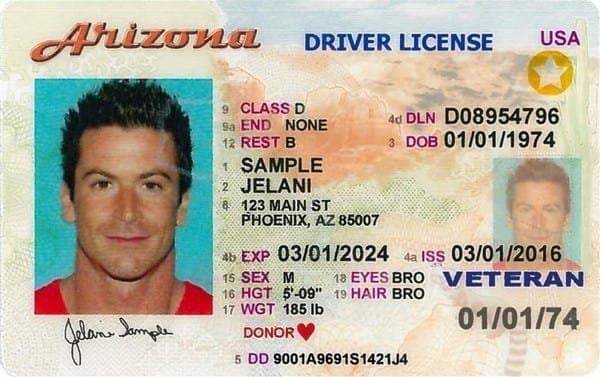
Arizona4 minEasy15 questions

Tests Verified by Daniel Gonzalez
Experienced teacher & Instructional Designer
"These practice tests are built from the DMV handbook to help you actually learn the rules and pass the driving test with confidence"
25000
practice tests completed by Arizona learners this month