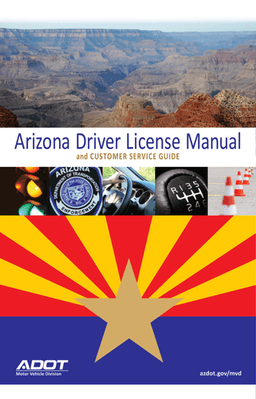
Arizona Driver's License Permit Test: Road Rules You Must Know
Arizona Freeway Rules Every Driver Must Understand
You're sitting there with the arizona driver's license permit test in front of you. Heart's beating a little faster. You've looped around 101, battled I-10 through rush hour, maybe merged onto I-17 with three seconds to find a gap. Now the MVD wants to know you actually know the rules. Not the stuff your buddy told you. The real ones.
Freeways dominate this exam. Live in Chandler and work downtown? That's freeway. Scottsdale errands? Freeway. So the MVD drills merging, lane discipline, exit safety. Over and over.
Take the merge question. Two answers look right. One says "freeway traffic must let you in." The other says "you must adjust speed to merge safely." Politeness screams pick the first. That's wrong. You adjust. They don't. You yield. Every time. That's the law here. The test will hammer that distinction. It'll show an on-ramp scenario and four choices, two of them sound perfectly reasonable. Time pressure will push you to click the nicer one. Don't.
Then there's the keep-right rule. Not a suggestion. On US-60 through Mesa, camping in the left lane will earn you flashing lights. The test asks when staying left is okay. Basically never, unless you're actively passing, turning left, or traffic is so heavy both lanes are packed. That "actively passing" part gets people. You can't just drift in the left lane thinking you'll pass someone in a mile. The MVD words it like "when overtaking and passing another vehicle." If you're not doing that right now, move over.
Exit rules sneak in, too. You don't slow on the freeway. You move into the deceleration lane, then slow. Simple. But on the test, with nerves buzzing, you might overthink it. The screen shows a car braking while still in the travel lane. That's a hazard. They want you to identify it.
And HOV? That's another headache, but we'll get to those details later. For now, know you can only enter and exit at dashed openings. Solid line? Stay put. Motorcycles always allowed. Certain clean-fuel rides with the right plates can solo. Weekday peak periods, two or more occupants. The test loves the solid line violation. Almost too much.
See more
Arizona Freeway Rules Every Driver Must Understand
You're sitting there with the arizona driver's license permit test in front of you. Heart's beating a little faster. You've looped around 101, battled I-10 through rush hour, maybe merged onto I-17 with three seconds to find a gap. Now the MVD wants to know you actually know the rules. Not the stuff your buddy told you. The real ones.
Freeways dominate this exam. Live in Chandler and work downtown? That's freeway. Scottsdale errands? Freeway. So the MVD drills merging, lane discipline, exit safety. Over and over.
Take the merge question. Two answers look right. One says "freeway traffic must let you in." The other says "you must adjust speed to merge safely." Politeness screams pick the first. That's wrong. You adjust. They don't. You yield. Every time. That's the law here. The test will hammer that distinction. It'll show an on-ramp scenario and four choices, two of them sound perfectly reasonable. Time pressure will push you to click the nicer one. Don't.
Then there's the keep-right rule. Not a suggestion. On US-60 through Mesa, camping in the left lane will earn you flashing lights. The test asks when staying left is okay. Basically never, unless you're actively passing, turning left, or traffic is so heavy both lanes are packed. That "actively passing" part gets people. You can't just drift in the left lane thinking you'll pass someone in a mile. The MVD words it like "when overtaking and passing another vehicle." If you're not doing that right now, move over.
Exit rules sneak in, too. You don't slow on the freeway. You move into the deceleration lane, then slow. Simple. But on the test, with nerves buzzing, you might overthink it. The screen shows a car braking while still in the travel lane. That's a hazard. They want you to identify it.
And HOV? That's another headache, but we'll get to those details later. For now, know you can only enter and exit at dashed openings. Solid line? Stay put. Motorcycles always allowed. Certain clean-fuel rides with the right plates can solo. Weekday peak periods, two or more occupants. The test loves the solid line violation. Almost too much.
Arizona2 minEasy8 questions

Tests Verified by Daniel Gonzalez
Experienced teacher & Instructional Designer
"These practice tests are built from the DMV handbook to help you actually learn the rules and pass the driving test with confidence"
Intersection Laws That Commonly Appear on the Test
Intersection law sinks more arizona driver's license permit test scores than anything else. Four-way stops. Uncontrolled intersections. Pedestrians. You'll see them all.
Picture a four-way stop in Gilbert. You and another driver roll up at the exact same moment. Who goes? Driver on the right. Always. Now plug that into a test scenario with cars arriving in a specific order. They'll add a pedestrian stepping off the curb near Tempe Marketplace. The pedestrian is "approaching." You must stop. May vs must. The test banks on you hesitating. If you think you might yield if they're still a few feet away, you'll miss it. You stop. Period.
Left turns on red. Arizona allows them, but only from a one-way onto another one-way. Downtown Tucson has plenty. The test will flash an intersection drawing. Two-way street you're turning onto? No. One-way to one-way? Yes, after stop. Under time pressure, you misread the arrow signs. Time pressure makes you misread. They know this.
Right on red seems simpler. Stop fully. Look. Turn when clear. But they'll slip in a "No Turn on Red" sign and ask if you can. Obvious? You'd think. Yet people click yes because they're skimming. The nuance is the complete stop. Rolling through is illegal. The test has a question that implies you can slow and go if nothing's coming. That's a trap.
Uncontrolled intersections-no signs, no lights-show up, too. First to arrive goes first. Same time? Yield to the right. If there's a pedestrian, they have right of way. These feel like trick questions only because they're so basic.
What Makes Arizona Road Laws Unique
Arizona tests things other states glance over. Aggressive driving prevention. The MVD isn't subtle. They want to know you won't be that person weaving across the 202 late for spring training. So they mention criminal speeding. 85 mph anywhere, or 20 over the posted limit. Not just a ticket. Criminal charges. That fact surprises a lot of first-timers. It's right there on the test.
Dust storms. The haboobs. If you've seen one roll into Scottsdale, you remember. The sky turns brown. The test asks what you do: Pull fully off the roadway. Turn off your lights. Foot off the brake. Stay buckled. The "turn off your lights" part is the detail everyone forgets. If you leave them on, cars behind might follow and plow into you. That tiny detail shows up.
Move Over law. Emergency vehicles, tow trucks, maintenance vehicles with lights flashing. You must move over or slow significantly. On I-19 south of Tucson, if you see a Border Patrol vehicle on the shoulder, you move. "Slow significantly" means reduce speed to where you could stop safely if needed. The test will ask that exact phrase. It's not just 10 below the limit. It's a real judgment call they want you to make.
No toll roads in Arizona. That's easy. But the test might slip in a question about HOV lane function instead. Don't confuse them with toll lanes from California. HOV isn't pay-to-use; it's occupancy-based. And that's a different set of rules.
Heat. Real danger. Extreme temps stress vehicles, tires. Carry water. Check coolant. Never leave people or pets in cars. The MVD sneaks in safety questions about this. Summer drive from Phoenix to Tucson? Be prepared. They'll frame it like a road trip scenario.
Seat belts. Secondary enforcement for adults. An officer can't pull you over just for that. But get stopped for something else and you're unbuckled, you get cited. The test loves distinguishing primary from secondary. That's a little detail that feels unnecessary until it's the only thing separating pass from fail.
School buses. Undivided road? Both directions stop. Divided road with a physical median? Only traffic behind the bus stops. The median distinction trips people up every time.
Road Rule Situations That Confuse Arizona Drivers
Some Arizona road rules look simple until you're staring at the screen. The MVD knows this. They bank on your second-guessing.
HOV rules top the list. Weekday peaks, two or more people. Motorcycles always okay. Certain clean-fuel plates can solo. But the danger is the solid white line. You can only enter or exit at dashed openings. The test might show a car crossing the solid line. That's a fail. Many drivers don't think it matters. It does.
Left on red nuances blur. One-way to one-way only. But downtown, some intersections feel like they should qualify, yet a two-way crossing messes it up. You'll see an arrow and a red ball, and your brain screams "I can turn!" Nope. Not if the cross street is two-way.
Roundabouts spread through Gilbert. Yield to traffic already in the circle. Choose your lane before entering. Don't stop inside. The test adds these because they're becoming common. If you haven't driven one, the yield-before-entry rule confuses. You think you should treat it like a four-way. You don't.
Motorcycle filtering. Legal since 2022. Motorcycles can filter between stopped cars to the front at red lights on roads 45 mph or lower, no more than 15 mph. Full lane splitting at speed? Illegal. The MVD wants you to know the difference. It's a new-ish law, so they test it hard.
Bicycles on wide arterials in Mesa. Give at least three feet when passing. If you can't, slow and wait. The test frames it as a safety must. The three-foot rule seems generous, but it's the law. Failure to give space even with a bike lane present? Counted as a violation.
Let's boil these down.
- HOV entry at solid white lines? Illegal.
- Left on red only with one-way to one-way.
- Roundabout yield, not stop, once inside.
This one trips people up.
The Smartest Way to Study Arizona Road Rules
Reading the manual cover to cover doesn't work for most. You need practical freeway scenarios. Real traffic situations. The stuff you'll face driving from Glendale to downtown Phoenix for a Suns game.
Use an arizona driving permit practice test that throws you into merge decisions, four-way stop puzzles, dust storm procedures. Not just rote questions. The MVD exam doesn't ask you to recite definitions. It asks what you do. So you practice the doing. A good arizona driving permit practice test will simulate the pressure, the two almost-correct answers. You train your brain to spot the nuance: adjust speed, not maintain. Stop, not yield. May, not must.
Think like a driver. When you exit the freeway, you decelerate in the exit lane. That feels natural behind the wheel but on paper you might pick "slow in the right lane." Don't. When you see a school zone with no flashing lights, you revert to the regular posted limit. That shows up. They'll test your reflex to overcorrect. You know, deep down, flashing means 15, no flashing means normal. Trust that.
Drill the Move Over law. What exactly does "slow significantly" mean? You can't just say "slow down." The MVD expects you to connect it to stopping-distance logic. Practice questions make that stick.
HOV lane rules need brute repetition. The dashed-line entry, occupancy count, and that motorcycles are always allowed. Clean-fuel vehicle exceptions get memorized. The test might hide that in a list where one statement is false. You'll see options like "motorcycles must have a passenger" or "any hybrid can use it solo." No. Motorcycles solo are fine.
Bicycle space, roundabout flow, filtering versus splitting. Mix them up. That's the trick. In a practice test, you'll get a scenario mixing filtering and school zones, just to see if you get rattled. Stay calm. Filtering is slow and controlled; splitting is fast and banned. The distinction sticks better when you've missed it once in a practice round and felt the sting.
Don't forget the stupid motorist law. Driving around flood barricades? You'll be billed for rescue. The test might mention it straight-faced. That one surprises people, then they laugh, then they never forget. That's the kind of detail a practice test drills in.
So, grab an arizona driving permit practice test that adapts. Do it over and over. Focus on the mistakes. Each wrong answer teaches the real rule better than a flat paragraph.
Arizona Road Rules FAQs
Does Arizona test freeway driving laws?
Yes. A lot. The test includes merging, lane discipline, exit procedures, and HOV lane usage. Expect scenarios drawn straight from I-10, Loop 101, or the 202. You'll need to know who yields when entering, when you can stay in the left lane, and what the solid line in the HOV means.
What right-of-way rules matter most in Arizona?
Four-way stops, uncontrolled intersections, and pedestrians. Two cars arrive simultaneously, the one on the right goes. Pedestrians always have the right-of-way; you must stop if they're approaching. Left on red? Only legal from one-way to one-way, which the test will probe carefully.
Are HOV lane questions included on the AZ permit test?
Absolutely. The test checks if you know occupancy requirements (2+ during peak), vehicle exemptions (motorcycles, certain clean-fuel plated cars), and the rule about entering only at dashed openings. Crossing the solid line is a frequent wrong answer trap.
How are Arizona road rules different from California?
Motorcycle filtering is allowed here only in limited, low-speed situations; California allows full lane splitting. Arizona has no toll roads, while California has many. Our Move Over law covers all stopped vehicles with flashing lights, not just emergency ones. Dust storm procedures are unique to Arizona and appear on the test.
What road rule mistakes are most common?
Misreading HOV lane entry (solid line, not dashed), thinking freeway traffic must yield to merging cars, and messing up right-of-way at four-way stops with pedestrians. Left-on-red mistakes happen when the cross street is two-way. Time pressure during the test amplifies these errors, so practice slowing down and reading each scenario carefully.
See more
Intersection Laws That Commonly Appear on the Test
Intersection law sinks more arizona driver's license permit test scores than anything else. Four-way stops. Uncontrolled intersections. Pedestrians. You'll see them all.
Picture a four-way stop in Gilbert. You and another driver roll up at the exact same moment. Who goes? Driver on the right. Always. Now plug that into a test scenario with cars arriving in a specific order. They'll add a pedestrian stepping off the curb near Tempe Marketplace. The pedestrian is "approaching." You must stop. May vs must. The test banks on you hesitating. If you think you might yield if they're still a few feet away, you'll miss it. You stop. Period.
Left turns on red. Arizona allows them, but only from a one-way onto another one-way. Downtown Tucson has plenty. The test will flash an intersection drawing. Two-way street you're turning onto? No. One-way to one-way? Yes, after stop. Under time pressure, you misread the arrow signs. Time pressure makes you misread. They know this.
Right on red seems simpler. Stop fully. Look. Turn when clear. But they'll slip in a "No Turn on Red" sign and ask if you can. Obvious? You'd think. Yet people click yes because they're skimming. The nuance is the complete stop. Rolling through is illegal. The test has a question that implies you can slow and go if nothing's coming. That's a trap.
Uncontrolled intersections-no signs, no lights-show up, too. First to arrive goes first. Same time? Yield to the right. If there's a pedestrian, they have right of way. These feel like trick questions only because they're so basic.
What Makes Arizona Road Laws Unique
Arizona tests things other states glance over. Aggressive driving prevention. The MVD isn't subtle. They want to know you won't be that person weaving across the 202 late for spring training. So they mention criminal speeding. 85 mph anywhere, or 20 over the posted limit. Not just a ticket. Criminal charges. That fact surprises a lot of first-timers. It's right there on the test.
Dust storms. The haboobs. If you've seen one roll into Scottsdale, you remember. The sky turns brown. The test asks what you do: Pull fully off the roadway. Turn off your lights. Foot off the brake. Stay buckled. The "turn off your lights" part is the detail everyone forgets. If you leave them on, cars behind might follow and plow into you. That tiny detail shows up.
Move Over law. Emergency vehicles, tow trucks, maintenance vehicles with lights flashing. You must move over or slow significantly. On I-19 south of Tucson, if you see a Border Patrol vehicle on the shoulder, you move. "Slow significantly" means reduce speed to where you could stop safely if needed. The test will ask that exact phrase. It's not just 10 below the limit. It's a real judgment call they want you to make.
No toll roads in Arizona. That's easy. But the test might slip in a question about HOV lane function instead. Don't confuse them with toll lanes from California. HOV isn't pay-to-use; it's occupancy-based. And that's a different set of rules.
Heat. Real danger. Extreme temps stress vehicles, tires. Carry water. Check coolant. Never leave people or pets in cars. The MVD sneaks in safety questions about this. Summer drive from Phoenix to Tucson? Be prepared. They'll frame it like a road trip scenario.
Seat belts. Secondary enforcement for adults. An officer can't pull you over just for that. But get stopped for something else and you're unbuckled, you get cited. The test loves distinguishing primary from secondary. That's a little detail that feels unnecessary until it's the only thing separating pass from fail.
School buses. Undivided road? Both directions stop. Divided road with a physical median? Only traffic behind the bus stops. The median distinction trips people up every time.
Road Rule Situations That Confuse Arizona Drivers
Some Arizona road rules look simple until you're staring at the screen. The MVD knows this. They bank on your second-guessing.
HOV rules top the list. Weekday peaks, two or more people. Motorcycles always okay. Certain clean-fuel plates can solo. But the danger is the solid white line. You can only enter or exit at dashed openings. The test might show a car crossing the solid line. That's a fail. Many drivers don't think it matters. It does.
Left on red nuances blur. One-way to one-way only. But downtown, some intersections feel like they should qualify, yet a two-way crossing messes it up. You'll see an arrow and a red ball, and your brain screams "I can turn!" Nope. Not if the cross street is two-way.
Roundabouts spread through Gilbert. Yield to traffic already in the circle. Choose your lane before entering. Don't stop inside. The test adds these because they're becoming common. If you haven't driven one, the yield-before-entry rule confuses. You think you should treat it like a four-way. You don't.
Motorcycle filtering. Legal since 2022. Motorcycles can filter between stopped cars to the front at red lights on roads 45 mph or lower, no more than 15 mph. Full lane splitting at speed? Illegal. The MVD wants you to know the difference. It's a new-ish law, so they test it hard.
Bicycles on wide arterials in Mesa. Give at least three feet when passing. If you can't, slow and wait. The test frames it as a safety must. The three-foot rule seems generous, but it's the law. Failure to give space even with a bike lane present? Counted as a violation.
Let's boil these down.
- HOV entry at solid white lines? Illegal.
- Left on red only with one-way to one-way.
- Roundabout yield, not stop, once inside.
This one trips people up.
The Smartest Way to Study Arizona Road Rules
Reading the manual cover to cover doesn't work for most. You need practical freeway scenarios. Real traffic situations. The stuff you'll face driving from Glendale to downtown Phoenix for a Suns game.
Use an arizona driving permit practice test that throws you into merge decisions, four-way stop puzzles, dust storm procedures. Not just rote questions. The MVD exam doesn't ask you to recite definitions. It asks what you do. So you practice the doing. A good arizona driving permit practice test will simulate the pressure, the two almost-correct answers. You train your brain to spot the nuance: adjust speed, not maintain. Stop, not yield. May, not must.
Think like a driver. When you exit the freeway, you decelerate in the exit lane. That feels natural behind the wheel but on paper you might pick "slow in the right lane." Don't. When you see a school zone with no flashing lights, you revert to the regular posted limit. That shows up. They'll test your reflex to overcorrect. You know, deep down, flashing means 15, no flashing means normal. Trust that.
Drill the Move Over law. What exactly does "slow significantly" mean? You can't just say "slow down." The MVD expects you to connect it to stopping-distance logic. Practice questions make that stick.
HOV lane rules need brute repetition. The dashed-line entry, occupancy count, and that motorcycles are always allowed. Clean-fuel vehicle exceptions get memorized. The test might hide that in a list where one statement is false. You'll see options like "motorcycles must have a passenger" or "any hybrid can use it solo." No. Motorcycles solo are fine.
Bicycle space, roundabout flow, filtering versus splitting. Mix them up. That's the trick. In a practice test, you'll get a scenario mixing filtering and school zones, just to see if you get rattled. Stay calm. Filtering is slow and controlled; splitting is fast and banned. The distinction sticks better when you've missed it once in a practice round and felt the sting.
Don't forget the stupid motorist law. Driving around flood barricades? You'll be billed for rescue. The test might mention it straight-faced. That one surprises people, then they laugh, then they never forget. That's the kind of detail a practice test drills in.
So, grab an arizona driving permit practice test that adapts. Do it over and over. Focus on the mistakes. Each wrong answer teaches the real rule better than a flat paragraph.
Arizona Road Rules FAQs
Does Arizona test freeway driving laws? Yes. A lot. The test includes merging, lane discipline, exit procedures, and HOV lane usage. Expect scenarios drawn straight from I-10, Loop 101, or the 202. You'll need to know who yields when entering, when you can stay in the left lane, and what the solid line in the HOV means.
What right-of-way rules matter most in Arizona? Four-way stops, uncontrolled intersections, and pedestrians. Two cars arrive simultaneously, the one on the right goes. Pedestrians always have the right-of-way; you must stop if they're approaching. Left on red? Only legal from one-way to one-way, which the test will probe carefully.
Are HOV lane questions included on the AZ permit test? Absolutely. The test checks if you know occupancy requirements (2+ during peak), vehicle exemptions (motorcycles, certain clean-fuel plated cars), and the rule about entering only at dashed openings. Crossing the solid line is a frequent wrong answer trap.
How are Arizona road rules different from California? Motorcycle filtering is allowed here only in limited, low-speed situations; California allows full lane splitting. Arizona has no toll roads, while California has many. Our Move Over law covers all stopped vehicles with flashing lights, not just emergency ones. Dust storm procedures are unique to Arizona and appear on the test.
What road rule mistakes are most common? Misreading HOV lane entry (solid line, not dashed), thinking freeway traffic must yield to merging cars, and messing up right-of-way at four-way stops with pedestrians. Left-on-red mistakes happen when the cross street is two-way. Time pressure during the test amplifies these errors, so practice slowing down and reading each scenario carefully.
25000
practice tests completed by Arizona learners this month