CaliforniaDMV California Driving Test Practice
The California driving test can feel huge. It is. Still, it's absolutely manageable if you prep the right way and don't cram the night before.
Whether you're studying in Los Angeles, commuting in San Diego, or practicing tight turns in San Jose, you're after the same thing: pass the written exam on the first try and move on with your life. Simple goal.
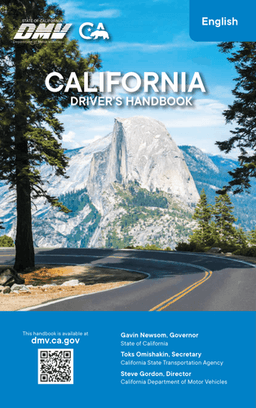
The DMV written test is mostly about judgment. Not vibes. It checks if you understand the rules that keep people safe on everything from jammed freeways near Long Beach to the steep, stop-and-go streets in San Francisco. The questions come from the California Driver Handbook, but they're often phrased to make you slow down and actually read.
Read twice.
Two answers can look right, and then one small word flips the meaning-like "may" versus "must." Add time pressure, and it's easy to misread something you actually know. That's why doing California driving test practice ahead of time helps so much. You get used to the wording, you see the traps, and you find weak spots before test day.
No surprises.
You'll also see questions that feel very "California." Think hands-free phone rules, HOV lanes, and how to share the road with motorcycles that can legally lane split. It adds up quickly, especially if you've mostly been a passenger and haven't paid attention to the details.
The good news is you don't need marathon study sessions. Ten minutes here. Twenty there. In Fresno, Sacramento, Oakland, Bakersfield, Anaheim-same test, same approach.
Consistency wins.
See more
The California driving test can feel huge. It is. Still, it's absolutely manageable if you prep the right way and don't cram the night before.
Whether you're studying in Los Angeles, commuting in San Diego, or practicing tight turns in San Jose, you're after the same thing: pass the written exam on the first try and move on with your life. Simple goal.
The DMV written test is mostly about judgment. Not vibes. It checks if you understand the rules that keep people safe on everything from jammed freeways near Long Beach to the steep, stop-and-go streets in San Francisco. The questions come from the California Driver Handbook, but they're often phrased to make you slow down and actually read.
Read twice.
Two answers can look right, and then one small word flips the meaning-like "may" versus "must." Add time pressure, and it's easy to misread something you actually know. That's why doing California driving test practice ahead of time helps so much. You get used to the wording, you see the traps, and you find weak spots before test day.
No surprises.
You'll also see questions that feel very "California." Think hands-free phone rules, HOV lanes, and how to share the road with motorcycles that can legally lane split. It adds up quickly, especially if you've mostly been a passenger and haven't paid attention to the details.
The good news is you don't need marathon study sessions. Ten minutes here. Twenty there. In Fresno, Sacramento, Oakland, Bakersfield, Anaheim-same test, same approach.
Consistency wins.
What the DMV California Driving Test Includes
The DMV California driving test is a knowledge exam. Not a behind-the-wheel lesson. It's designed to confirm you can make safe choices before you're driving solo.
Most questions fall into a few buckets: traffic laws, road signs and pavement markings, safe driving habits, and hazard awareness. You'll be asked about everyday situations-merging onto a freeway, turning at busy intersections, dealing with pedestrians, and knowing when you must stop versus when you should yield.
Words matter.
California traffic laws show up everywhere on the exam. The state is strict about hands-free phone use, and the test reflects that, even if you see people breaking the rule on the 405 or 101. Same story with carpool lanes, which are heavily enforced in LA, San Diego, and the Bay Area.
Tickets are real.
Signs and markings are another big chunk. It's not just memorizing a chart. You're expected to recognize warning signs, regulatory signs, and lane markings fast, because on the road you don't get extra time to think-not on Highway 99 and definitely not on I‑5.
Hazard awareness matters too. California drivers deal with sudden congestion, aggressive lane changes, and motorcycles filtering between lanes in slow traffic. In places like San Francisco, add hills, one-way streets, and short blocks that force quick decisions.
A few things the exam loves to test:
- When to yield, stop, or proceed at intersections
- How to handle school zones and pedestrian-heavy areas
- What colored curbs and lane markings mean
This one trips people up.
Why Practice Tests Help You Pass
A solid California driving test practice routine does more than quiz you. It trains your brain for how the DMV asks questions, especially the ones designed to distract you with "almost right" choices.
It works.
Practice tests improve recall because you keep pulling the same rules from memory in different formats. That turns reading into retention. And confidence matters more than people admit-once you're sitting at the DMV, the pressure can make you second-guess basics you'd get right at home.
Don't spiral.
They also teach you the feel of the exam. The DMV leans on scenarios, not just definitions. You might get asked what to do when a motorcycle is lane splitting near you, or how much space to leave when following another vehicle, or what to do when a light is out at an intersection.
Real-life stuff.
If you've driven in heavy congestion around Los Angeles or San Jose, you already know how quickly conditions change. Practice questions reflect that, especially around freeway merging, speed choice, and defensive driving habits.
A smart routine is simple:
- Take a short quiz, then review every missed question
- Look up the rule in the handbook (not just the correct option)
- Retake fresh sets until the same mistakes stop happening
This one trips people up.
Over time, you start recognizing DMV phrasing. You stop falling for the "close enough" answer. That's a big reason people pass the California DMV test with less stress.
Common Topics on the California DMV Test
Some topics show up constantly, no matter which office you test at-Sacramento, Oakland, San Diego, wherever. If you focus here, you'll cover a lot of ground.
Start with signs and signals. Guaranteed. You should know what colors and shapes mean, how to respond to flashing red versus flashing yellow, and what to do when traffic signals aren't working. Right-of-way rules also show up a lot, especially four-way stops and left turns.
Be precise.
Safe driving behavior is another major area. Following distance, scanning, lane changes, and speed choices come up again and again. California driving can be fast-paced, but the test still expects defensive driving-even if other drivers don't bother.
Keep your head.
Top areas to study hard:
- Right-of-way with pedestrians and at crosswalks
- Safe following distance and stopping space
- Freeway basics: merging, lane discipline, and signaling early
This one trips people up.
You should also expect California-specific rules: hands-free phone laws, HOV lane requirements, and situations where right turn on red is blocked by a posted sign (common in dense areas like parts of San Francisco and Los Angeles). The sign wins. Always.
If you want the quickest improvement, keep taking DMV California driving test practice sets until you can explain why each correct answer is correct. Not just pick it. Then you're ready.
See more
What the DMV California Driving Test Includes
The DMV California driving test is a knowledge exam. Not a behind-the-wheel lesson. It's designed to confirm you can make safe choices before you're driving solo.
Most questions fall into a few buckets: traffic laws, road signs and pavement markings, safe driving habits, and hazard awareness. You'll be asked about everyday situations-merging onto a freeway, turning at busy intersections, dealing with pedestrians, and knowing when you must stop versus when you should yield.
Words matter.
California traffic laws show up everywhere on the exam. The state is strict about hands-free phone use, and the test reflects that, even if you see people breaking the rule on the 405 or 101. Same story with carpool lanes, which are heavily enforced in LA, San Diego, and the Bay Area.
Tickets are real.
Signs and markings are another big chunk. It's not just memorizing a chart. You're expected to recognize warning signs, regulatory signs, and lane markings fast, because on the road you don't get extra time to think-not on Highway 99 and definitely not on I‑5.
Hazard awareness matters too. California drivers deal with sudden congestion, aggressive lane changes, and motorcycles filtering between lanes in slow traffic. In places like San Francisco, add hills, one-way streets, and short blocks that force quick decisions.
A few things the exam loves to test:
- When to yield, stop, or proceed at intersections
- How to handle school zones and pedestrian-heavy areas
- What colored curbs and lane markings mean
This one trips people up.
Why Practice Tests Help You Pass
A solid California driving test practice routine does more than quiz you. It trains your brain for how the DMV asks questions, especially the ones designed to distract you with "almost right" choices.
It works.
Practice tests improve recall because you keep pulling the same rules from memory in different formats. That turns reading into retention. And confidence matters more than people admit-once you're sitting at the DMV, the pressure can make you second-guess basics you'd get right at home.
Don't spiral.
They also teach you the feel of the exam. The DMV leans on scenarios, not just definitions. You might get asked what to do when a motorcycle is lane splitting near you, or how much space to leave when following another vehicle, or what to do when a light is out at an intersection.
Real-life stuff.
If you've driven in heavy congestion around Los Angeles or San Jose, you already know how quickly conditions change. Practice questions reflect that, especially around freeway merging, speed choice, and defensive driving habits.
A smart routine is simple:
- Take a short quiz, then review every missed question
- Look up the rule in the handbook (not just the correct option)
- Retake fresh sets until the same mistakes stop happening
This one trips people up.
Over time, you start recognizing DMV phrasing. You stop falling for the "close enough" answer. That's a big reason people pass the California DMV test with less stress.
Common Topics on the California DMV Test
Some topics show up constantly, no matter which office you test at-Sacramento, Oakland, San Diego, wherever. If you focus here, you'll cover a lot of ground.
Start with signs and signals. Guaranteed. You should know what colors and shapes mean, how to respond to flashing red versus flashing yellow, and what to do when traffic signals aren't working. Right-of-way rules also show up a lot, especially four-way stops and left turns.
Be precise.
Safe driving behavior is another major area. Following distance, scanning, lane changes, and speed choices come up again and again. California driving can be fast-paced, but the test still expects defensive driving-even if other drivers don't bother.
Keep your head.
Top areas to study hard:
- Right-of-way with pedestrians and at crosswalks
- Safe following distance and stopping space
- Freeway basics: merging, lane discipline, and signaling early
This one trips people up.
You should also expect California-specific rules: hands-free phone laws, HOV lane requirements, and situations where right turn on red is blocked by a posted sign (common in dense areas like parts of San Francisco and Los Angeles). The sign wins. Always.
If you want the quickest improvement, keep taking DMV California driving test practice sets until you can explain why each correct answer is correct. Not just pick it. Then you're ready.