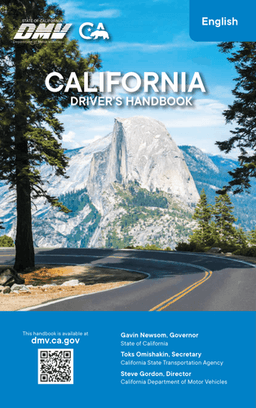
California Road Rules Practice Test
California driving can feel like its own sport, especially if you've ever sat on the I-405 in Los Angeles, crept across the Bay Bridge into San Francisco, or tried to make a quick left in downtown San Diego. That's exactly why this California Road Rules Practice Test exists. It's not just about memorizing signs. It's about learning how the rules work when traffic is heavy, people are rushing, and you have to decide fast.
Read it like test prep, not like a textbook. Slow down. Then speed up. On the real exam, time pressure makes you misread a single word like may vs must, and suddenly two answers look right. Annoying, but common.
The goal here is simple: help you feel confident with the california road rules you'll actually be tested on by the California Department of Motor Vehicles (DMV). Whether you're driving in San Jose, Fresno, Sacramento, Long Beach, Oakland, Bakersfield, or Anaheim, the basics are the same, and the DMV expects you to know them cold.
You've got this.
See more
California driving can feel like its own sport, especially if you've ever sat on the I-405 in Los Angeles, crept across the Bay Bridge into San Francisco, or tried to make a quick left in downtown San Diego. That's exactly why this California Road Rules Practice Test exists. It's not just about memorizing signs. It's about learning how the rules work when traffic is heavy, people are rushing, and you have to decide fast.
Read it like test prep, not like a textbook. Slow down. Then speed up. On the real exam, time pressure makes you misread a single word like may vs must, and suddenly two answers look right. Annoying, but common.
The goal here is simple: help you feel confident with the california road rules you'll actually be tested on by the California Department of Motor Vehicles (DMV). Whether you're driving in San Jose, Fresno, Sacramento, Long Beach, Oakland, Bakersfield, or Anaheim, the basics are the same, and the DMV expects you to know them cold.
You've got this.
California2 minEasy6 questions
Tests Verified by Daniel Gonzalez
Experienced teacher & Instructional Designer
"These practice tests are built from the DMV handbook to help you actually learn the rules and pass the driving test with confidence"
Understanding California Rules of the Road
Rules of the road are the shared "language" of driving. They tell everyone what to expect, even when nobody is making eye contact. That matters a lot in California, where lanes move fast, drivers change lanes often, and motorcycles may legally lane split between slow or stopped traffic.
Not optional.
When you study california dmv rules of the road, you're really practicing decision-making. Who goes first. Who yields. When you must stop. And when you can proceed but only if it's safe. The test loves those small differences.
A big theme in CA rules of the road is "safe speed and safe space." Even if you technically have the right-of-way, you can still be responsible if you drive aggressively or fail to avoid a collision. California expects defensive driving, especially around pedestrians and cyclists, which you'll see constantly in places like San Francisco and San Jose.
Watch the wording.
Also remember that California has strict hands-free phone rules. Your phone should be mounted for GPS, and you're limited to a single tap or swipe. The DMV may ask about this directly, and it shows up in real life during stop-and-go traffic in Los Angeles or on Highway 99 near Fresno.
Right-of-Way Rules in California
Right-of-way is one of the most tested topics because it's where crashes happen. And because it's easy to overthink. At intersections, the DMV wants you to know the basic order, then apply it calmly.
Be patient.
At a stop sign, the first vehicle to stop is usually the first to go. If two vehicles arrive at the same time, the driver on the left yields to the driver on the right. If you're turning left, you generally yield to oncoming traffic going straight or turning right. Simple, until the intersection is busy, like in Sacramento during commute time.
Pedestrians change everything. In California, you must yield to pedestrians in crosswalks, marked or unmarked, and you should be especially careful in dense areas like downtown San Diego or near tourist spots in San Francisco. If someone steps off the curb, your "I can make it" feeling is not a rule.
Stop fully.
Merges are another spot where california road rules show up. When entering a freeway, you don't have the right-of-way over traffic already on the freeway. You accelerate to match speed, signal, and merge when there's a safe opening. Drivers already on the freeway should help when possible, but they are not required to slam on the brakes for you.
Common right-of-way reminders:
- At a four-way stop, yield to the driver who stopped first
- At the same time, yield to the driver on your right
- When turning left, yield to oncoming traffic and pedestrians
This one trips people up.
One more California-specific reality: right turn on red is usually allowed after a complete stop, but many intersections in big cities post "No Turn on Red." You must obey the sign, even if everyone behind you is honking. In Los Angeles and San Francisco especially, assume there might be a restriction and look for it.
Look twice.
Speed Limits and Safe Driving Laws
California speed limits are partly about numbers and partly about judgment. The DMV will test both. You need to know posted limits, but you also need to know when the law expects you to drive slower even if the sign says you can go faster.
Slow is smart.
On many California freeways, the maximum speed limit is 65 mph, and on some stretches it's 70 mph. In cities like Anaheim, Long Beach, or Oakland, you'll see frequent changes as you move from surface streets to larger roads. Residential areas, school zones, and business districts often have lower limits, and the test expects you to recognize when a lower speed makes sense.
The key concept is the Basic Speed Law: you may never drive faster than is safe for current conditions. That includes rain, fog, traffic, glare, road work, or a tight curve on a road like Highway 1. In the Central Valley near Bakersfield or Fresno, tule fog can drop visibility fast, and the "safe" speed might be far below the posted number.
Reduce speed when:
- Visibility is limited by fog, rain, or darkness
- Traffic is heavy and stop-and-go
- You're near pedestrians, cyclists, or school areas
This one trips people up.
Also know how California treats special lanes and enforcement. HOV or carpool lanes are common around Los Angeles, San Diego, and the Bay Area, and violations can be expensive. If the sign says 2+ or 3+, that means occupants, not "I'm in a hurry." And if you cross solid lines to enter or exit, you can be cited.
No shortcuts.
Finally, remember that speed ties into following distance. If you're tailgating and someone brakes, you're the one with no time. The DMV loves questions that test whether you'll choose the safer option, even if it feels slower.
Choose safety.
See more
Understanding California Rules of the Road
Rules of the road are the shared "language" of driving. They tell everyone what to expect, even when nobody is making eye contact. That matters a lot in California, where lanes move fast, drivers change lanes often, and motorcycles may legally lane split between slow or stopped traffic.
Not optional.
When you study california dmv rules of the road, you're really practicing decision-making. Who goes first. Who yields. When you must stop. And when you can proceed but only if it's safe. The test loves those small differences.
A big theme in CA rules of the road is "safe speed and safe space." Even if you technically have the right-of-way, you can still be responsible if you drive aggressively or fail to avoid a collision. California expects defensive driving, especially around pedestrians and cyclists, which you'll see constantly in places like San Francisco and San Jose.
Watch the wording.
Also remember that California has strict hands-free phone rules. Your phone should be mounted for GPS, and you're limited to a single tap or swipe. The DMV may ask about this directly, and it shows up in real life during stop-and-go traffic in Los Angeles or on Highway 99 near Fresno.
Right-of-Way Rules in California
Right-of-way is one of the most tested topics because it's where crashes happen. And because it's easy to overthink. At intersections, the DMV wants you to know the basic order, then apply it calmly.
Be patient.
At a stop sign, the first vehicle to stop is usually the first to go. If two vehicles arrive at the same time, the driver on the left yields to the driver on the right. If you're turning left, you generally yield to oncoming traffic going straight or turning right. Simple, until the intersection is busy, like in Sacramento during commute time.
Pedestrians change everything. In California, you must yield to pedestrians in crosswalks, marked or unmarked, and you should be especially careful in dense areas like downtown San Diego or near tourist spots in San Francisco. If someone steps off the curb, your "I can make it" feeling is not a rule.
Stop fully.
Merges are another spot where california road rules show up. When entering a freeway, you don't have the right-of-way over traffic already on the freeway. You accelerate to match speed, signal, and merge when there's a safe opening. Drivers already on the freeway should help when possible, but they are not required to slam on the brakes for you.
Common right-of-way reminders:
- At a four-way stop, yield to the driver who stopped first
- At the same time, yield to the driver on your right
- When turning left, yield to oncoming traffic and pedestrians
This one trips people up.
One more California-specific reality: right turn on red is usually allowed after a complete stop, but many intersections in big cities post "No Turn on Red." You must obey the sign, even if everyone behind you is honking. In Los Angeles and San Francisco especially, assume there might be a restriction and look for it.
Look twice.
Speed Limits and Safe Driving Laws
California speed limits are partly about numbers and partly about judgment. The DMV will test both. You need to know posted limits, but you also need to know when the law expects you to drive slower even if the sign says you can go faster.
Slow is smart.
On many California freeways, the maximum speed limit is 65 mph, and on some stretches it's 70 mph. In cities like Anaheim, Long Beach, or Oakland, you'll see frequent changes as you move from surface streets to larger roads. Residential areas, school zones, and business districts often have lower limits, and the test expects you to recognize when a lower speed makes sense.
The key concept is the Basic Speed Law: you may never drive faster than is safe for current conditions. That includes rain, fog, traffic, glare, road work, or a tight curve on a road like Highway 1. In the Central Valley near Bakersfield or Fresno, tule fog can drop visibility fast, and the "safe" speed might be far below the posted number.
Reduce speed when:
- Visibility is limited by fog, rain, or darkness
- Traffic is heavy and stop-and-go
- You're near pedestrians, cyclists, or school areas
This one trips people up.
Also know how California treats special lanes and enforcement. HOV or carpool lanes are common around Los Angeles, San Diego, and the Bay Area, and violations can be expensive. If the sign says 2+ or 3+, that means occupants, not "I'm in a hurry." And if you cross solid lines to enter or exit, you can be cited.
No shortcuts.
Finally, remember that speed ties into following distance. If you're tailgating and someone brakes, you're the one with no time. The DMV loves questions that test whether you'll choose the safer option, even if it feels slower.
Choose safety.
25000
practice tests completed by California learners this month